iPad Mini display production slated for August, says analyst


The gears could start to turn as early as this month for the production of a smaller iPad.

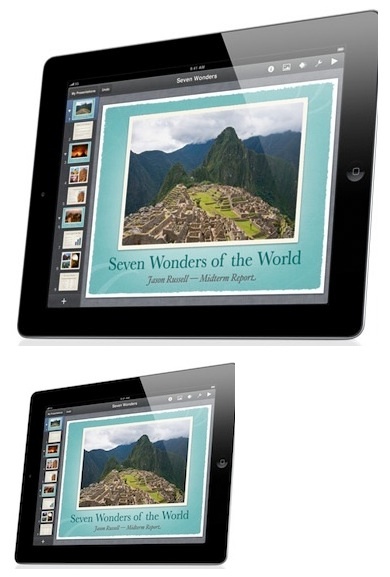
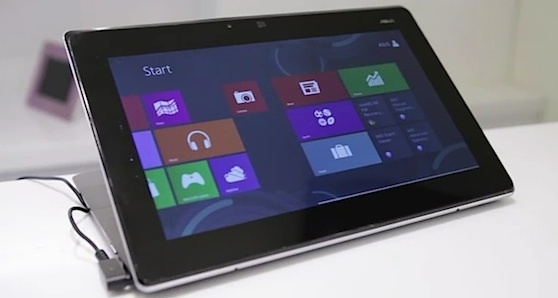
Production of the 7.85-inch display slated for use on a smaller version of the iPad should begin in August, an analyst told CNET.

"We expect panel production to start in August, with production ramping up to high volumes (more than a million units per month) in the fourth quarter," said Paul Semenza, an analyst at NPD DisplaySearch, in response to an e-mail query.

Semenza said this is DisplaySearch's "understanding of the activity for the 7.85 [inch] panel expected to be used in the iPad Mini."

If this production schedule plays out, it could indicate a late 2012 launch, he said.

Recent reports say the so-called iPad Mini will launch in September.

While the downsized iPad is being characterized as a 7-inch tablet like the Google Nexus 7, a screen size falling between 7 and 8 inches -- such as 7.85 inches -- would likely make the Apple tablet closer to the larger 8.2-inch Motorola Xyboard.

No solid word yet on pricing, though a report claimed it "is likely to sell for significantly less than the latest $499 iPad."

Whatever the exact price is, it's safe to say that the $199 Google Nexus 7 would be seen as a direct competitor to a smaller iPad.

[Source: cnet]

Sony loses $312 million in Q1 2012 amid high restructuring costs

Sony has announced its financial results for the first quarter of its fiscal year, and as expected for a company in transition they don't make for pleasant reading — it managed to lose $312 million off sales of $19.2 billion. Sony actually increased its sales year-on-year by 1.4 percent, attributed to the consolidation of Sony Mobile, but $143 million in restructuring costs caused operating income to slide from $270 million to $79 million. Together with the high yen and unstable situation in Europe, the company has downgraded its operating profit forecast for the year from $2.29 billion to $1.66 billion.

The company's few profitable areas right now are its imaging, components, and music businesses, while the gaming, home entertainment, and mobile divisions are all making losses. The games division in particular was disappointing, with sales falling 14.5 percent and the PS Vita not doing much to stop the business slip into the red. However, despite a decline in sales the TV business is actually bleeding less money than this time last year, possibly due to efforts Sony is making to streamline the category. The imaging division, too, is one of the company's recent success stories with high-end cameras contributing to profits of $160 million. The company claims it is "proceeding steadily with efforts to transform our business structure," but shareholders will no doubt have to be patient.

[Source: The Verge]

IDC: Apple's still king of the tablet hill with 68 percent of the market

IDC's cabal of statisticians, nerds and people who just love spreadsheets have handed down their latest document about the state of the tablet market. Of the 25 million slates shipped in the second quarter, 17 million of them were iPads -- giving Apple 68.2 percent of the market. Samsung came second with 2.4 million devices and Amazon third, although since the Kindle Fire maker doesn't reveal numbers, there's probably some guesswork involved there. Rounding out the top five are ASUS and Acer, although the former should expect to move up a place (or two), depending on the success of the Nexus 7 when Q3's results are released in a few months time.

Top 5 Vendors, Worldwide Media Tablet Shipments, Second Quarter 2012


2Q 2012 Shipments

Market Share

2Q 2011

Shipments

Market Share

Q212 / 2Q11Growth

Apple 17,042 68.2% 9,248 61.5% 84.3%
Samsung 2,391 9.6% 1,099 7.3% 117.6%
Amazon 1,252 5.0% 0 N/A N/A
ASUS 855 3.4% 397 2.6% 115.5%
Acer 385 1.5% 629 4.2% -38.7%
Others 3,067 12.3% 3,668 24.4% -16.4%
           
Total 24,994 100% 15,042 100% 66.2&
Unit shipments are in thousands

[Source: Engadget]

Ice Cream Sandwich adoption doubles from July to August

Another month is upon us (again already?), and that means it's time for another breakdown of Android versions. This is the monthly look at the percentage of the various Android versions that are on active phones. Here's the gist:

  • Android 4.1 (Jelly Bean): 0.8 percent
  • Android 4.0.3 to 4.0.4 (Ice Cream Sandwich): 15.9 percent
  • Android 3.1-3.2 (Honeycomb): 2.3 percent
  • Android 2.3-2.3.7 (Gingerbread): 60.6 percent
  • Android 2.2 (Froyo): 15.5 percent
  • Android 2.1 (Eclair): 4.2 percent
  • Android 1.6 (Donut) 0.5 percent
  • Android 1.5 (Cupcake): 0.2 percent

Our big takeaway from this is that Ice Cream Sandwich has more than doubled, from 7.1 percent at this point last month. And that'll grow again for August, and presumably the rest of the year.

Jelly Bean makes its first appearance at less than 1 percent, and we're not expecting a huge bump until more retails devices (as in, anything not named Nexus) are released, though any increase may be a good indication of how the Nexus 7 tablet is selling.

[Source: Android Central]


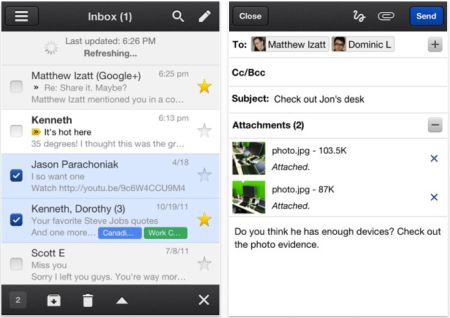
Gmail 1.3 for iOS now saves image attachments

The official Gmail app for iPhone recently got a nice update, and in addition to a few bugfixes and performance enhancements, users now have the ability to save picture attachments straight to their iPhone (or iPad's) camera reel. That's a nice feature -- it means that you can browse and save attachments more easily.

I can imagine some nice use cases as well: You could grab an image from Gmail and put it right into a slideshow on your iPad, or send yourself some images from another computer, and insert them on to your iPhone or iPad's lock screen wallpaper easily.

The Gmail app in general is a solid app to have. Though I usually use the Gmail web client in my browser when I'm at home, and Apple's own Mail app when I'm out and about, there are times when I'd just rather have an official Google experience when browsing mail. With this update and a few others lately (the last update added support for Notification Center), Gmail makes an even better case for owning a spot on your home screen.

[Source: TUAW]

O2 launches value Pay & Go Pocket Hotspot to create “Wifi in your Pocket”

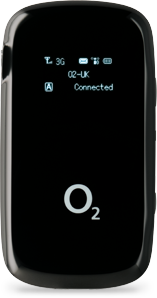
O2 has entered the Mobile Wifi arena with O2 Pocket Hotspot , a new pocket-sized device and tariff that will enable anyone to get a “Wifi hotspot in their pocket”. The new service launches on 2 August 2012.

The new device enables up to five devices to connect simultaneously, sharing mobile internet access. The device is the perfect partner for a growing number of Wifi-enabled mobile devices that consumers increasingly want to be able to use on the move – including tablets, games consoles and cameras, as well as conventional laptop users. It will mean customers can use all their internet-connected devices on the move.

The new device will come with two Pay & Go data options: a daily top-up and 1GB or 2GB bundles (both of which have a 30 day term). Offering a Pay & Go mobile Wifi solution means that O2 Pocket Hotspot customers can get some of the most competitive rates available for mobile internet access without having to sign up to 12 month (or longer) contracts.

Gary Booker, GM Consumer at O2 says of the launch:

“We saw a big gap in the market for a Mobile Wifi package that offered lower start-up costs and competitive data. 

“Customers have told us that they want access to the web on the go, but that they don’t always want to sign up for year-long contracts or to buy lots of data from the outset. O2 Hotspot has been designed to cater for exactly those needs: lowering up-front costs and offering customers lots of options when it comes to the amount of data they buy – what they need, when they need it.”

Starter package costs: O2 Pocket Hotspot

Device Cost

Starter Data

Data Cost

Total Cost

£59.99

Pay daily (200MB/day)

£2.04

NA

£59.99

1 GB (lasts 30 days)

£10.21

£70.20

£59.99

2 GB (lasts 30 days)

£15.32

£75.31


Ongoing cost: O2 Pocket Hotspot Pay and Go data

Data

Cost

Term

1 GB

£10.21

30 days

2 GB

£15.32

30 days

O2 Pocket Hotspot offers 802.11b/g Wi-Fi connectivity and maximum download speeds of 21.6 Mbps and upload at 5.76 Mbps.

 Gary Booker added:

“There are growing numbers of consumers wanting to be able to use the devices they get internet access on at home while they’re on the move.

“Whether tablet users who want access to the web, gamers who want to carry on playing wirelessly while they’re on the move or business customers who are fed up with slow connections on trains or hunting down the nearest WiFi point, O2 Hotspot is the ideal solution.

“Because you can connect up to five devices at once, we also think that this product will appeal to students who want a fast connection but don’t have a telephone line for home broadband or even those who want internet access out of the range of their home router – in the garden for example.”

To find out more, visit: http://www.o2.co.uk/broadband/mobile-broadband/o2-pocket-hotspot

Huawei to introduce 10.1-inch tablet PC in Russia and China

Huawei Technologies aims to expand its tablet PC product line. The firm plans to introduce the MediaPad 10 FHD with a 10.1-inch IPS screen that has a resolution of 1900 by 1200. The tablet PC, featuring Android 4.0.4, will be launched in Russia and China first.

Unlike most tablet PC makers that develop similar applications such as smartphones and notebooks, Huawei has been developing tablet PCs using its home appliance department. The firm hopes to integrate home appliances with the tablet PCs.

Huawei has been cooperating with Foxconn on OEM orders.

According to Huawei, MediaPad 10 FHD comes with a HiSilicon quad-core K3V2 1.5GHz processor and 2GB RAM. The product has a thickness of 8.8mm and weighs 598g. MediaPad 10 FHD will be introduced in Taiwan at the end of the fourth quarter.

Huawei has been dominating the set-top box (STB) market in India, Brazil and Mexico, an mainly focuses on cable TV and satellite STBs. The firm indicated that IP STBs are a development trend.

[Source: DigiTimes]

Crucial outs v4 SSD for solid-state storage on a budget

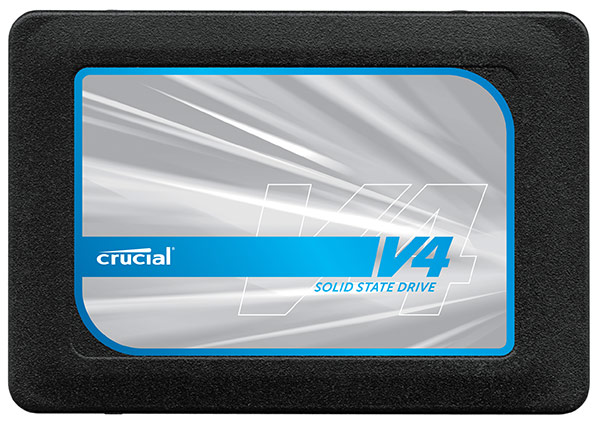
Solid-state drives cost just a fraction of what they did a few years ago, but with prices that can still exceed $1,000, you could hardly label them as cheap. Crucial still aims to put solid-state storage within reach of those on a budget, however, releasing its 2.5-inch v4 drive with pricing that starts at $50. That entry-level model will net you just 32 gigs of storage -- hardly a lust-worthy sum -- but the series is also available in configurations of 64GB ($70), 128GB ($100) and 256GB ($190), offering read speeds of up to 230 MB/s and write speeds of up to 190 MB/s with SATA 2-capable desktops and laptops. The v4 joins Crucial's higher-end m4, which offers much speedier performance and Ultrabook-friendly configurations to boot. You'll find full details in the PR after the break.

[Source: Engadget]

Entrepreneur: How I made $10K in one day with Facebook Ads

As a counterpoint to the company that claimed its Facebook Ads didn't work because most clicks came from bots, entrepreneur Brendan Irvine-Broque decided to tell the story of how he used the social network's advertising platform to make five figures in one day.

After deciding to get rid of a record collection consisting of 6,000 vinyl records, Irvine-Broque created a Facebook Event titled "MASSIVE Vinyl Sale in the East Bay!" He then spent $150 to promote it using Facebook Ads, which simply said "6000 Vinyl Records, $3 Each" and pointed to the event. Here's the description in full (sans address):

I used to be a record dealer, specializing in rare and private press LPs and 45s, and have thousands of vinyl records sitting in storage, many of which I've never even seen. It's time to let go of them, and now that it's warm outside, I figured it'd be a good time to setup some tables outside and have folks over to dig through. There are well over 6000 records, including tons of private press of all genres, obscure 12-inch singles, etc. Everything is $3 each, save for 1-2 boxes of heavily discounted rarities. I'll have snacks and drinks, feel free to bring your own too. Lots of good food just up the street in case you get hungry. Hope to see you there!

[Source: cnet - Click to read the full story]

PC makers falling further behind Apple, says Canalys

Things are not looking good for PC makers in the age of the iPad.

Market researcher Canalys makes this point with PC shipment stats, which are a function of the way it sees the PC market. In short, tablets are PCs too. (And note Canalys defines "PC" generically, not the traditional definition of a Windows PC.)

That gives Apple an overwhelming lead over No.2 Hewlett-Packard. In the second quarter, Apple shipped about 21 million PCs versus about 13.5 million for HP, according to a Canalys report released today. Lenovo was a close third with 13.1 million (see table below).

"There is now a large base of replacement buyers that simply must have the latest Apple product," Canalys said in a statement. "The decision to continue shipping the iPad 2 at lower price points has opened up new customers, for example in education."

[Source: cnet - Click to read the full story]

Dropbox sends password change notification to some users

In a blog post today, Dropbox's VP of engineering Aditya Agarwal explained that the online storage company is addressing some key security concerns in the wake of some concerning incidents. Some Dropbox users saw a spike in spam messages to their registered email accounts over the past few weeks, which drove an internal investigation.

The spam emails turned out to be the result of a breach of an employee's Dropbox account, which contained a project file with some user contact information. The employee's account info had been stolen from a third-party website that was compromised -- which points out the necessity of having password diversity among your web service accounts, rather than using the same password for all of them.

To help protect against future security issues, Dropbox is implementing some policy and technical changes immediately, and also rolling out others over the next few weeks. Two-factor authentication is one of the future changes, similar to what Google has already implemented for Gmail accounts; users will be able to validate password changes with a separate fact or via a cellphone verification pass.

In the meantime, some Dropbox users who have never changed their password or who have an easily crackable password will be getting email reminders to change their password. These emails may appear suspicious, but they are coming from Dropbox (and you should double-check, should you receive one, that you're directed to a Dropbox reset page). When you pick a new password, you can make it extra secure by using a random generation system like Diceware -- endorsed by the makers of 1Passwordand XKCD alike.

[Source: TUAW]

CorelDRAW Graphics Suite X6 Winners

Back on the 20th July we posted a video review of CorelDRAW Graphics Suite X6 (see video below). This superb collection of applications really does deliver a well rounded package to give the creative designer some very powerful & intuitive tools. Please do check out the video & the Corel website.

In the video, we also gave viewers the chance to win one of three CorelDRAW packages. With so many entries, I would like to personally thank everyone who took part.
The winners are detailed below, congratulations go out to;
@TekCrazy7
@5bobert2
@geogant