ASUS Nexus 7 took just four months

When the ASUS MeMo 370T appeared, and then swiftly disappeared at CES, rumors suggested that the $250 7-incher had been poached by Google as the basis for its Nexus tablet. Fast forward six months, and we got confirmation at the Google I/O developer conference, with the introduction of the Nexus 7 and its official model number, ME370T. However, its journey from budget ASUS tablet to Google flagship has remained a mystery, until now...

 [Source: To read the full article visit Android Central]

Starbucks switches to Square for payments, invests $25 million and will support Pay with Square

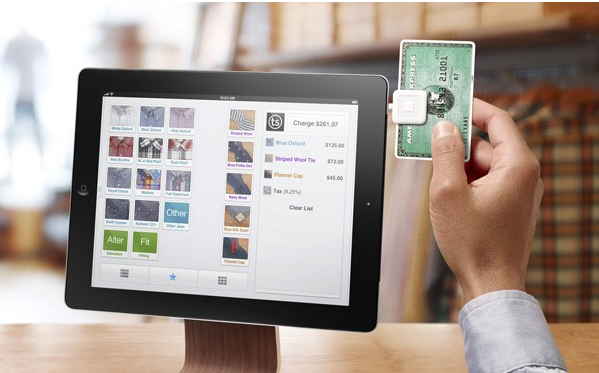
While Square's mobile payment processing platform has already picked up some major players in retail to go along with more than a million small businesses, its biggest shot in the arm to date is a new partnership with Starbucks. The chain will use Square to process credit card payments in nearly 7,000 US locations along with investing $25 million in the company, while Starbucks president, chairman and CEO Howard Shulz is joining its Board of Directors. Also notable for Square is that this fall Starbucks will be pushing features like its Pay with Square app that lets customers pay via iOS and Android apps, as well as the Square Directory of local businesses. In a letter, Square CEO Jack Dorsey pushed the platform as a way enhance local businesses and communities, but we'll see how friendly your local coffeeshop employees are when a familiar green logo shares their payment processor.

[Source: Engadget]

Galaxy Note 2 reported to use flexible AMOLED panel

Samsung's flexible AMOLED displays, long demonstrated to slack-jawed journos at trade shows, could be about to find its place in an upcoming smartphone, if reports from South Korea are accurate. In a recent article on the latest AMOLED display innovations, the Korea IT Times reports that the Galaxy Note 2, due to be unveiled in Berlin on Aug. 29, will utilize the bendy display tech. In addition, Samsung's new, thinner Unbreakable Plane (UBP) tech is also said to be used in the Note 2, freeing up space for extra battery capacity. That's interesting given that just a month ago the Korean press was reporting that UBP was off the table for the Note 2.  

These rumors, combined with recent reports of RGB AMOLED displays reaching pixel densities of 350ppi, make for encouraging reading, suggesting that Samsung's upcoming stylus-toting smartphone may usher in a host new display technologies. In particular, the reported use of flexible AMOLED might suggest some sort of curved device encompassing a curved screen. Samsung has dabbled with curved glass in its phones before (in the Nexus S and Galaxy Nexus, to name a couple), so it's possible the Note 2 might develop these ideas further by curving the AMOLED display beneath. (It should go without saying that the actual phone itself won't bend.)  

We still know almost nothing about the Galaxy Note 2, but rumored specs suggest it'll sport a 5.5-inch, 16:9 display, up from the 5.3 inches of the original Note. Whatever form it takes, we'll be live from Berlin on the 29th to bring you full coverage of the next Galaxy Note, so keep it locked to AC.

[Source: Android Central]

Dell's new 27-inch UltraSharp monitor, its first with AH-IPS

Following 2010’s highly-regarded U2711 monitor, Dell is releasing its next iteration on the 27-inch 2560x1440 IPS LCD panel. Announced on Dell’s Japanese site, the UltraSharp branded U2713HM is the company’s first display to use AH-IPS (advanced high-performance IPS), which it claims offers improved color and clarity over other IPS technologies.  While Dell’s offering doesn’t have the Thunderbolt interface of Apple’s similarly-sized display (also a 2560x1440 IPS panel), it does offer four USB 3.0 ports, and its DisplayPort, HDMI, dual-link DVI, and even VGA inputs mean it should be compatible with whatever computer you want to throw at it. The U2713HM hasn’t yet been announced in the US, but the Japanese price of ¥49,980 (about $637) is a drop of ¥20,000 (about $255) from Dell's last generation.

[Source: The Verge]

Nearly 30,000 Microsoft employees tested Windows 8 Preview

Microsoft has revealed that nearly 30,000 employees have been testing Windows 8 Release Preview on over 30,000 machines. The figures, a snapshot from mid-July, are part of the dogfooding evaluation at Microsoft — a process where a company uses its own product to test it before release. Microsoft regularly sets up internal dogfood builds for upcoming software products, including its web products and Office 2013.

Microsoft's internal IT team fully supported the Windows 8 Release Preview deployment, offering self-help, help desk, and online communities to provide employees with assistance. The company also provisioned 75 devices with Windows To Go, a new self-contained version of Windows 8 on a USB device, and provided them to senior staff and engineers. Although it's not surprising to see Microsoft test its own software internally, the fact that nearly a third of the company's 94,290 employees tested Windows 8 in its beta phase shows it's serious about the operating system...

[Source: To read the full article visit The Verge]

Meet the Vers 1Q: the speaker gets Kickstarted and ships this November

If you're in the market for a battery-powered speaker and are willing to splurge a bit, then you'd be wise to check out the 1Q from Vers. The diminutive, 3-inch cube-shaped music system is said to provide some impressive tunes all by its lonesome, but it can also be paired with another 1Q to provide true stereo sound. Also, thanks to a 3.5mm headphone jack and Bluetooth connectivity, the little guy is sure to work with any number of devices. Naturally, much of the 1Q's allure is due to its hand-crafted wooden enclosure, which is available in walnut and bamboo varieties. The Vers 1Q has eight days left in its Kickstarter funding phase, but it's not like the project will need your help across the finish line: it's already surpassed the goal nine times over. Fortunately for you, this provides an opportunity to snag a 1Q for just $95; when it hits the market in November, the speaker will retail for $120. For even more details, be sure to hit up the PR after the break.

[Source: Engadget]

Would You Wear an Internet-Connected T-Shirt?

T-shirts are great outerwear, especially in the summer. But they’re just so, you know, analog. That may change, though. Ballantine’s, the brand behind the tattoo-based “Human API,” has a new idea it calls “T-Shirt OS.”  The concept: A T-shirt with an ultrathin LED screen that’s connected to the Internet (via your smartphone) and can display tweets, your Intstagram feed and even take photos. Though the technology to do all this is available, it’s not clear whether consumers want such an item. Hence the video above, which is a sort of trial balloon for the concept. If you like what Ballantine’s is proposing, then visit the brand’s Facebook Page.  

[Source: Mashable]

Next Generation iPhone Enclosure Measured at 7.6 mm Thick

Apple.pro posts scans of a story that first appeared in Chinese-language newspaper Apple Daily. That publication obtained one of the many "iPhone 5" enclosures that have been available over the past few weeks and took measurements of them. 

The thickness of the next generation enclosure was measured at 7.6 mm. The rest of the dimensions appear to be equivalent to circulating specifications leaked by case manufacturers in June:

One manufacturer we spoke to said that he was sure that the leaked images were accurate – so sure that he was already preparing to construct iPhone 5 cases and he’d be willing to ship replacements for free if they turned out not to be perfect. He enumerated three big changes from the old iPhone 4S to the iPhone 5: 

1. The phone is much bigger, measuring 58.47 mm wide, 123.83 mm high and 7.6 mm thin. The screen is 4″. 
2. The earphone jack has been relocated to the bottom of the phone. 
3. The dock connector is much smaller, similar in size to micro USB. 

The iPhone 4S measures 9.3mm in depth, so a 7.6mm thin phone would represent an 18% reduction in thickness. The width of the new iPhone is expected to be about the same as the iPhone 4S, but the height will increase in order to fit a 4" diagonal screen. 

Apple is expected to introduce the new iPhone at a September 12th media event.

[Source: MacRumors]

Google adds real time traffic data in maps to 130 new U.S. cities, expands global coverage, too

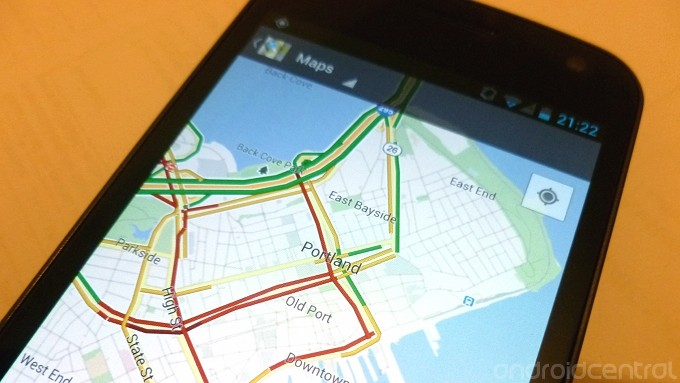
Real time traffic information is a real day saver, and todays news from Google brings the service to a further 130 U.S. cities within Google Maps. 

These smaller cities such as Kalamazoo, Michigan and Portland, Maine, will now benefit from traffic information and estimated travel times around the arterial routes within the cities. Hit the source link below for more information on which cities have been added.

The United States isn't the only place to see expanded coverage either. Panama City, San Jose (Costa Rica) and Bogota all join in for the first time too. Additionally, the coverage is being expanded throughout parts of Brazil, Canada, China, Czech Republic, France, Germany, Italy, Mexico, Russia, Spain, Sweden, and the United Kingdom. Good work, Google.

[Source: Android Central]

Windows 8 RTM will include 'do not track' by default for Internet Explorer 10

Many advertisers weren't thrilled when Microsoft proclaimed that 'do not track' would be the default forInternet Explorer 10 on Windows 8, but that reaction hasn't made the folks in Redmond flinch. Brendon Lynch, the company's Chief Privacy Officer, announced that the 'do not track' default is already baked into the code of the October-bound operating system that has been released to manufacturers. Upon booting Windows 8 for the first time, users will be greeted with a choice between "Express Settings" or "Customize," the former of which has "do not track" enabled. IE 10 on Windows 7 will receive a similar treatment, with a "prominent notice" about the setting being switched on appearing alongside a link to additional information. Despite Microsoft's efforts, it's possible that advertisers could ignore the web browser setting if they feel their negotiations have been for naught. Considering the response to Microsoft's initial default announcement, we suspect this won't be the last development in the saga.

[Source: Engadget]

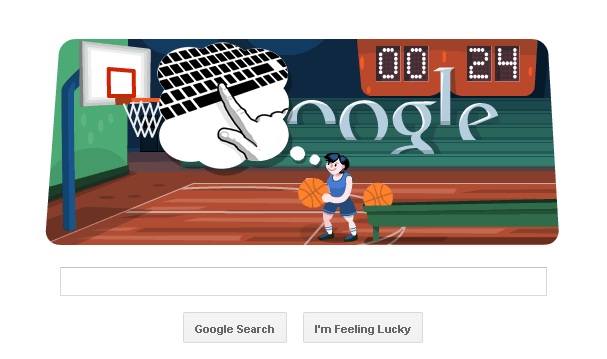
Google interactive doodle highlights Olympics hoop dreams

Google is trying hard to get its users into the Olympic Games.

After yesterday's hurdles challenge, the Web giant is tapping our hoop dreams with another interactive doodle that allows users to take the rock to the hole for Olympic gold. Using the space bar (or even the left-click button), would-be Dream Teamers try to shoot as many free throws as possible in 24 seconds.

Oddly, while the hurdles doodle demanded users to use two hands, the basketball doodle requires only two clicks with one hand to shoot a basket. But the trick is that the time between those two clicks determines the distance of the shot -- the longer time between clicks, the farther the ball will travel. That comes in handy has the free-throw line gradually moves away from the basket.

Performances are judged from one to three stars and can be shared on Google+.

As with tradition dating back to the 2000 Sydney Olympics, Google highlights a different event each day of the Games. In addition to the hurdles, sports already featured this year are archery, diving, fencing, rings, field hockey, table tennis, shot put, pole vault, synchronized swimming, and javelin.

However, unlike other doodles, this one doesn't appear to link to information about the event because it also uses the left-click button to operate the virtual athlete. For those you too busy working on your free throw to type in the associated search terms, the first of the men's basketball quarterfinals games begins at 6 a.m. PT Wednesday.

[Source: cnet]

Windows 8-optimized versions of Windows Photo Gallery and Movie Maker released

Microsoft is releasing its Windows Essentials 2012 package this week, an update to its existing Windows Live Essentials applications. The company is dropping its Windows Live branding this time around, a decision that is echoed across its upcoming Windows 8 operating system. Although Essentials 2012 includes Mail, Messenger, SkyDrive, and Writer, Microsoft is making the most changes in its Photo Gallery and Movie Maker apps.

Movie Maker has been designed to work with the new hardware accelerated graphics changes in Windows 8, improving the performance of the app. The updated app also includes a new video stabilization feature that includes wobble correction for shaky videos. Microsoft has also worked with AudioMicro, Free Music Archive, and the Vimeo Music Store to make it easy to find music online with the proper rights to include in Move Maker videos. A new waveform visualization in the app also makes it easier to trim and cut sections of video to match a music track. Other enhancements in Movie Maker include some new text effects and outputting to h.264 video by default.

Photo Gallery is the second app that contains noticeable changes. An auto collage feature now lets you create a collage of photos automatically, merging images in a collection of photos. Vimeo is also supported as a publish partner this time around, allowing users to upload videos from Photo Gallery and Movie Maker straight to the video sharing site.

[Source: The Verge]