Apple starts selling refurbished 'new' iPads for $50 less than MSRP

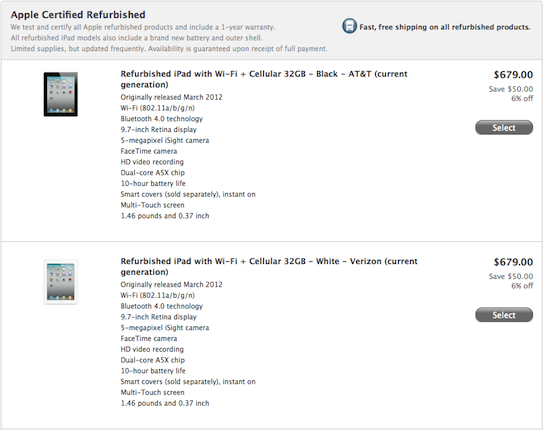
Back when Apple's third-gen slate was originally unveiled to the world, the company very quietly slashed down the prices of its first and second generation refurbed iPads. Now, some five months after itstriumphant launch in the US of A and other countries, Cupertino's started selling the pixel-packed newiPad for 50 bucks less than the original price -- that's if, of course, you don't mind a refurbished unit. Still, as we've said before, Apple includes a one-year warranty with each iPad sold via its "Certified Refurbished" online store, which is considerably better than any Craigslist deal you might find out there. Currently, stock appears to be quite loaded, but you never know how long that's going to last. In other words, you may want to get 'em while they're hot.

[Source: Engadget]

Nikon Coolpix L610: an AA-powered, 1080p-capable point-and-shoot for $249

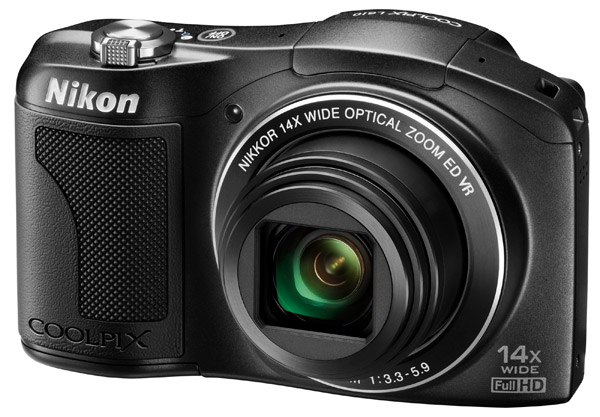
A flagship it isn't, but Nikon's newest Coolpix will certainly hit the sweet spot in terms of pricing for many. The Coolpix L610 is an entry-level compact that breaks away from proprietary cells in order to rely on a pair of AAs. World travelers may argue that it's easier to find a pack of those at any corner shop than a power outlet, and while it may only suit a select few, we're glad that the AA notion hasn't been tossed aside completely. Specs-wise, you're looking at a 16 megapixel BSI (backside illuminated) CMOS sensor, a 1080p movie mode, 3-inch rear LCD, optical VR image stabilization, HDMI socket and a 14x wide-angle zoom lens. It's designed to sit between the P510 and P7100 in terms of size, with a newfangled design that looks pretty darn attractive at the $249 asking price. For those interested, it'll be hitting shelves in September donning a red, black or silver motif.

[Source: Engadget]

OUYA's Kickstarter funding is complete: over $8.58 million raised, starts shipping in March (update: still going)

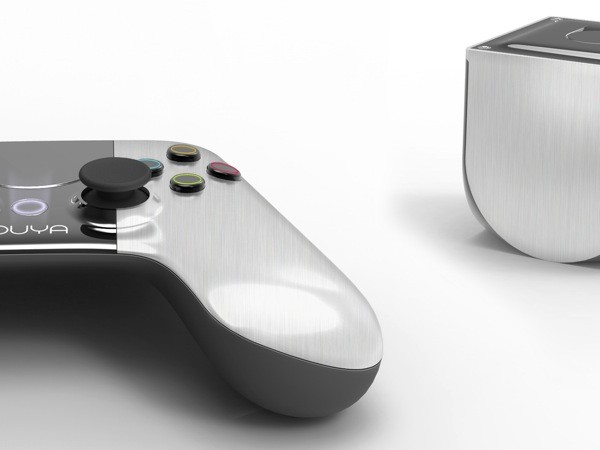
It's a wrap! Suffice it to say, it's a been a relatively short, yet astoundingly fruitful -- and initially record-breaking -- funding run for OUYA, the hackable, Android-based gaming console. With just 29 days to work with since being announced, the Yves Behar-designed system has raked in over $8.58 million thanks to just under 63,300 backers on Kickstarter as of its official 1AM ET funding deadline today. Those who opted for developer editions will be able to start tinkering with their own units around December, while the majority of backers should receive the console as early as March 2013. Missed the Kickstarter bandwagon? Don't fret, because OUYA plans to take pre-orders from the general public over the web soon, expecting those units to arrive at doorsteps near April.

The numbers are only part of the picture, of course. If you'll recall, OUYA swiftly acquired a slew of partnerships from companies like OnLive, Square Enix, XBMC, Vevo, and Robotoki -- and as if that wasn't enough, just yesterday Namco Bandai and Plex officially joined the content-providing party as well. What's more, we now know that each console will support up to four of those touchpad-equipped controllers for local multiplayer action. Even with all that, this story is far from over, as Joystiq points out that Julie Uhrman and company "promise" to have more updates before its official launch. Naturally, it still remains to be seen how OUYA's (literally) tiny, Tegra 3-powered footprint will fare against the big three in gaming, but we're cautiously optimistic.

So, while the final, mass-produced product is still months away, in the meantime you'll find a recap of all the highlights from OUYA in the nifty saga module below. You can also hit up our friends at Joystiq here for extra insight from the company about its successes so far.

Update: Despite the timer hitting zero, it appears that pledges are still being accepted past the 1AM deadline -- better be quick! We'll be sure to update the numbers again as soon pledging is officially halted.

[Source: Engadget]

Panasonic preps SD cards that survive heat, water and X-rays, will probably outlast you

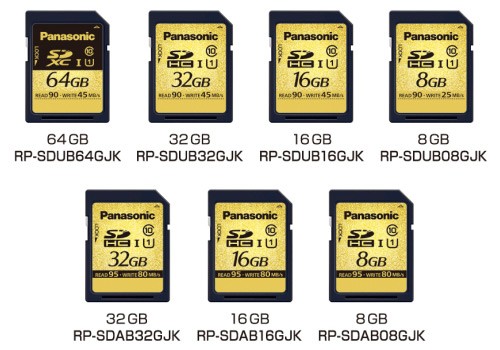
Much ado has been made of weather-resistant cameras, but it's all a moot point if the memory card dies, isn't it? Panasonic wants that level of survivability in its SDHC and SDXC cards, and its new UHS-I-level SDAB and SDUB lines are tested for the kind of abuse that could see the camera give up the ghost first. The cards can take the kinds of punishment that we often associate with rugged gear, such as temperatures from -13F to 185F, immersion in 3.3 feet of water for half an hour and the usual steep drops. It's beyond this that the resistance levels become truly exotic: the cards are also built to survive zaps of electricity, proximity to magnets and exposure to X-rays. If it all becomes too much to bear, the design will even fuse on the inside to prevent fire burning the card from within. Those who like what they see will only have to decide whether or not they want the SDAB range's 95MB/s read speeds and 80MB/s writes or are willing to settle for the SDUB line's respective 90MB/s and 45MB/s transfers. We have yet to see if or when the SD cards cross the Pacific after their September 8th launch in Japan, although we hope so -- with that kind of extra-tough design, our photos are more likely to endure than we will.

[Source: Engadget]

Evernote updates for iOS, adds tap anywhere to edit

If there's one thing that perpetually frustrates us about Evernote on mobile devices, it's the inability to simply start editing a note when we open it up. As is, you've got open one, then tap the edit button, then you can navigate to the portion of the note you want to tweak. Not exactly the most efficient of workflows. That's finally changed, on the iPad and iPhone at least, and simply tapping anywhere in an entry will immediately open the editing tool, with the cursor exactly where you tapped. It may seem like a minor tweak, but it's one that should help address one of the primarily complaints about the note-taking service's mobile apps -- a lack of convenience. Now, we just hope the same update heads to Android devices. And sooner, rather than later.

[Source: Engadget]


HTC 'Endeavor C2' rumored to be a spec-bumped One X for late 2012

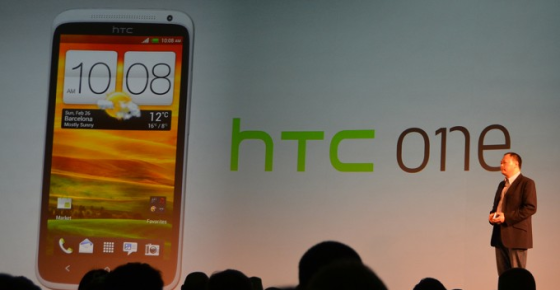
HTC's flagship One X may be set to receive a minor specification bump before the end of 2012, according to reports from ​Stuff​. The re-vamped model is known only by its codename "HTC Endeavor C2" -- note that the original One X was "Endeavor". It'll allegedly ship with a souped-up 1.7GHz quad-core NVIDIA Tegra 3 CPU, along with an "improved" battery, new color options and urBeats earphones included in the box. ​Stuff​ also claims that the new "Endeavor C2" will be compatible with all existing One X accessories, which to us implies that the chassis design will remain identical.  Essentially, the C2 could be to the One X what the Sensation XE was to the original Sensation last year -- the same design, with slightly upgraded internals. The news also converges nicely with rumors we've heard from T-Mobile USA, suggesting an "HTC One X+" may be arriving on that network later in the year...

[Source: To read the full atricle visit Android Central]

Stock Talk: HTC's problem is getting worse

Late last week, HTC posted its Q2 results for 2012, and they weren’t pretty. Profits are down 60 percent year over year.  But perhaps the most visible sign of decline comes from revenue. After all, consumers don’t necessarily know if a company makes money based on what it sells. But if HTC sells fewer phones, it’s a highly visible change. And that’s exactly what has been happening. HTC revenues dropped by more than 25 percent in Q2.  This week the Taiwanese manufacturer posted results for July, and sales were down by 45 percent. This is worrisome because it suggests HTC’s revenue woes are accelerating, not easing.  

The problems faced by HTC are serious. With Android having gained so much market share over the last couple of years, the only way to explain HTC’s performance is a loss of consumer appeal. When people think about Android, the brand that comes to mind is clearly Samsung.  The smartphone market, at the high end, has essentially consolidated around Apple's iPhone and Samsung's Galaxy families. Then, waiting to duke it out for a slice of the action will be Microsoft/Nokia and the Windows Phone 8 Lumia phones, along with Research in Motion’s BlackBerry 10 (neither of which have hit the market)...

[Source: To read the full article visit Android Central]

After ‘Genius’ Fail, Apple Back to Promoting iPad in Olympics

Apple, which discontinued its much-panned “genius” ads during the Olympics after their short run, is back with a more traditional approach, promoting its latest iPad.  The ad above, which ran during Tuesday night’s Olympics telecast on NBC, touts the new iPad’s Retina display and the ability to tweet articles you like. The “product-as-hero” style of the TV spot is more in keeping with past Apple ads than the three “genius” spots, which put the brand’s Apple Store VIPs in the spotlight. In contrast with “Genius,” which divided fans, the latest spot seems to be gaining wider acceptance — with more than 26,000 views, the new ad has 10 times more likes than dislikes.  However, the creative retreat by Apple is uncharacteristic. The brand rarely kowtows to fans and a tacit admission that the previous ads weren’t working is a rare occurrence for a brand known for its uncompromising vision and untouchable marketing prowess.  What do you think? Do you like the latest ads? Were the genius ads unfairly maligned? Sound off in the comments.

[Source: Mashable]

Apple Temporarily Halts Over-the-Phone iCloud Password Resets

Wired reports that Apple has ordered its support staff to temporarily stop processing AppleID password changes over the phone.   The move is a response to the experience of Wired reporter Mat Honan who had his iCloud account hacked which resulted in the remote-wipe of his iPhone, iPad and MacBook Air. An Apple worker with knowledge of the situation, speaking on condition of anonymity, told Wired that the over-the-phone password freeze would last at least 24 hours. The employee speculated that the freeze was put in place to give Apple more time to determine what security policies needed to be changed, if any. Wired was able to confirm the policy change by calling Apple Support and attempting to reset the password on an iCloud account.   Meanwhile, Amazon has also changed their policy in the wake of the hacking report. Amazon no longer allows people to call in and change their credit card or email address settings. Hackers had taken advantage of Amazon's policies in order to expose the last four digits of Honan's credit card which was then used to take over his iCloud account.

[Source: Mac Rumours]

ASUS Nexus 7 took just four months

When the ASUS MeMo 370T appeared, and then swiftly disappeared at CES, rumors suggested that the $250 7-incher had been poached by Google as the basis for its Nexus tablet. Fast forward six months, and we got confirmation at the Google I/O developer conference, with the introduction of the Nexus 7 and its official model number, ME370T. However, its journey from budget ASUS tablet to Google flagship has remained a mystery, until now...

 [Source: To read the full article visit Android Central]

Starbucks switches to Square for payments, invests $25 million and will support Pay with Square

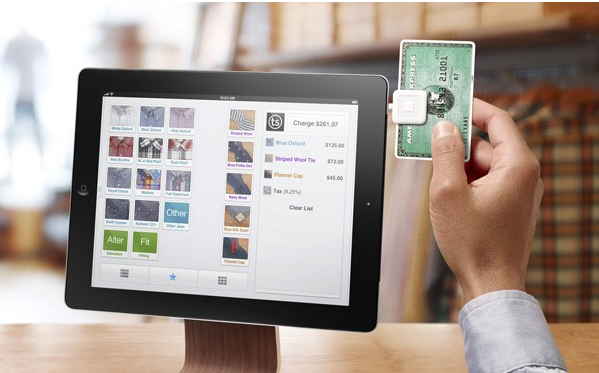
While Square's mobile payment processing platform has already picked up some major players in retail to go along with more than a million small businesses, its biggest shot in the arm to date is a new partnership with Starbucks. The chain will use Square to process credit card payments in nearly 7,000 US locations along with investing $25 million in the company, while Starbucks president, chairman and CEO Howard Shulz is joining its Board of Directors. Also notable for Square is that this fall Starbucks will be pushing features like its Pay with Square app that lets customers pay via iOS and Android apps, as well as the Square Directory of local businesses. In a letter, Square CEO Jack Dorsey pushed the platform as a way enhance local businesses and communities, but we'll see how friendly your local coffeeshop employees are when a familiar green logo shares their payment processor.

[Source: Engadget]

Galaxy Note 2 reported to use flexible AMOLED panel

Samsung's flexible AMOLED displays, long demonstrated to slack-jawed journos at trade shows, could be about to find its place in an upcoming smartphone, if reports from South Korea are accurate. In a recent article on the latest AMOLED display innovations, the Korea IT Times reports that the Galaxy Note 2, due to be unveiled in Berlin on Aug. 29, will utilize the bendy display tech. In addition, Samsung's new, thinner Unbreakable Plane (UBP) tech is also said to be used in the Note 2, freeing up space for extra battery capacity. That's interesting given that just a month ago the Korean press was reporting that UBP was off the table for the Note 2.  

These rumors, combined with recent reports of RGB AMOLED displays reaching pixel densities of 350ppi, make for encouraging reading, suggesting that Samsung's upcoming stylus-toting smartphone may usher in a host new display technologies. In particular, the reported use of flexible AMOLED might suggest some sort of curved device encompassing a curved screen. Samsung has dabbled with curved glass in its phones before (in the Nexus S and Galaxy Nexus, to name a couple), so it's possible the Note 2 might develop these ideas further by curving the AMOLED display beneath. (It should go without saying that the actual phone itself won't bend.)  

We still know almost nothing about the Galaxy Note 2, but rumored specs suggest it'll sport a 5.5-inch, 16:9 display, up from the 5.3 inches of the original Note. Whatever form it takes, we'll be live from Berlin on the 29th to bring you full coverage of the next Galaxy Note, so keep it locked to AC.

[Source: Android Central]