Microsoft reportedly settles on 'Windows 8' as replacement for 'Metro'

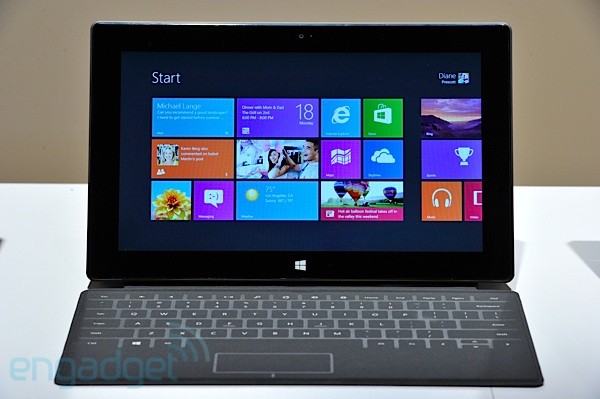
We've already heard that Microsoft was temporarily using "Windows 8-style UI" as a substitute for "Metro" now that the latter is on the outs, and it looks like they may now have a permanent replacement. According to some unnamed sources speaking to ZDNet's Mary Jo Foley, Microsoft has decided to simply use "Windows 8" as a name for all things once known as Metro. That means "Metro-style applications" will now be known as "Windows 8 applications," and that the "Metro user interface" will now be the "Windows 8 user interface." What's more, Foley also notes that the phrase "Windows 8 apps" has already turned up on the promo page for Lenovo's new ThinkPad Tablet 2, which also indicates that the traditional Windows 8 apps will simply be known as "desktop" apps to distinguish the two. We'll keep you posted if we hear more on the change from Microsoft itself.

[Source: Engadget]

Google gives mobile search a makeover for quick-answer queries

If you're looking for flight times, currency conversions, word definitions and more, you'll notice that Google has dressed up the responses in new, Now card type clothing. On top of being prettier, the look is designed to make the data easier to parse and also adds an interactive element -- letting you change a distance or unit when doing metric conversions, for example. Currently the refresh is limited to smartphone and tablet searches, but Google has promised to roll it out soon to desktop searches and international users. The change is part of an ever-evolving list of tweaks and updates to Mountain View's venerable search engine -- check the source for more info.

[Source: Engadget]

T-Mobile UK confirms unlimited tethering won't be available to new Full Monty customers

Well, well, so much for being "truly unlimited," right? As TechRadar adequately reports, T-Mobile UK's confirmed that any new customer looking to snag the Full Monty data plan won't be offered an unlimited tethering feature on their all-you-can-have bundle. Effective immediately, the change is a sudden move from the carrier and it wasn't quite clear as to what made it backpedal on its initial "unlimited" promise, only saying, "From 8th August, tethering is not permitted for new customers under the terms and conditions of the Full Monty." Surely this is a small blow to UKers hoping to grab the Full Monty for the all-out tethering alone -- but hey, at least you've still got the data, texts and calls.

[Source: Engadget]

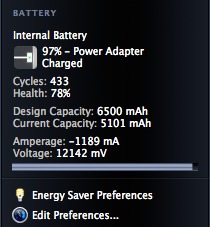
Tests Find OS X Mountain Lion May Significantly Degrade Notebook Battery Life

Ars Technica has been doing some testing after reports emerged that some Mountain Lion early adopters were experiencing degraded battery life after upgrading to OS X 10.8. A 46-page thread with nearly 700 replies has been growing over the past several weeks on the Apple Support Forums.

Ars writer Chris Foresman, after extended testing, discovered that the battery life of his Retina MacBook Pro review unit dropped 38% from its previous 8-hours. He was unable to narrow down blame for the battery loss to any particular bit of software or system process.

Our own testing revealed similar (and significant) drops in battery runtime after installing Mountain Lion. In previous tests, we were able to regularly achieve just over 8 hours of use by relying solely on our Retina MacBook Pro's integrated Intel HD4000 GPU. Performing the same "real-world" test using the same software applications and usage pattern, we never got the Retina MacBook Pro to run for more than a few minutes past 5 hours after a full charge.

Typically, the quad-core processor wasn't taxed beyond 5 percent capacity, except for occasional 10-20 percent spikes when loading webpages, reading or writing files, or other activities. Unexpected file system or network access, or less efficient use of the GPU, could cause additional power drain without showing significant CPU use.

One poster on Apple's support forums claims a company support representative told him that "an update will be issued via the [Mac App Store] as soon as they can work a fix."

[Source: MacRumors]

Next-Generation iPhone Components Compared to Previous Models

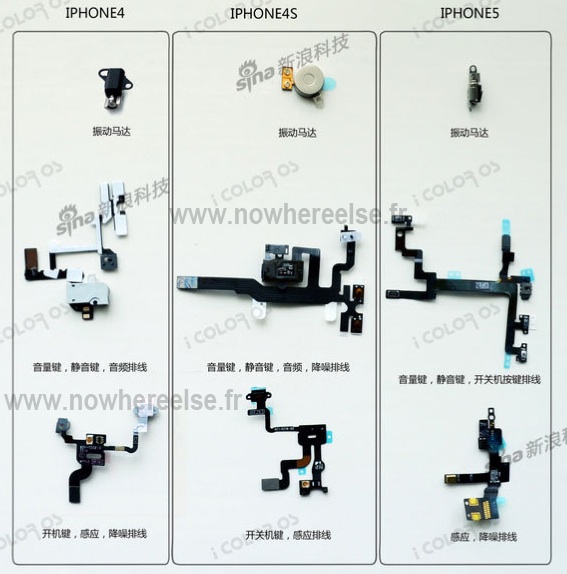
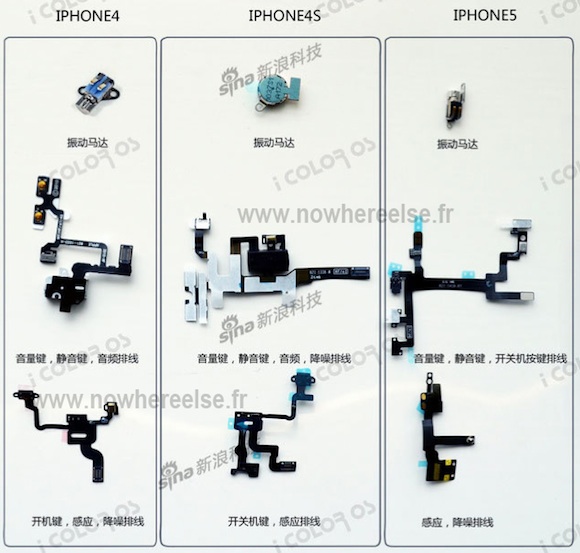
Following up on a fresh leak of claimed next-generation iPhone parts, Nowhereelse.fr now shares [Google translation] new photos from the same source that provide an interesting comparison between several of the new components and their predecessors found in the iPhone 4S and iPhone 4. As shown in the top row, Apple appears to be returning to the rotational electric motor design for the vibrator that was used in the GSM iPhone 4 and earlier devices. In the CDMA iPhone 4 and the iPhone 4S, Apple has been using a larger drum-shaped linear oscillating vibrator that gives a softer feel and sound. 

Apple's flex cable designs have also continued to evolve through the generations, with the company tending to group components on cables by function and physical proximity. With the move of the headphone jack to the bottom of the device and tweaks to the camera and sensor arrangements, it appears that Apple has in some respects been able to simplify its cable designs.

The second row of parts shows how Apple has modified the design of the volume control cable over time. While the part previously included the volume control button/mute switch assembly and the headphone jack, with the headphone jack having moved to the bottom of the device the cable now stretches across the device to also contain the power switch, consolidating all of the exterior button and switch functionalities on a single cable.

In previous iPhones, the power switch was included on the sensor cable, which also contained both the proximity sensor and the ambient light sensor, as shown in the third row of parts. But with the power switch now having been moved over to the volume control cable, the sensor cable has been simplified. 

Not shown in these photos is the headphone jack and dock connector part. That part was one of the first to leak back in May, but the dock connector was initially misidentified as the earpiece before it was discovered that the headphone jack would actually be located on the bottom of the next-generation iPhone.

[Source: MacRumors]

Boot Camp Files Hint at New Mac Pro and iMac Models

Hidden files in the Mountain Lion version of Boot Camp appear to confirm the next generation of both the Mac Pro and iMac, according to information dug up by AppleInsider.

Within a Boot Camp configuration file lies information that tells the software what models of Mac can boot Windows from a USB-drive, a task that only Macs of a more recent vintage can accomplish. The file includes mention of the existing Mac Mini and MacBook Air, but also mentions iMac 13,0 and MacPro 6,0 models -- machines that don't currently exist.

Earlier this year, Geekbench 2 benchmarks for an unreleased iMac 13,2 model were discovered that appear to be legitimate and fueled speculation that the iMac would be updated soon. The current model iMacs have gone more than a year -- 464 days -- without an update, and are well overdue.

After the Mac Pro was given a quiet update this year, many were wondering about the future of Apple's desktop line of Macs. Both Apple CEO Tim Cook and an unnamed Apple spokesperson have confirmed that the Mac Pro will receive a full redesign for delivery sometime in 2013, nearly three years after the last significant update to the product.

Update: It's been pointed out that these strings were in Boot Camp as early as November 2011.
[Source: MacRumors]


Next Generation iPhone Battery Only Marginally Higher Capacity

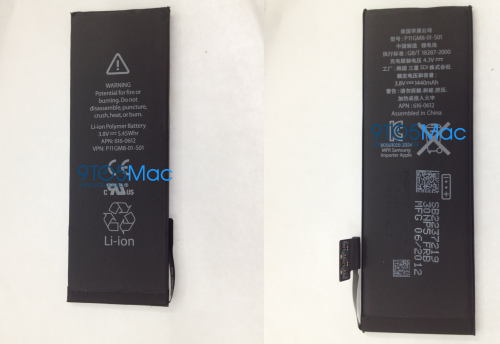
Part photos of the new battery for the next generation iPhone have been posted by9to5Mac. The part shows only a minor increase in capacity from 3.7V/1430mAh/5.3Whr in the iPhone 4S to 3.8V/1440mAh/5.45Whr in the rumored iPhone 5. No dimensions are provided to compare the size of the battery to the current iPhone batteries. 

The next generation iPhone is believed to be a taller but thinner device. The increased height, however, is more than offset by the reduction in thickness which results in a decreased internal volume of the device as compared to the iPhone 4 and 4S. If this part leak is to believed, Apple hasn't been able to significantly increase the battery capacity on the new iPhone. 

The new iPhone is expected to include LTE data networking for the first time. LTE has traditionally required more power than the currently supported 3G networks. Apple's Tim Cook has said that the reason that Apple hadn't used LTE in iPhones is due to the "design compromises" required to build such a device. This has widely believed to have referred to the increased power requirement of existing LTE chips. Qualcomm is poised to release a new LTE chip that Anandtech believes will "likely increase LTE battery life to reasonable levels."

[Source: MacRumors]


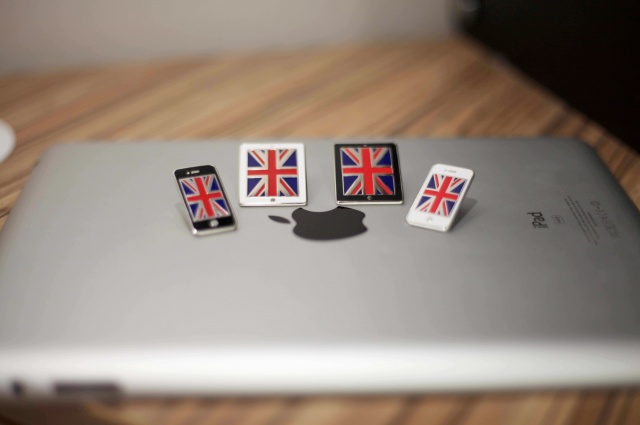
Check Out The Mini iPhone And iPad Pins Apple Has Been Giving Out At The London Olympics

Since the beginning of the 2012 London Olympics last month, Apple has been giving away a rotating set of 4 Great Britain-themed lapel pins each day. This isn’t a new thing for Apple, as the company gave out similar Canadian-themed pins during the 2010 Winter Olympics in Vancouver.

For the Olympics this year, the pins are tiny black and white iPhones and iPads. Cult of Mac reader Andrew Wingert sent in some shots of Apple’s full pin set.

[Source: Cult of Mac - Read the full story]

Leaked iPhone 5 Pic Compares New Smaller Dock With Current 30-Pin Dock [Rumor]

In Cult of Mac’s feature on the future of Apple’s dock connector, John Brownlee hypothesized that Apple’s next iOS device dock would be significantly smaller because the current 30-pin architecture is severely outdated. Nearly half of the current dock connectors pins are for legacy technology no one uses anymore, and Brownlee’s research matched up perfectly with the general consensus at the time: Apple would introduce a smaller 19-pin dock connector in the next iPhone this fall.

Since then, newer rumors have surfaced claiming that Apple’s new dock connector will be even smaller than everything originally thought. Leaked photos have depicted a micro dock that could very well consist of only 7-9 pins.

New pictures of an alleged iPhone 5 exterior have surfaced today that compare the new dock connector with the current 30-pin design. The above pic reiterates the significantly smaller design, and also the possibility of a surprise to look forward to when the next iPhone is unveiled in the coming weeks.

French site Nowehereelse.fr got its hands on side-by-side shots of the iPhone 5 and iPhone 4S, and the dock connector pic is the best quality we’ve seen so far.

[Source: Cult of Mac - Read the full story]

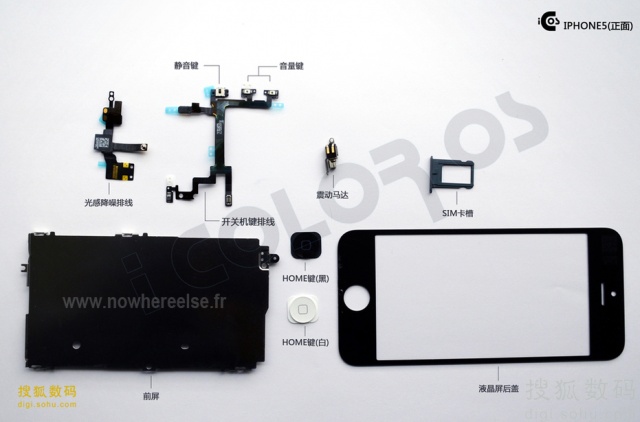
This Is What The Front Assembly Of The Next iPhone Looks Like Disassembled

Another morning, another big leak in next-generation iPhone components.

This morning, that leak comes to us from iColorOS, which shows pretty much the entire front assembly of the iPhone 5, including the glass display, internal sensors, home button, and volume control… as well as a new protective shielding that separates the back of the iPhone’s display from the rest of the internal components.

In addition, the iColorOS photos — which are very well done — clearly show a number of other iPhone 5 parts we’ve seen popping up over the last couple weeks, such as the new nano-SIM tray.

There’s no doubt about it: this is what the next iPhone is going to look like, friends.

[Source: Cult of Mac]

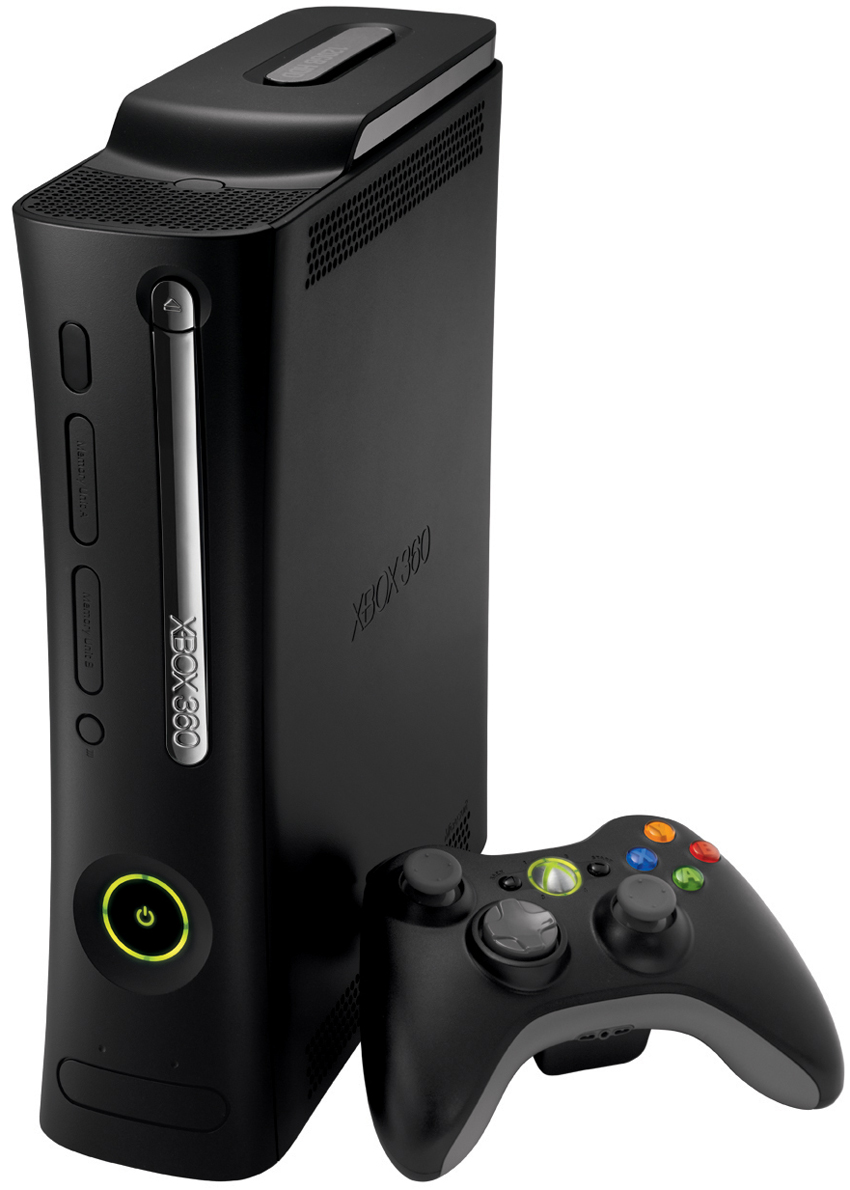
Microsoft hints at new Xbox launch within the next 18 months

At this point in time, it's a pretty sure bet that Microsoft won't be introducing any new Xbox hardware this year. After unveiling some software improvements at E3, the company is widely expected to launch a new dashboard update in October. However, Microsoft's next Xbox may arrive within the next 18 months, according to a recent job posting. "Over the next eighteen months Microsoft will release new versions of all of our most significant products including Windows (Client, Server, Phone and Azure), Office and Xbox," reads the job posting.

Microsoft hasn't officially announced that it's planning a new Xbox console, but the company was forced to issue a clarification this week after a Microsoft manager suggested that a "new Xbox" was part of a new wave of product updates arriving soon. Instead, Microsoft says the manager was referring to the upcoming dashboard update. A recent "Xbox 720" document leak revealed some old plans for a $299 console with Kinect 2 and a lot of references to a next-generation Xbox in 2013.

We reached out to Microsoft for comment and a spokesperson says the company is "continually thinking about the future of the platform and when we have something to share, we will."

[Source: The Verge]

Things 2.0 takes Cloud syncing out of protracted beta, showers you with new features

Things, one of the leading task manager apps on Apple's OS X has seen a long-awaited update to version 2.0 today. It brings to a close some five months of public beta testing of a new Cloud syncing feature — which distributes your to-do list across the full range of Apple devices, courtesy of updated iPhone and iPad apps as well. Also on the new features list are Retina display support for the new MacBook Pro, an entirely re-engineered core for "blazing fast Things Cloud performance," visual refinements that include a reduction in window chrome, and an all-new Daily Review section. You'll need to be running OS X 10.6.6 (Snow Leopard) or later to be able to apply this update, which is free for anyone who's already purchased the app.

[Source: The Verge]