Google to downrank sites hit by valid copyright claims

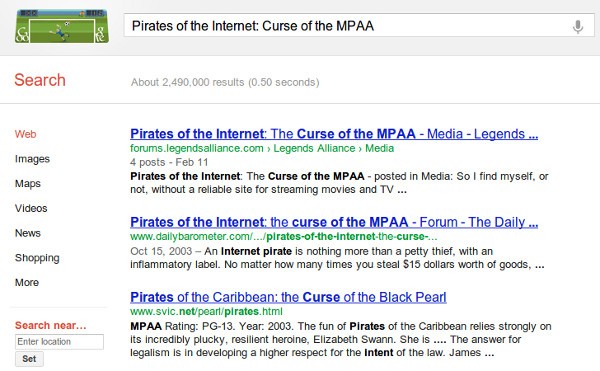
Google has been dogged by claims that it facilitates the piracy of content through its search results pretty much since day one. Starting next week, the web giant will be taking a much more aggressive approach to sites hosting pirated material by downranking frequent offenders. The new results algorithm will take into account the number of valid copyright notices received against a site and penalize them appropriately in the rankings. Google says that this will allow consumers to more readily find legitimate sources of content such as Hulu and Spotify, but it's hard not to see the move as one intended to appease studios, content producers and government officials that routinely threaten to hammer companies like Google with lawsuits and restrictive legislation. Mountain View was also quick to highlight how responsive it's been to industry concerns -- citing the fact that it receives and processes more copyright complaints in a day than it did in all of 2009 combined. For more details, hit up the source link.

Update: The MPAA has issued the following statement from Michael O'Leary, Senior Executive Vice President for Global Policy and External Affairs, in response to Google's move:

We are optimistic that Google's actions will help steer consumers to the myriad legitimate ways for them to access movies and TV shows online, and away from the rogue cyberlockers, peer-to-peer sites, and other outlaw enterprises that steal the hard work of creators across the globe. We will be watching this development closely – the devil is always in the details – and look forward to Google taking further steps to ensure that its services favor legitimate businesses and creators, not thieves.

[Source: Engadget]

Next iPhone's tiny docking connector possibly spotted

We've seen the rumored next iPhone's minuscule docking port more than once. Any of the cabling that plugs into that port, however, has been non-existent until today. If photos slipped to Nowhereelse.fr are more than just flights of fancy, they show a much narrower and possibly slimmer connector that matches up with the hole we've seen. It's so small that a full-size USB connector dwarfs it by comparison, and there's only eight contact pins per side (or possibly total) versus the 30 overall that we know today. We're not told if there are any special tricks besides the size reduction, though: while the new cable end looks dual-sided, there's no guarantee Apple will have eliminated the right-side-up requirement that afflicts just about every mobile-sized port format we've seen to date. If real, the redesign could lead to one less hassle for charging and syncing. It just wouldn't be much consolation to those who'd been hoping for a switch to a standard like micro-USB -- or, for that matter, to long-time iPhone owners who may have to give up or convert legions of accessories.

Update: since we first posted, the rumor has fleshed out a bit. It's claimed that there are eight pins on both sides, but that they perform different functions and might not let us plug the connector in any which way. Supposedly, the connectors also aren't the final models and reflect the problems the unnamed contractor has had meeting Apple's standards. Don't worry about claims of future iPads leaping to the new connector: if there's really a format switch underway, it's only natural that other devices will follow suit.

[Source: Engadget]

Next iPhone's motherboard possibly spotted with a dash of extra wireless

We may well have seen the next iPhone's back shellfront panelSIM tray and even its cabling. Why not round it out with what might be the motherboard? A WeiPhone forum goer who slipped out the iPhone 4S' board last year is back with the 2012 update's potential new heart. While the tipster hasn't been courteous enough to do a side-by-side with the older component, repair shop iDeviceGuys notes to 9to5 Mac that the newer part isn't just a carbon copy; that smaller SIM slot (what you see in the middle) is one of the bigger giveaways. The real treat may be the extra wireless antenna connections. They aren't any surefire signs of 4G, but the antenna links suggest Apple isn't content with what the iPhone 4S has to offer. We're mostly left wondering about what's under that shielding -- it's a mystery as to whether or not the next iPhone's processor speed bump is a mountain or a molehill. Barring one more peek, we could get the full scoop next month.

[Source: Engadget]

Motorola to cut its workforce by 20 percent, shutter a third of its offices worldwide

When Google acquired Motorola Mobility, Larry Page said the move would help "supercharge the Android ecosystem," but first, the firm needs to reorganize. That seems to be starting -- the company just announced that it will be closing a third of its 94 offices and laying off 20 percent of its workforce, including 40 percent of its vice presidents. The move will scale back its presence in Asia and India, says the New York Times, and will center its operations in Chicago, Sunnyvale and Beijing. The new, smaller Motorola will be working on less devices too, focusing on releasing a few high quality handsets each year as opposed to several dozen. Less phones means less parts, of course, and the firm says it will be dropping some suppliers and will be buying half as many components as a result. We're all for the new Moto's less-is-more approach and the potential it has to breed a new Nexus device, but Google's already made it clear that it isn't playing favorites with OEMs. Either way, it's a start.

[Source: Engadget]

iOS developer toolchain will bid farewell to the iPhone 3G

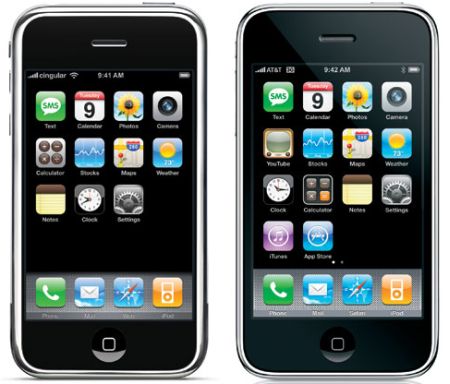
Cocoanetics has noticed something that's become apparent to most iOS developers already: with the advent of iOS 6 in a few weeks, Apple is essentially phasing out support for iOS on the iPhone 3G. Apple is slowly deprecating frameworks that iPhone 3G-compatible apps require from Xcode and app libraries, and the upcoming version of Xcode (4.5, currently in development) specifically states that it does not support armv6 devices or anything below iOS 4.3.

In other words, both the original iPhone and the iPhone 3G have become extremely difficult for iOS developers to support, and by the time iOS 6 rolls around this fall, there will be essentially no reason for devs to try and make sure their apps and games work on the older hardware. While it may be technically possible to maintain separate codebases for newer and older hardware (by running old versions of Xcode), even the largest developers won't have financial reasons to do so.

And the audience likely won't care much anyway. The number of people this affects grows smaller and smaller every day -- most phone contracts last about two years, which means it's been a few generations since the iPhone 3G was released in 2008. And there are a whole lot of new technologies for developers to take advantage of, including iCloud, Automatic Reference Counting, and Storyboard development, that make apps easier and quicker to develop and would never work with the older iPhone models anyway.

Apple's never been accused of sticking with a product for too long -- the company has a reputation for moving on to the newer and better as quickly as possible. For developers, the iPhone 3G is essentially being lowered into the ground for good. Of course, that doesn't mean consumers are obligated to dump them; the existing apps they run will still work.

[Source: TUAW]

Apple Stores matching iPhone discounts from retailers and carriers

If you're in the market for an iPhone right now, you can take advantage of a new price-matching deal that appears to be popping up at Apple retail stores nationwide according to MacRumors.

The program apparently matches price drops that have been announced by carriers -- for instance, Sprint's recent $149.99 price on the 16 GB iPhone 4S. Apple is officially showing pricing at $199/$299/$399 for the iPhone 4S, $99 for the iPhone 4, and free for the iPhone 3GS, and if you purchase an iPhone from the online Apple Store, you'll still pay that price.

But Apple's retail stores have authorization to match discounted prices by cutting prices down $49.01 on all iPhone 4S and iPhone 4 models. In order to take advantage of the discounts you'll need to show the store personnel the ad where you saw the lower pricing.

[Source: TUAW]

WordPress iOS app update brings new UI, features

Talk about timing! Just yesterday, Mike Rose and I were talking about blogging tools on TUAW TV Live and had a discussion about the WordPress iOS app. Today, the WordPress team shipped an update to the iOS app that changes the user interface and adds features that should help power users with multiple WP sites get more work done while mobile.

Version 3.1 of the free WordPress app brings a new look to the universal application. There's a sidebar for quickly navigating through your site, and on the iPad, sliding panels make navigation a piece of cake. The app can now be used in landscape mode, which makes me quite happy as that's the way I prefer to type on the iPhone and iPad. There are allegedly "updated colors and graphics", but if so, they are almost invisible changes.

The iPad has gained the WordPress.com blog reader and the ability to quick-add photos. Rather than needing to "write" a blank post and add an image to it, you can just snap a photo, give it a title and add it immediately to your blog as a photo entry. That's perfect vacation blogs where you want to add a photo and not write a book for every entry.

[Source: TUAW - Read the full story]

Google to pay $22.5 million to settle FTC charges over tracking cookies in Apple's Safari browser

Google has agreed to pay a $22.5 million penalty to settle its dispute with the FTC, over the company's role in bypassing browser settings in Apple's Safari web browser. Although it stated that it wouldn't use tracking cookies or targeted ads in the web browser, a loophole was discovered, violating a previous privacy settlement between the FTC and Google. According to the commission, the company exploited an exception in the browser's default settings, adding a temporary cookie that could temporarily open up access to all cookies from the DoubleClick domain. While the exploit was patched by Google, for a limited time, it was able to track Safari users that had explicitly opted out. The FTC's full statement is right after the break.

[Source: Engadget]

YouTube video editing brings in real-time previews, trims UI down to the basics

YouTube's video editing suite is officially a toddler in human years, so it's about time that it grew a little more beyond learning how to walk and talk. By far the most conspicuous sign of maturity is a new real-time preview that shows edits and filter options as you play -- you'll now know if that effects filter at 1:37 is festive or just gaudy. The overall interface is also a little more buttoned-down with a simpler interface that cuts back on unnecessary clutter. YouTube has been rolling out the editor update in recent hours and may have wrapped up by the time you're reading this, which we'd take as a cue to start producing that streaming masterpiece.

[Source: Engadget]

Microsoft reportedly settles on 'Windows 8' as replacement for 'Metro'

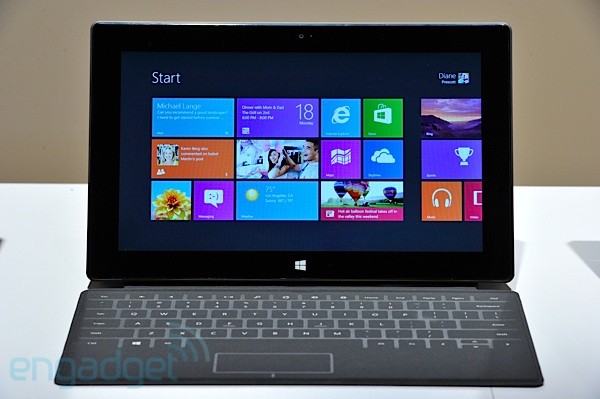
We've already heard that Microsoft was temporarily using "Windows 8-style UI" as a substitute for "Metro" now that the latter is on the outs, and it looks like they may now have a permanent replacement. According to some unnamed sources speaking to ZDNet's Mary Jo Foley, Microsoft has decided to simply use "Windows 8" as a name for all things once known as Metro. That means "Metro-style applications" will now be known as "Windows 8 applications," and that the "Metro user interface" will now be the "Windows 8 user interface." What's more, Foley also notes that the phrase "Windows 8 apps" has already turned up on the promo page for Lenovo's new ThinkPad Tablet 2, which also indicates that the traditional Windows 8 apps will simply be known as "desktop" apps to distinguish the two. We'll keep you posted if we hear more on the change from Microsoft itself.

[Source: Engadget]

Google gives mobile search a makeover for quick-answer queries

If you're looking for flight times, currency conversions, word definitions and more, you'll notice that Google has dressed up the responses in new, Now card type clothing. On top of being prettier, the look is designed to make the data easier to parse and also adds an interactive element -- letting you change a distance or unit when doing metric conversions, for example. Currently the refresh is limited to smartphone and tablet searches, but Google has promised to roll it out soon to desktop searches and international users. The change is part of an ever-evolving list of tweaks and updates to Mountain View's venerable search engine -- check the source for more info.

[Source: Engadget]

T-Mobile UK confirms unlimited tethering won't be available to new Full Monty customers

Well, well, so much for being "truly unlimited," right? As TechRadar adequately reports, T-Mobile UK's confirmed that any new customer looking to snag the Full Monty data plan won't be offered an unlimited tethering feature on their all-you-can-have bundle. Effective immediately, the change is a sudden move from the carrier and it wasn't quite clear as to what made it backpedal on its initial "unlimited" promise, only saying, "From 8th August, tethering is not permitted for new customers under the terms and conditions of the Full Monty." Surely this is a small blow to UKers hoping to grab the Full Monty for the all-out tethering alone -- but hey, at least you've still got the data, texts and calls.

[Source: Engadget]