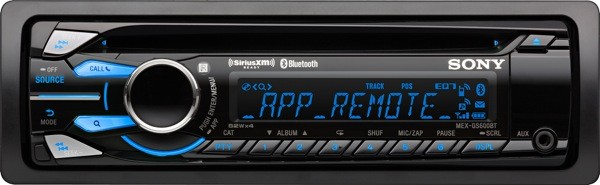
Sony unveils in-car receivers with App Remote, taps into your smartphone music from October

Sony has been big on smartphone integration for car audio lately, having already launched its MirrorLink receivers earlier in the year for the more well-heeled drivers among us. The company is bringing that mobile tie-in down to Earth through a new quartet of in-car CD receivers. The MEX-GS600BT, MEX-BT4100P, MEX-BT3100P and CDX-GS500R all bring in App Remote, which lets the faceplate buttons steer local music or Pandora streaming radio coming from Android, BlackBerry, iOS and Walkman devices paired through a Bluetooth wireless link. The old-fashioned USB connection is still on offer for these and the HD Radio-toting CDX-GT710HD, while the whole collection can graft on the optional SXV200V1 tuner to carry the full Sirius XM satellite radio lineup. Differences across the line aren't completely clear from Sony's wording, although both the MEX-GS600BT and CDX-GS500R carry two USB ports as well as 5-volt RCA preamp outputs. You'll be waiting awhile to slip any of these receivers into a DIN slot, regardless of which one you pick: the GS500R ships in October for $199, and the rest hit the shops in November for between $149 to $249.

[Source: Engadget]

Kno textbooks arrive on Android with the Galaxy Note 10.1, take on a social side

Kno's post-hardware textbook platform has called the iPad its only tablet home for more than a year; it's about to spread its wings. Starting with a bundled presence on the Galaxy Note 10.1, Kno is an option for K-12 and college students who'd rather go the Android route. While all the 3D, note-taking and navigation features remain the same, there's an obvious selling point in supporting the S Pen (and hopefully other pens) to more directly put thoughts to virtual paper -- or, let's admit it, doodle in the margins. All of us, Android and otherwise, get a new Social Sharing component that lets us crib each other's notes before the big exam. We're still waiting on Kno for other Android devices as well as the already-promised Windows 7 support, but it's hard not to appreciate at least a little more variety in our digital learning.

[Source: Engadget]

Fujitsu's Stylistic M532 quad-core tablet ships to the US with toughened body, dash of security

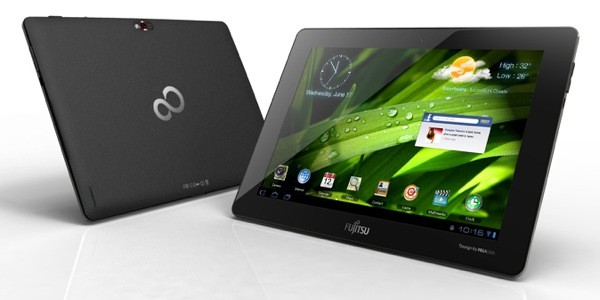
Fujitsu's Stylistic M532 has had a protracted development process that saw it appear on our radar as early as January; imagine our surprise after it ships to the US with barely more than a knock on the door. Now that it's here, it looks to be on the sunnier side of average for an Android 4.0 slate. A quad 1.4GHz Tegra 3, a 1,280 x 800 display and 32GB of built-in space won't rock our world in mid-2012, but the rough-and-ready among us will likely appreciate the military-spec abuse tolerances and support for optional Absolute CompuTrace theft tracking, just in case it's pilfered from an open bag. Fujitsu's obstacles? Apart from not having much of a cachet in the tablet arena, the company also has to convince buyers that the extra safeguards are worth a $549 price -- for those who treat their tablets more delicately, there are a few tempting alternatives.

[Source: Engadget]

RIM confirms BB10 standard screen resolutions for touch and keyboard devices

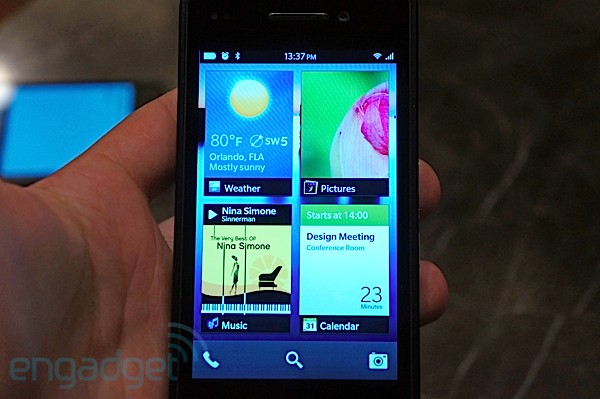
RIM took some time out from its worldwide tour to confirm that it's standardizing screen resolutions for BB10. Tim Neil took to the company's developer blog to say that forthcoming full-touch devices will ship with 1,280 x 720 displays, while keyboard-style phones would pack 720 x 720 screens. The only handset that won't play by these rules is the first (presumably flagship) BB10 handset, since it's too late to change its 1,280 x 768 screen. The company's urging developers to get tweaking to ensure apps run properly on the new gear -- or add letterboxing to offer a Sergio Leone feel to your mobile gaming.

[Source: Engadget]

Xiaomi Phone 2 now official: 4.3-inch 720p IPS, quad core and Jelly Bean for just $310

At last, no more secrets. Announced in Beijing just now is the Xiaomi Phone 2, and with the exception of the appearance, most of the specs match the many leaks we've come across: 4.3-inch 720p IPS display by Sharp, Qualcomm's Snapdragon S4 Pro APQ8064 quad-core chip, 2GB RAM and 16GB memory. To power this beast, Xiaomi's throwing in a 2,000mAh cell, but you can also purchase a 3,000mAh version if you don't mind the extra 2mm thickness on the phone. As for photography, you get a 28mm two-megapixel imager at the front along with a 27mm F2.0 eight-megapixel BSI camera on the back -- we saw some stunning untouched shots from the latter at the launch event.

The good news doesn't stop there. On the software front Xiaomi's decided to jump straight to Android Jelly Bean for the phone's MIUI ROM, which itself packs several new features as well. Just to name a few: enhanced security, phone finder, Chinese voice assistant (apparently with 85 percent comprehension accuracy), more interactive themes and 5GB of cloud storage service with online client.

As you can already see, all of this will cost just ¥1,999 (about $310) -- the same as the original Xiaomi Phone announced this time last year -- when it launches in October, and local carriers China Unicom plus China Telecom will also be offering the DC-HSPA+ handset at subsidized prices. Interestingly, Xiaomi co-founder Lei Jun even admitted on the stage that the phone's raw cost is ¥2,350 ($370) per unit, so hopefully it'll go down sooner than later for his sake. But if ¥1,999 is still too much, there's also the¥1,499 ($235) Xiaomi Phone 1S which, as we've already seen, is very much just the original Xiaomi but bumped up from 1.5GHz to 1.7GHz, along with a front-facing camera.

[Source: Engadget - Read the full story]

Creative reveals Sound Blaster ZxR, Zx, and Z PCI-Express sound cards, pumps up the volume

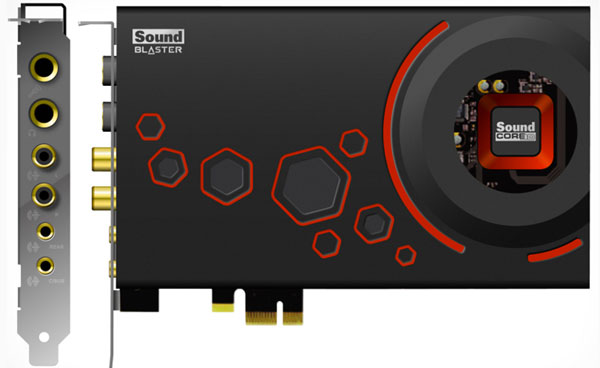
Along with your first day at school, and (for the boys at least) growing your first peach fuzz mustache, many of you might also never forget your first Sound Blaster soundcard. In the present day (unless you're blessed with youth) only the Sound Blaster can be enjoyed again, and today Creative introduces its new Z-series. The latest PCI-Express cards use the firm's Core3D quad-core sound and voice processor and come in three variants: the Sound Blaster ZxR, the Zx and the Z. As you might have guessed, the more letters, the higher up the food chain it is. The flagship ZxR ($249.99) boasts a 127dB SNR, sockets for swappable Op-Amps, 80mW into 600 ohm headphone pre-amp, plus RCA / optical connectivity (via additional daughter board) and an external "ACM" control module for less fiddling around the back of your machine. You can save yourself $100 with the Zx model, if you don't want the ZxR's "DBpro" daughter board, and the Z edition saves a further $50 at the expense of the external controller. Want to dive into the full specifications? Plug in to the PR after the break.

[Source: Engadget]

More than $60,000 worth of ‘computers and personal items’ stolen from Steve Jobs home

According to a report from MercuryNewssuspects are now in custody for the recent burglary of the Silicon Valley home of Steve Jobs that contained more than $60,000 worth of computers and personal items:

The deceased Apple co-founder’s home on the 2100 block of Waverley Street in Palo Alto was burglarized July 17, said Santa Clara County Deputy District Attorney Tom Flattery, a member of the high-technology crimes unit…More than $60,000 worth of “computers and personal items” were allegedly stolen, but Flattery declined to say whether they belonged to Jobs, who died last year at the age of 56, or another family member.

Weeks after the burglary on July 17, police arrested Kariem McFarlin, 35, who is currently in jail on $500,000 bail, but other specific details regarding the crime are not available. We know that Laurene Powell Jobs and family were likely not living in the home at the time of the robbery, as during July the property was undergoing renovations with construction barricades and scaffolding surrounding the house.

[Source: 9to5Mac]

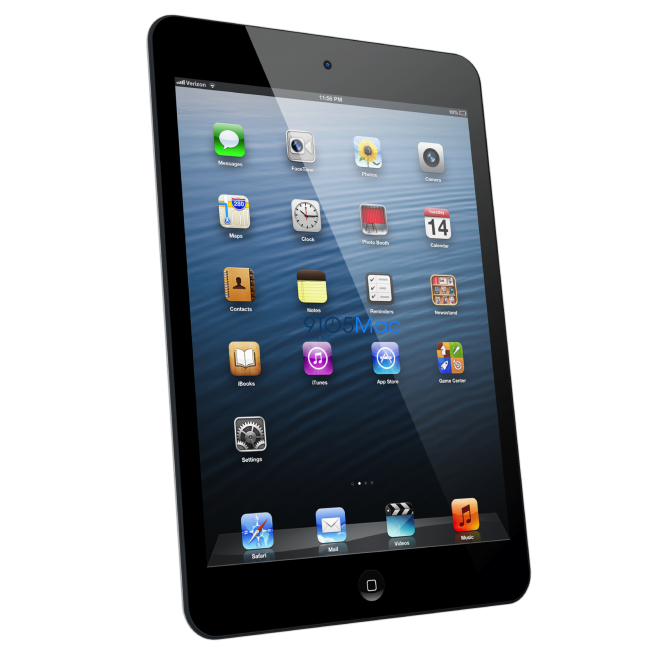
iPad mini will look like a large iPod touch with smaller side bezels

We received a number of tips over the last few weeks from sources that we have reason to believe hold knowledge about Apple’s plans on the upcoming iPad mini. A recurring theme of late is that the iPad mini will “look like a big iPod touch” with smaller bezels along the sides in portrait mode and separate volume buttons and not a “rocker” and a mic on the back.

In addition, we received a number of different iPad mini back plates with the best quality being these from case maker Devicewear.

[Source: 9to5Mac - Read the full story]

The upcoming iPad mini rendered in 3D based on reports and leaked schematics

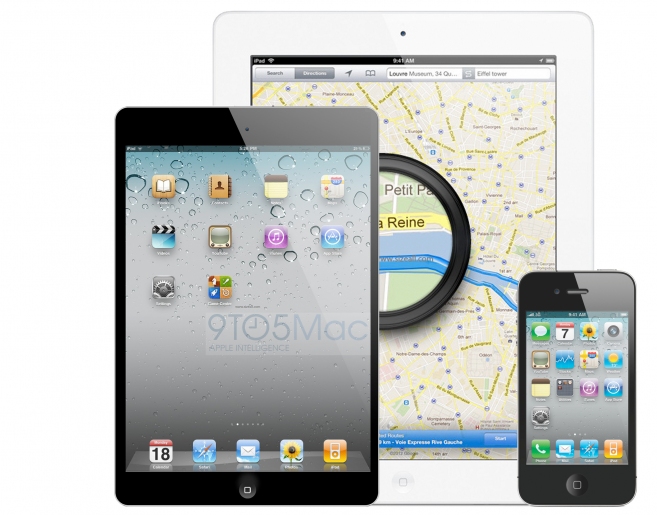
Following our report yesterday with information about the iPad mini’s design, specifically that the iPad mini would look like a larger iPod touch (with skinnier bezels than the full-sized iPad), we’ve made some 3D renders.

These renders, courtesy of designer Maurizio Vitale, are based off of our reported information. More importantly, however, is that these renders are also based off of the leaked iPad mini schematics from July, which basically match our information from sources.

The height, width, screen-size, and more were all calculated based on those aforementioned schematics. Better yet, we’ve also got an iPad mini render that compares the device in size to the current Retina display iPad with a 9.7-inch display. That comparison is also based on the dimensions garnered from the schematics.

[Source: 9to5Mac]

Apple in talks with cable operators to use Apple TV device as set-top-box

The Wall Street Journal reports that Apple is in talks with cable television operators to use an Apple TV device as a set-top-box. Instead of Apple building their own TV show database to compete with the cable operators – as Apple has discussed with show creators in the past – this approach would simply plug cable operators to televisions via an Apple device.

The report says that Apple’s plans with cable TV networks aren’t necessarily for the current Apple TV $99 box. The plans could be for a future version of Apple’s current device, or for the much-rumored Apple Television set.

Two people briefed on the matter said the technology involved could ultimately be embedded in a television. Apple has worked on prototypes for televisions in the past, according to people briefed on the projects.

Additionally, the report says that Apple has not yet come to any agreements with any cable TV operators.

[Source: 9to5Mac - Read the full story]

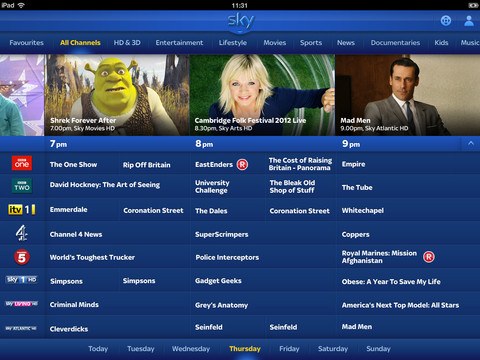
Sky+ iPad app update brings remote control and DVR scheduling

After being teased earlier in the year, v4.0 of the Sky+ app for iPad has arrived in the UK and brought a number of new features to subscriber's tablets. Now, it can be used as a remote control to change channels or select DVR functions, as well as view scheduled recordings and add to or change them, or just browse the TV guide's new look. Even with the changes however, Sky has more planned for later this summer when it will integrate zeebox technology to bring second screen features and data to accompany live TV. The free app is up in iTunes now, however customers will need the latest HD guide upgrade on their cable box that's connected to the same local network as the iPad to make it all work. There's a quick demo video of the new features embedded after the break plus more official information on the Sky website.

[Source: Engadget]

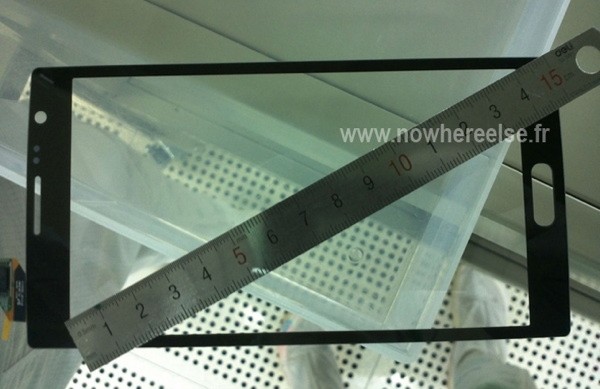
Potential Samsung Galaxy Note 2 bezel gets snapped, measured at 5.5 inches

Here's an image purporting to be of the Galaxy Note 2's bezel, and if it's a fake, it's a very good one. Taken by a (sharper-than-usual) blurrycam snapper wearing factory-style dust booties, the hardware suggests a chunky, squared-off design for the second-generation phablet that rejects the Galaxy S III'smore curvaceous body. The ruler draped from corner-to-corner jibes with earlier rumors that it would have a slightly expanded 5.5-inch canvas for your S-Pen fun. We just have one question: does that photo make it look curved along the horizontal axis, or is the loose component just bendy?

[Source: Engadget]