Apple extends Seagate drive replacement program for iMacs

As noted by MacRumors, Apple's extended service program for iMacs with 1TB Seagate internal hard drives was updated late last week to include iMacs manufactured as far back as October 2009. The program, launched in the summer of 2011, originally covered only machines made during a narrow window of that year. Drives can be replaced at the Apple Store, by an Apple Authorized Service Provider or by Apple Technical Support.

Apple has also extended the duration of this program more than once, and now will cover iMac hard drive replacements with affected drives for three years after the original retail purchase date or until April 12, 2013, whichever ends up providing longer coverage for the computer. You can check if your machine might be affected by entering your serial number on the program page. Of course, you'll need to back up your data prior to replacement, and you may need your OS installer discs depending on how you plan to restore your machine.

Seagate's had past problems with drive reliability, including a firmware flaw that resulted in data loss.

[Source: TUAW]
iOS 6 tethered jailbreak updated with official Cydia, quicker installation for your A4-packing device

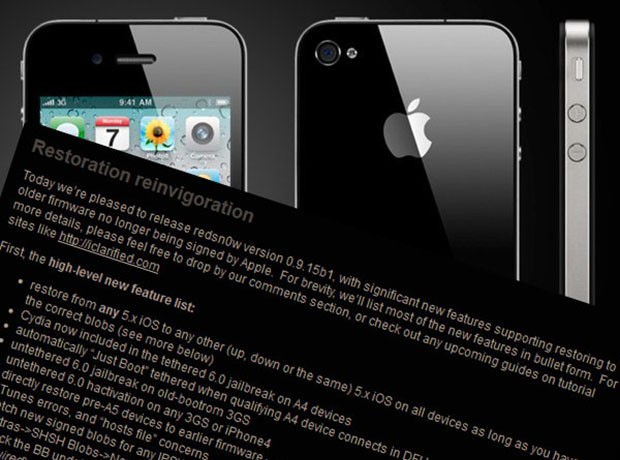
The iPhone Dev-Team has just outed a new version of Redsnow that opens up iOS 6 to an official version of the sinful, definitely-not-Apple Cydia store, but you'll still have to be tethered to use it. The process is now simpler, as the latest version recognizes your already-installed iOS 6 OS and installs only the necessary jailbreak files, and Cydia is now installed automatically as well -- rather than needing a complex workaround like the last version. If you're willing to put up with the tethering and have an A4-powered iPhone 4, 3GS or gen-4 iPod touch device, the laundry list of how to do it is at the source below -- but there's always the risk of bricking, so caveat emptor, of course.

[Source: Engadget]

Raspberry Pi Model B gets RAM boost to 512MB, keeps $35 price tag

So you got your Raspberry Pi all set up, you overclocked it and you even made it run Atari 2600 games. But then, it seems, many you wrote to the UK-based outfit to complain about the fixed 256MB of RAM. Indeed, the budget mini PC maker says that requests for a memory upgrade have been among "the most common suggestions" it's received since it launched the device. However, rather than introduce a pricier version, the company has decided to offer 512MB as standard with all future Model Bs (including all current and outstanding orders), while sticking to the original $35 price tag. Good news? Sure, even if your current unit just got relegated to secondary secondary PC status.

[Source: Engadget]

Felix Baumgarter breaks YouTube record as 8 million viewers watch his space jump

Felix Baumgartner might not have broken Joe Kittinger's world record for the longest time spent in freefall, but he did smash a fourth milestone during his dive. In addition to records for the highest ever jump, longest distance fall and fastest downward speed, the stunt was watched by eight million YouTubers at the same time. While the site hasn't divulged exact stats, that figure is apparently higher than those who watched President Obama's inauguration. That said, if you weren't one of the eight million, you can head on past the break to watch the highlights reel -- unless you're already bored of watching a man fall, unaided, you know, from space.

[Source: Engadget]

Apple Posts New iPod Television Ad: 'Bounce'

With the new iPods shipping, Apple has posted their television ad for the new iPod touch, nano and shuffle. The ad premiered during the media event introducing the new iPods. The iPod touch now carries the taller 4" screen and comes in several different colors. The new iPod nano is radically redesigned with a 2.5" multi-touch screen and front home button. Finally the iPod Shuffle was upgraded with new color choices.


[Source: MacRumors]

Apple Hires Key Chip Designer from Samsung

The Wall Street Journal reports that former AMD chip designer and executive Jim Mergard has now moved to Apple after a brief stint at Samsung, marking a significant talent win for Apple in its efforts to build its own chips.

The gadget maker has hired Jim Mergard, a 16-year veteran of Advanced Micro Devices who was a vice president and chief engineer there before he left for Samsung. He is known for playing a leading role in the development of a high-profile AMD chip that carried the code name Brazos and was designed for low-end portable computers. [...] 

It is not clear whether Mergard will work at Apple’s Cupertino, Calif., headquarters or remain in Austin, where he worked for AMD and Samsung. Apple has long operated a customer support center in the Texas capitol, but the company has had a local presence in chip design as well since its 2010 purchase of the startup Intrinsity.

The report quotes former AMD executive Patrick Moorhead as saying that Mergard has expertise in both PC chip design and system-on-a-chip design such as that used for Apple's iOS devices. The company uses ARM-based designs for its A-series chips that power its iOS devices, and the new A6 chip found in the iPhone 5 appears to be Apple's first custom design

Apple and Samsung of course have a complicated relationship, with the two rivals competing fiercely in the marketplace and the courtroom even as Samsung is one of Apple's primary suppliers. Apple's ARM-based chips are key components that are currently manufactured by Samsung.

[Source: MacRumors]

Apple offers targeted ad opt-out

Targeted ads present you with advertising keyed to your interests and history. If you're an Amazon customer, you've likely received emails related to your recent browsing choices. Gmail ads are based on your Google account contents. Apple is no different. iAds tracks you and offers ads that best match your profile.

Apple offers an opt-out choice if you'd rather be served random ads from their iAds service. To use it, first visit http://oo.apple.com from your device. Then set the switch from ON to OFF. You'll be asked to confirm. Tap the red "Opt Out"button.

When disabled, you'll still see iAds. However, these will not be tied to you or your specific interests in any way.

If at some time you feel the need to return to the previous state of things, you can always revisit the Opt Out page and update your settings.

[Source: TUAW]

Verizon confirms Motorola RAZR HD and RAZR MAXX HD available October 18th

When Verizon said the RAZR HD and RAZR MAXX HD would be out before the holidays, it wasn't kidding. October the 18th is the big day if you're after some of the sharp-sounding Motorola action. The 8-megapixel, NFC-enabled RAZR HD , if you recall, sports a 4.7-inch 720p display, running ICS (Jelly Bean update in the works) on that dual-core S4 chip. If you cast your memory back once more, you'll remember that the RAZR MAXX HD has the same sized screen, but the real killer feature is that 3,300 mAh battery. The RAZR HD will set you back $200, in either black or white with 16GB storage, the MAXX, however will run you an extra $100, and has double the storage. So, which one gets your money?

[Source: Engadget]

Samsung announces Galaxy S III mini: 4-inch Super AMOLED display, 1GHz dual-core CPU, NFC

Samsung has just announced the Galaxy S III mini, a 4-inch David version of its Goliath big brother -- will it be worthy of its name? The rumor mill churned out that it might be a dumbed down version, but an oblique comment by mobile head JK Shin suggests otherwise -- either way, we're on the scene in Frankfurt, Germany to give you the long (and short) of it. According to the spec sheet we just received, this Android 4.1 phone features a dual-core 1GHz chip (which is good news for the 1,500mAh battery), 1GB RAM, 8 or 16GB of internal storage plus an extra 32GB maximum via microSD. The 4-inch Super AMOLED screen comes with a WVGA resolution, while the main camera takes five-megapixel photos plus 720p video, and there's a VGA front-facing camera as well for fans of video chats. There's obviously the usual bundle of radios as well, including 802.11a/b/g/n WiFi, GPS, GLONASS, FM radio, Bluetooth 4.0 (LE) and even NFC, but for now, this 111.5-gram TouchWiz device will only support HSPA 900/1900/2100 networks along with EDGE 850/900/1800/1900.

[Source: Engadget]

Microsoft Office 2013 releases to manufacturing, reaches most of us early next year

Break out the party streamers and balloons -- if only in an orderly fashion, because this is the day Office 2013 has been released to manufacturing. The completion swings Microsoft's attention towards a rollout staggered over the next few months. Wider availability will have to wait until the first quarter of 2013 -- such synchronicity with your branding, Microsoft -- but companies who've sprung for volume licensing will get access as early as mid-November to December 1st, depending on whether or not they're embracing a Software Assurance plan. In the meantime, Microsoft is offering an easy path for anxious workers by promising a free copy of Office 2013 to everyone who buys Office 2010 from October 19th onwards. The upgraded software might not be cheap for those who aren't already buying a Windows RT tablet, but it's likely to be an important piece of the puzzle for anyone hunting down a touchscreen Windows 8 PC.

[Source: Engadget]

Ubuntu One reaches Mac in beta, completes the cloud storage circle

For all of the many directions Ubuntu One's cloud storage has gone, it hasn't headed the Mac's way. Official clients have been the province of Linux devotees (naturally, Ubuntu is recommended) and their Windows friends across the aisle. A newly available Mac beta puts all three major desktop platforms on an even keel, very literally -- the OS X port is almost identical to what you'd get in Linux or Windows, including a few rough points where other interface concepts clash. Still, the Ubuntu One test build has a handy Mac-specific menu bar item, and it's one of the few cloud options that will natively support both the Ubuntu box in your den and the MacBook Pro in your bag. Grab your copy at the source link if you can deal with a few unfinished elements.

[Source: Engadget]

Apple files patent application for fingerprint sensor that can be transparent or opaque

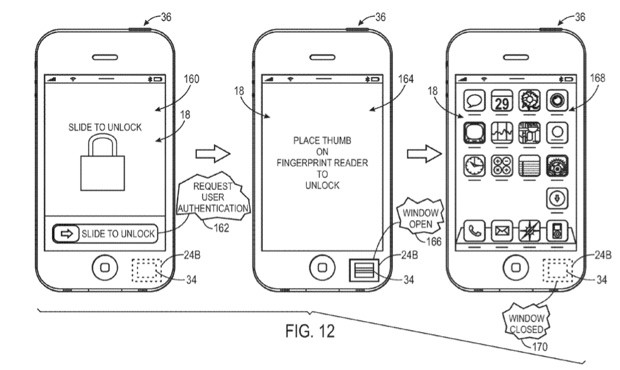
While Apple has flirted with biometric-based patents before, we've yet to see them implemented in real-world technology. That hasn't stopped it from filing yet another one though, as the latest application reveals a fingerprint sensor apparently embedded into the iPhone itself. The patent describes a hardware "window" that can become selectively "transparent or opaque." When transparent, it would reveal a component comprised of an "image capture device, a strobe flash, a biometric sensor, a light sensor, a proximity sensor, or a solar panel, or a combination thereof" as a method of unlocking the phone. According to the filing, the biometric sensor in question might indeed be a fingerprint reader. The document goes on to describe an alternative method using face or eye recognition technology that can be used not just for security purposes, but for possible e-commerce solutions like completing an online transaction. Of course, take any of these patent applications with a generous pinch of salt -- we haven't seen an Apple stylus yet, for example -- but perhaps this is the reason Apple bought fingerprint sensor maker AuthenTec back in July.

[Source: Engadget]