Samsung will update US Galaxy S III devices to Jelly Bean 'in the coming months'


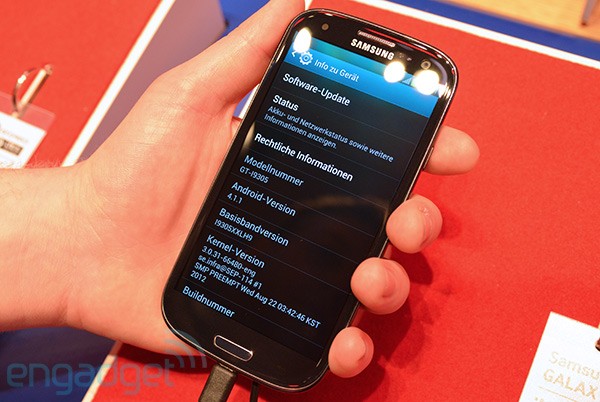
The about screen on your US Samsung Galaxy S III may look a lot like the one above in the near future (albeit in English). Samsung has officially announced its intention to make an upgrade to Jelly Bean available to stateside versions of the company's flagship, though it left out one very important detail: the actual date. Instead, all we know at this point is that an upgrade to Android 4.1 will be offered OTA and via Kies sometime in the coming months. Why so vague? It's likely because Samsung is now at the mercy of each individual carrier to finish testing the new version of Android on the GS3 before unleashing it to the public. The refresh will deliver some TouchWiz-based enhancements like Blocking Mode, Easy Mode and a few new camera settings, as well as the usual suite of Jelly Bean improvements like Google Now and expandable notifications. Head below to check out the press release, which offers a more detailed list of what to expect.


[Source: Engadget]

CloudOn announces new features, worldwide availability on iOS and Android

Having already conquered over 70 countries in its relatively short history, CloudOn decided it was now time to make its handy cloud-based tools available to all Android and iOS users around the globe. Aside from announcing its worldwide invasion, CloudOn's also outed version 2.5 of its application on Google and Apple's mobile platforms, bringing with it a slew of new traits into the mix -- among these are a FileSpace for "real-time context around any document," the ability to add single-tap annotations to Word, Excel or PowerPoint files, an all-new ribbon that's enhanced for tablet use and, naturally, universal language support. It's worth noting that while all of these novel features will be available on Android / iOS at some point, the former two are currently only compatible with Cupertino's devices -- however, CloudOn has told us the missing goods will be making their way to the other side very soon. We're not exactly sure when that's going to be, but if you're still interested in grabbing the app, you'll find the necessary download links below.

[Source: Engadget]

Google introduces Maps Tracks and Geolocation APIs, awaits your next location-enabled application

In its never-ending quest to dominate the global mapping scene, Google has just rolled out a new pair of APIs designed to help organizations build their own location-enabled applications. The first is Google Maps Tracks API, which gives developers the ability to concoct apps that can store, display and analyze GPS data on a map. In other words, those in need of a geofencing program -- fleet managers and the like -- need look no further. Secondly, there's the Google Maps Geolocation API, which "enables an application or device to determine its own location without the use of GPS by looking up the locations of nearby WiFi access points and cell towers." It's pretty clear that enterprises are the target here, but it seems like only a matter of time before consumer-facing location apps tap into 'em. After all, the world needs more indoor mall apps. Fact.

[Source: Engadget]

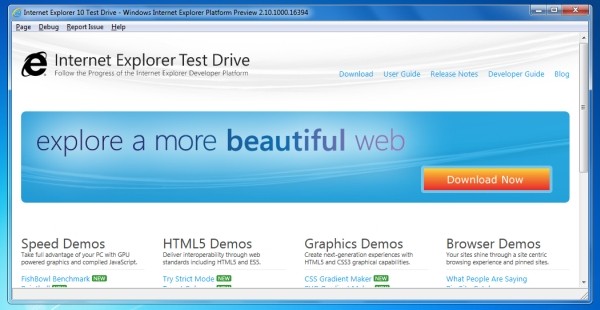
Internet Explorer 10 preview coming to Windows 7 semi-Luddites in mid-November

For all of Microsoft's talk of Internet Explorer 10 on Windows 8, we've heard precious little about the Windows 7 version beyond the certainty that it was coming. Eventually. Someday. The company is partly putting that anxiety to bed with word that IE 10 should be available for the Metrophobic in mid-November, but only in a preview version -- a possible sign that Microsoft's Windows 8 RTM deadline prevented the concurrent platform releases we've grown accustomed to in recent years. The team in Redmond is hinging its launch of a finished Windows 7 build on the feedback it gets, so we'd suggest that those willing to experiment with a new browser (but not a new OS) still give IE 10 a shot next month.

[Source: Engadget]

Apple announces 'Special Event' for October 23rd

Apple has just invited members of the press to attend a product launch on October 23rd, where we assume the long-rumored iPad mini will be unveiled. The event will go down merely weeks after Apple took the wraps off of the iPhone 5 (and strangely enough, the Foo Fighters played their last show for the foreseeable future). It's quite unlike Apple to throw two product parties in the fall, but if an entirely new iPad is being revealed, it may be a scenario that becomes more familiar in years to come. At this point, we're left with far more questions than answers: will the iPad mini really ship with a Lightning port, while the Retina iPad -- which was only introduced in March -- continues to ship with the "old" Dock Connector? Will Apple really continue to refresh its two iPad products at different intervals? Will the (presumed) AT&T iPad mini actually include mobile hotspot functionality?

And while we're at it, is Apple really going to throw a "one more thing" into the mix by bumping its 13-inch MacBook Pro into Retina territory? After all, tossing "little" into the invite could allude to a smaller iPad and an update to an already-small laptop. We'll be there to bring you the blow-by-blow as it happens, so feel free to go ahead and take next Tuesday off. We'll sign the approval form.

[Source: Engadget]

Microsoft reportedly building up to 5 million Surface tablets for the fall

Just how confident is Microsoft that its Surface tablets will take off? To the tune of 3 to 5 million units shipped in the fall alone, according to the Wall Street Journal's supplier contacts. While that wouldn't be much when Apple already ships more than three times as many iPads, even discounting the supposed 10 million tiny iPads coming this fall, it would represent a strong start for a company that's only just dipping its toes into own-brand computing. Microsoft isn't confirming any numbers at this stage, but the large production volume might explain that Busby Berkeley-style TV ad -- you'd want a full song and dance routine if you had that many Surfaces to sell.

[Source: Engadget]

Google revamps Developer Console for Google Play, eases tracking Android app ratings over time

Android developers need as much tender loving care for their interfaces as the users, don't they? Google thinks so, as it just reworked Google Play's Developer Console to offer a more direct, faster loading design. Along with scaling elegantly to let app writers see and manage many releases at a glance, the makeover gives developers a much more refined historical breakdown of app ratings. Creators can filter the star count through Android versions, carriers, countries, language, updates and even specific devices -- if you're convinced adding Kyocera Echo support was the ticket to improved ratings, you might have a chance to prove it. For anyone who isn't that determined to keep everyone happy, there's still a simplified publishing process and automatic translations for app descriptions in the store. Developers comfortable with a few limits on APK bundles can try the new console in a rough but mostly ready state ahead of its wider launch in the near future.

[Source: Engadget]

EU regulators urge Google to modify privacy policy, offers 12 recommendations (update: statement from Google)

It wasn't all that long after Google consolidated most of its privacy policies before people wanted clarification on what this meant to users. Even then, EU regulators weren't satisfied, asking the search giant to hold up a little while it took a proper look at the implications for European citizens. The result of that investigation? Well, Justice Commissioner Viviane Reding previously declared it to be in breach of European law, and now the EU is commanding that it be reexamined. The assertion comes in a letter to Mountain View from the EU's data protection regulators, who feel that consolidating so much personal data into one place creates untenable risks to privacy, and was signed by 24 member states (plus Liechtenstein and Croatia). The regulators also outlined 12 recommendations for Google to follow to bring its policy back to the favorable side of the fence. No official word from Google at this time, but we've reached out for comment.

Update: Peter Fleischer, Google's global privacy counsel issued the following statement: "We have received the report and are reviewing it now. Our new privacy policy demonstrates our long-standing commitment to protecting our users' information and creating great products. We are confident that our privacy notices respect European law."

[Source: Engadget]

Logitech announces $200 Broadcaster WiFi webcam for iPhone, iPad and Mac

After trying (and failing) to surreptitiously shepherd it through the FCC, then seeing it leak out anyway, Logitech has formally outed the HD WiFi Broadcaster webcam. The 720P shooter (not 1080p as we hoped) allows wireless transmission from 50 feet away to any Mac computer, iPhone or iPad, instant broadcasting on Ustream and the ability to toggle between your device or computer's built in camera with a button push. The hard plastic carrying case with a magnetic lid doubles as a stand to elevate the cam, which Logitech says will "play nicely" with apps like iMovie, Final Cut Pro and FaceTime. Broadcaster is already up for preorder for $200 in the US and 180 in Europe.

[Source: Engadget]

Microsoft puts a price on Surface RT: starts at $499, or $599 with Touch Cover

With a stamp from the FCC on its passport, and some fancy new TV ads, the smell of Microsoft's Surface tablet is thick in the air. Until now, however, price has been a mystery. Microsoft has just revealed, via its own store, that if you want a slice for yourself, you can do so starting from $499. That price will get you the 32GB version, without the touch cover, with pre-orders available now, penciled in for a 26th of October delivery date. If you must have that cover, it'll set you back another $100, and the same amount again if you want to hop up to 64GB of memory. With the current status of the larger-memory version showing as out of stock though, those with a thirst for storage still might have to wait a little longer.

Update: It looks like Microsoft might have pulled the listing for now. Perhaps the pages weren't meant for prime-time just yet.

[Source: Engadget]

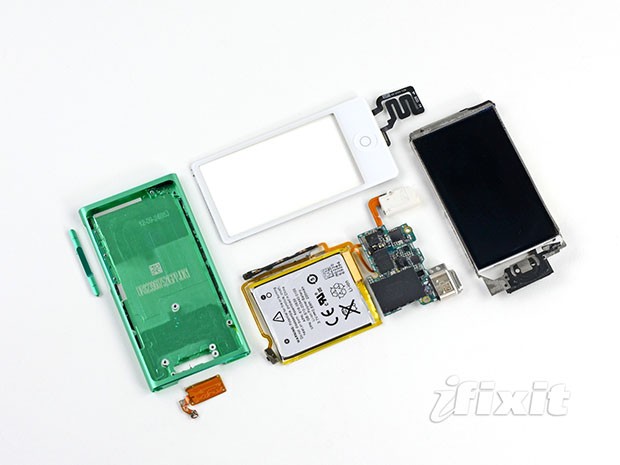
iPod nano hits iFixit's dissection slab, rated so-so on the repairability scale

Tearing down a device the size of an iPod nano is definitely not for the faint of heart (or shaky of hand), but none of that deters iFixit, who just tackled Apple's latest pint-sized player. We called it the best nano so far, but if the tiny iPod with newfound Nike+ functionality calls it quits, can you do something about it yourself, or will it need to be binned or go back to the repair depot? iFixit is torn on the device, saying that it's easy to take apart and replace the LCD or digitizer glass, but that the battery is glued solidly to the chassis, and other important parts like the Lightning connector are soldered together. That makes the replacement of those components nigh-on impossible, resulting in a repairability score of 5/10 for the device -- not that we'd be brave enough to crack it open ourselves.

[Source: Engadget]


Adobe Reader for iOS and Android updated with cloud storage support

On Monday, Adobe dropped details for an update to its iOS and Android versions of Reader. The most noteworthy enhancement here is the introduction of cloud file storage with Acrobat.com, which allows users to view and edit documents seamlessly across mobile and desktop devices, à la Google Docs Google Drive. Reader Mobile has also gained FormsCentral data support, improved selecting and highlighting of Asian text, and mobile document rights management with secure watermark support. If Android is your mobile platform of choice and you'd like to give these new features a spin, head on over to Google Playto claim your prize. iPhone owners, on the other hand, have a bit of a wait ahead of them. The update is still awaiting Apple's approval before hitting the App Store.

[Source: Engadget]