Microsoft 'retiring' Facebook and Twitter Xbox 360 Dashboard apps

Eagle-eyed gamers may have already noticed that the Xbox 360's dedicated Twitter and Facebook appshave gone missing after the latest Dashboard update, and now Redmond has confirmed it's put the applications out to pasture. According to a Microsoft representative that spoke to IGN, the firm is "retiring the Facebook and Twitter apps" as it works to streamline functionality. When asked if the pair of apps will ever make a comeback, Ballmer and Co. didn't comment. Still crave to update your friends on your latest gaming exploits through the console? Spreading the news on the digital grapevine is still possible, but you'll have to access the social networks through the freshly added Internet Explorer app -- an experience we hope Xbox SmartGlass will improve.

[Source: Engadget]

13-inch MacBook Pro with Retina display reportedly seen with 2,560 x 1,600 LCD, dual Thunderbolt ports

We hope you didn't want Apple's little event next week to be a complete surprise. After promises of extra details for a prior leak, a WeiPhone forum goer has returned with photos of what's supposed to be the active screen and ports of the 13-inch MacBook Pro with Retina display that might be on stage come October 23rd. If this is what we get alongside the similarly unofficial miniature iPad, we'll take it. The possible leak shows a 2,560 x 1,600 LCD (four times higher in resolution than the existing MacBook Pro) and, importantly, no sacrifices in expansion versus the 15-inch Retina model -- there's still the dual Thunderbolt ports and HDMI video that shipped with this system's bigger brother. Vital details like the performance and price are left out, so there's a few cards left off Apple's table, but the images hint at what could be a tempting balance between the 15-inch MacBook Pro's grunt and the MacBook Air's grace.

[Source: Engadget]

TweetBot for Mac reaches the Mac App Store, keeps the 3rd-party Twitter client flame alive

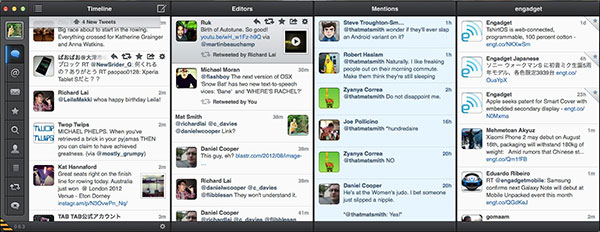
When Twitter put out its strict new API guidelines, there was some doubt as to whether or not third-party clients like Tapbots' Tweetbot for Mac would even make the cut -- the user caps and other curbs on unofficial apps potentially made it tough to develop competition around a different (and possibly better) experience. That makes today's official appearance of Tweetbot in the Mac App Store as much symbolic as it is practical. While there won't be many significant shocks for those who've been participating in Tweetbot's alpha and beta stages, the finished version gives everyone running OS X Mountain Lion a major and sometimes more advanced alternative to official choices, such as TweetDeck, as well as existing third-party options like Twitterrific. A $20 price doesn't make Tweetbot the cheapest way to buck convention by any means, but it might be worth the investment if you're already committed to Tapbots' iOS apps or want to make a statement on the value of third parties in an ecosystem.

[Source: Engadget]

UK carriers form alliance to speed up 800MHz LTE rollout, let us enjoy our Freeview TV

Isn't it better when we work together? British carriers think so. EE, O2, Three and Vodafone have officially created a non-exclusive joint venture, Digital Mobile Spectrum Limited, that should speed up the deployment of 800MHz LTE by keeping Freeview over-the-air TV signals clear of interference while the partners bring their low-frequency 4G online. Previously, the networks were bound to form an equivalent company called MitCo that wouldn't have been active until after the 800MHz auction, preventing companies from getting their wireless houses in order until they'd already made a commitment. There's also a competitive angle involved to go with the cooperative work, as you might imagine: with EE's 1,800MHz LTE poised to go live on October 30th, choosing infighting over assistance would only help widen the frontrunner's lead. Whether DMSL represents altruism or pragmatism, we'll appreciate knowing that the hurdles to a catch-up in UK 4G will be more those of the technical reality than the usual political maneuvering.

[Source: Engadget]

Apple says no Java for you, removes plugin from browsers on OS X 10.7 and up

Apple has recently released a Mac update for OS X Lion and Mountain Lion that removes its Java plugin from all OS X browsers. If you install the update, you'll find a region labeled "Missing plug-in" in place of a Java applet; of course, Apple can't stop you from clicking on it to download a Java plug-in directly from Oracle. The Cupertino-based company had previously halted pre-installing Java in OS X partially due to the exploitable factors of the platform, so this update signifies further distancing from Larry Ellison's pride and joy.

[Source: Engadget]

Ubuntu 12.10 launches with web apps and search, Canonical plans for more secretive 13.04 development

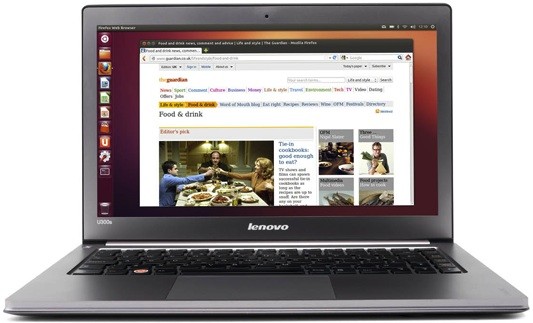
An Ubuntu release is always a momentous occasion for a large portion of the Linux community, although it's coming with a mild share of controversy this time around. Ubuntu 12.10 (Quantal Quetzal) is finished and brings with it support for pinning web apps to the Launcher as well as search that includes web results, detailed photo results and quick previews. They're all appreciated upgrades -- what's raising hackles is the development strategy for 13.04, or Raring Ringtail. Company head Mark Shuttleworth wants a "skunkworks" approach that will silence pre-release discussion of some features outside of key, trustworthy community members. While there will still be open-source code and only a light layer of secrecy, Ubuntu's progress in the near-term won't be quite as transparent as we're accustomed to with Linux. There's a good chance that most end users won't mind the difference enough to skip the download.

[Source: Engadget]

Bring the noise! Sony confirms HD Voice support for Xperia T

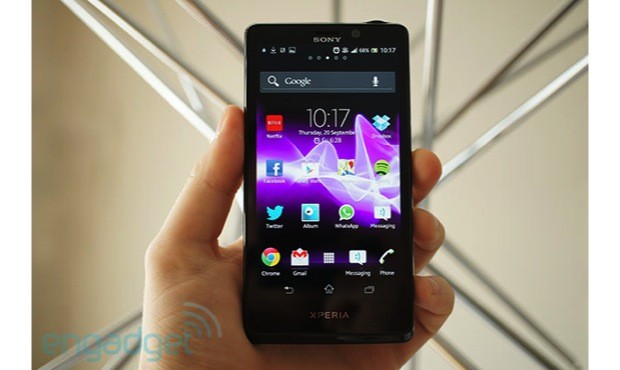
In the fast moving world of smartphones, giant HD displays just aren't enough anymore. The new hot commodity in the land of mobile is "HD Voice." Sure, the technology isn't exactly brand new, but using it over post-3G high speed networks is. The selling point here is high quality noise cancellation, which allows a phone's user to be heard clearly in the noisiest of environments. The latest device to hop on the bandwagon is Sony's Xperia T. When describing this feature, the herculean consumer electronics maker got downright emotional saying, "you feel closer to the person you are talking to." While we're not too sure about that, HD Voice did impress during our ears-on session. The major caveat here is that this feature requires that both parties have HD Voice capable handsets. So, until this concept becomes more mainstream, Xperia T owners' phone calls are likely to be close, but no cigar.

[Source: Engadget]

Mozilla opens Firefox Marketplace for Aurora builds of Android, gives mobile a taste of web apps

Mozilla's love of web apps is more than obvious; we just haven't had a real chance to try the Firefox Marketplace that represents a large part of the company's app strategy. The doors are at last open for a peek, although Mozilla has chosen the unusual path of giving mobile users the first crack: Android users willing to live on the bleeding edge of an Aurora build of Firefox can browse and run those web apps in Mozilla's store. Everyone else willing to venture into the Marketplace will have to wait until their own Firefox builds receive a matching update, including that rare group with access to Firefox OS. We're not quite in a rush to try a first wave of apps in an alpha-grade browser. Should you be the sort who thinks that even beta releases are too sluggish, however, your gateway to the Marketplace awaits at the source links.

[Source: Engadget]

Listing reveals 3G Samsung Chromebook is on its way for $329.99

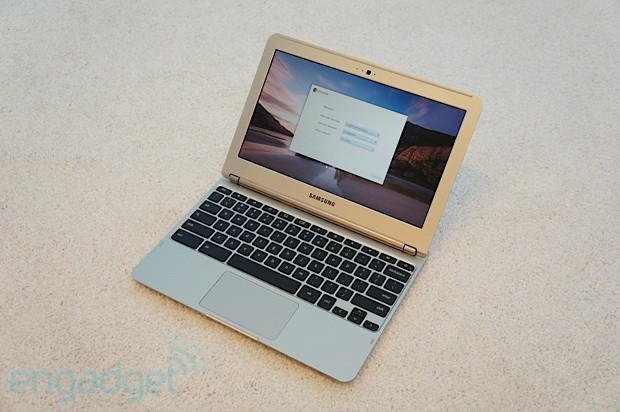
Well, this has got us scratching our collective heads. Yesterday, Samsung was fairly certain that its latest and greatest Chromebook would be a WiFi-only affair. Today, however, and a listing has appeared on the company's official website and Amazon that shows a 3G-enabled option is available for $329.99. Neither site mentions network options, so presumably you get the same 100MB a month for two years Verizon data that its brethren receive -- and given that we described it as being "80 percent of the MacBook Air experience for a quarter of the price," the 3G version seems well worth the extra $80.

[Source: Engadget]

Sony to start Xperia upgrades to Jelly Bean by mid-Q1, rules out all 2011 phones

We've got mixed news for those who were wondering just where Sony's Jelly Bean updates were headed. The good? Sony has narrowed down its upgrade schedule for the Xperia TXperia TX and Xperia V to the middle of 2013's first quarter, or roughly February. Just about every other reasonably capable 2012 model is also getting an upgrade once Sony has narrowed down the timetable, ranging from the Xperia Sthrough to the Xperia ion and Xperia go. Brace yourself for the dark side of the news, however: not a single 2011 Xperia phone will make the Jelly Bean leap, no matter how quick or recent it might be. The company was "not able to guarantee" the experience the devices would have with the newer OS, we're told. While we know that some older phones would have been borderline at best, that cutoff won't be pleasant for anyone whose Xperia Arc S is already out of the Android upgrade loop after less than a year.

[Source: Engadget]

Cybergeddon from Anthony E. Zuiker

Cybergeddon, is a new digital blockbuster about the growing threat of cybercrime starring Oliver Martinez and Missy Peregrym. Cybergeddon follows the story of agent Chloe Jocelyn as she investigates a series of seemingly unrelated cyberattacks with fellow agent Frank Parker and master hacker Chase 'Rabbit' Rosen. The team must crack a worldwide cybercrime ring before it's too late. 


The series comes from Anthony E. Zuiker, creator of landmark show CSI and debuted on Yahoo!. It's the first of its kind bringing together an engaging story, social media and gaming experience.

Norton by Symantec offered their insight to lend credibility and insight into security to the narrative. Like the Facebook page to receive exclusive content and tips from the Norton team:https://www.facebook.com/Cybergeddon.

For more information visit: http://bit.ly/ukcybergeddon

[sponsored article]

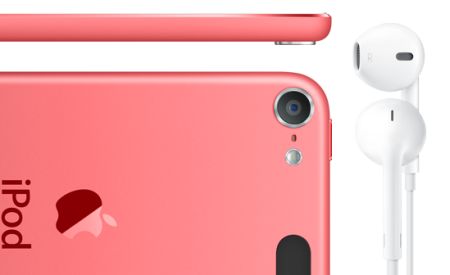
The iPod touch doesn't have a light sensor because it's 'too thin'

Kevin Tofel over at GigaOm stepped into the sunlight this past week (a dangerous endeavor for any blogger, let me tell you), and found out something strange about his new iPod touch: It doesn't have an autobrightness function. That's because it doesn't have a light sensor at all, apparently: There's only a manual setting for the brightness, and when Tofel went to Apple's product page for the new iPod touch, he confirmed that there's no light sensor listed in the various features of the device. While older iPod touch models do have the light sensor function, this current model apparently does not.

Why not? An iDownloadBlog reader named Raghid Harake emailed Apple Senior VP Phil Schiller to ask him that very question, and he got the answer that the device is just too thin. Schiller confirmed again that the device doesn't have a built-in light sensor, and reported that the design makes the whole thing too thin to fit one in. Indeed, Apple lost more than a millimeter in the latest iPod touch design, and part of that space means losing the light sensor.

Was the trade-off worth it? For Apple, apparently so. While some users might be surprised when their iPod touch doesn't automatically brighten up or down when moving into different ambient light situations, Apple decided that feature wasn't as important as slimming the device down. Do you agree?

[Source: TUAW]