New Kindles start shipping today in Europe, Lovefilm launches on Kindle Fire

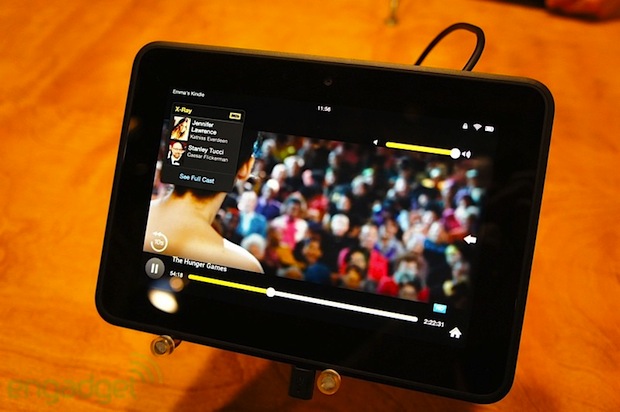
As promised, Amazon has started shipping its latest Kindles on the other side of the Atlantic, with theKindle Paperwhite as well as the Kindle Fire and Kindle Fire HD making the trip. Amazon's branded video services did not make the trip, so Lovefilm is filling in, offering a free month to buyers of either Fire tablet. Despite the switch in names, the Kindle Fire / Fire HD Lovefilm app will support features owners have gotten used to in the US like Whispersync pause / resume across devices, watch list and X-Ray for Movies that brings in extra info about any actors or scenes that are being watched. The Kindle Fire 8GB is available for £129/€159, while the Fire HD in 16GB or 32GB editions costs £159/€199 and £199/€249, respectively. The Kindle Paperwhite isn't invited to the video party, but it starts at £109 for the basic model or £169 with 3G.

[Source: Engadget]
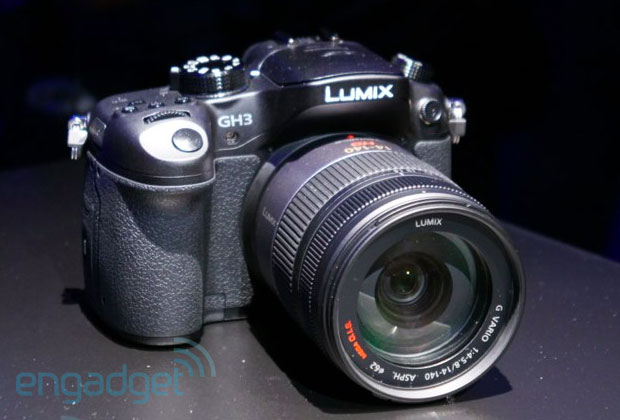
Panasonic Lumix GH3 launches on December 13th, but pricing remains a mystery

Panasonic's forthcoming mirror-less multimedia wonder has been given a release date. Yep, the Lumix GH3, with its 'unlimited recording time' and magnesium alloy build, will arrive in the Land of the Rising Sun just over a month from now. While the Japanese press release doesn't specify pricing, you can expect this Lumix to arrive in body-only and two lens kit variants, one with a 12-35mm f/2.8 zoom lens, and another with a f/4.0 - 5.8 rig. Behind those optic options (not to mention the ability to capture 72Mbps 60p video), you'll be getting a 16-megapixel sensor, splash-proof shell and a flip-out OLED touchscreen alongside a 614K-dot viewfinder. If that leaked video sample piqued your interest, check out the full spec rundown at the source below.

[Source: Engadget]

Sharp announces first TVs with Moth-Eye technology: the AQUOS XL series

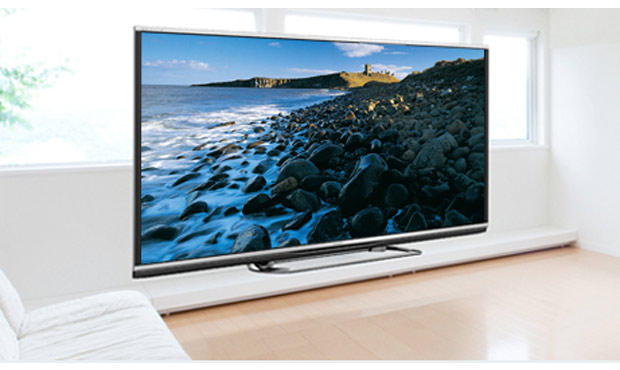
Sharp may look like it's in trouble, but that's not stopping it bringing new displays to the market, including today's announcement of the AQUOS Quattron 3D XL TV line. Behind the mouthful of acronyms, these LED-backlit LCD panels are the first to feature Sharp's Moth-Eye technology, designed to reduce glare and pump out bright colors, as well as a deep black. The company's 'four primary color' tech is partly responsible for the rich output, which squeezes a yellow sub-pixel in with the standard R, G and B. All the panels run at 1,920 x 1,080, as you'd expect, sport a 10 million to 1 contrast ratio and use five speakers to deliver audio. Prices aren't fixed, but the 46-, 52- and 80-inch models will be released inJapan on December 15th, while the 60- and 70-inch variants will come slightly earlier, on November 30th. You're going to have to be quick on launch day, though -- only 10,000 units are expected to be available in the first month.

[Source: Engadget]

Nexus 4 appears early at Carphone Warehouse, October 30th release date

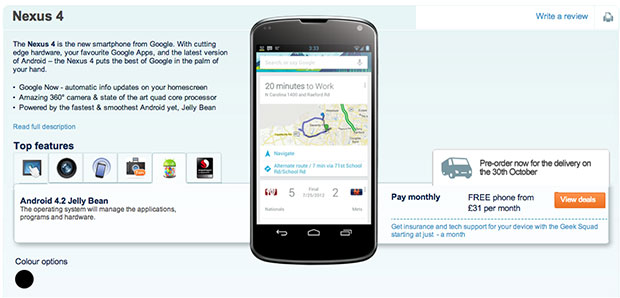
Whoa there! The next Nexus just got an early reveal over at UK retailer Carphone Warehouse. Delivery is currently pegged for October 30th and apparently it's got brand new Android 4.2 (or Android 4.1.2 -- the listing mixes in both). The preorder screen confirms plenty of details we've already heard, including that 4.7-inch 1,280 x 768 display, Snapdragon S4 processor and 8-megapixel camera. Unfortunately, at least according to the phone seller, there's only 8GB of storage and no microSD card slot. Other curious parts include a "360-degree camera", whatever that is, and an on-screen render that's been previously been identified as a custom ROM. Diving into the supposed feature list, we're intrigued to see whether "gesture typing" will form a part of Google's new Android build -- the Carphone Warehouse compares it to Swype's finger-dragging input method.

Price-wise, it looks like you could get the handset for free on contracts over £31 per month, with both O2 and Vodafone named as prospective networks for the device in the UK -- but no news here on whether the 4G-capable EE will offer an LTE iteration. Excited? Good, because we're going to hear plenty more on this next week.

[Source: Engadget]

Apple Store now has Lightning to HDMI and VGA adapters at $49 a pop, souped-up iPad charger

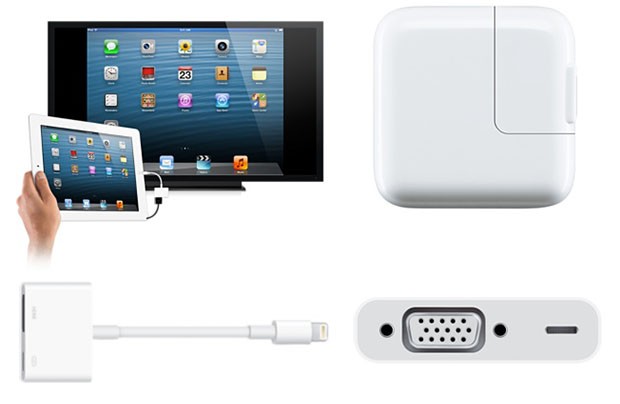
We noticed during the iPhone 5 launch that Apple had a big caveat with its Lightning to 30-pin adapter: no video or iPod out support. Now that the new iPads are here with that same connector, the problem's been partially rectified -- for a sum. Namely, you can grab the Lightning to VGA or digital AV (HDMI) adapters for a rather princely $49, though there's no sign of any iPod support yet. If you're still holding out for generic models instead, you may want to rethink that plan, as there's a control chip inside each, and so far only Apple holds the authentication keys. Also, a new $19 12W USB power adapter (which connects directly to the Lightning port) has also appeared for the 3rd and 4th generation iPads, bumping the previous version's 10W -- meaning your slate might get charged a bit quicker.

[Source: Engadget]

Canon's upcoming 5D Mark III firmware update brings uncompressed HDMI output support, enhanced AF functionality

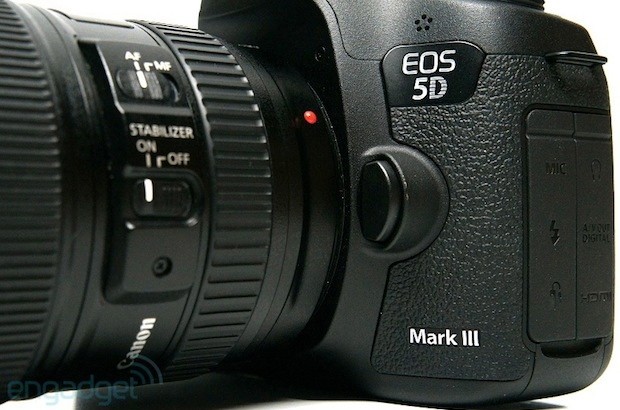
Proud owners of that sleek and relatively powerful Mark III will be happy to know Canon has just announced a firmware update for its flagship 5D model. The Japanese camera maker is touting this upcoming release as one that will bring clean HDMI-out support to the EOS shooter, which should be great for folks who would like to monitor their recordings in real time. Additionally, Canon's improved the Mark III's AF functionalities yet again; this time out by enabling the unit's auto focus system to adequately adjust to the type of lens that it is paired with. Unfortunately, it looks like users will have to wait a little while to install the new firmware, as the company won't be making it available until April of next year -- at which point it can be grabbed from the soon-to-be bookmarked source link below.

[Source: Engadget]

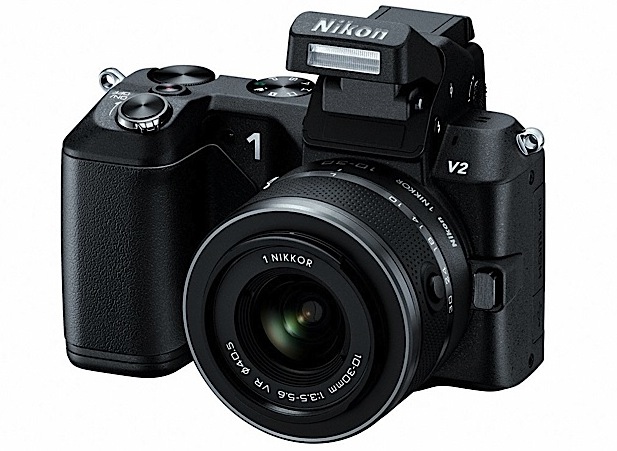
Nikon 1 V2 unveiled: 14.2 megapixel ILC shoots 15fps stills for $899.95 in November

It was just over a year ago when Nikon first dipped its toe into mirrorless waters with its first two 1 System cameras, the V1 and J1. Now, the company has released the V1's successor, the aptly named V2. Like its elders, the V2 has a 1200fps slo-mo capture mode, a 3-inch LCD display on the back, a high-res (1.4 million dot) electronic viewfinder, and does 1080/30p and 1080/60i video capture (Alas, 4K recording capability didn't make the cut). Unlike the V1, the V2 comes in only black or white and uses an upgraded 14.2-megapixel CMOS sensor with an ISO range of 160-6,400. It also packs a new Expeed 3A image processor in tandem with Nikon's Advance Hybrid AF to deliver higher speed shooting. That autofocus system is comprised of 73 phase detect sensors and 135 contract detect sensors, which enables the V2 to capture stills at up to 15fps for 45 continuous frames -- and it can shoot 60 frames continuously using fixed focus.

[Source: Engadget]

HP fills in pricing and availability details for its sprawling Windows 8 line-up

HP has just announced pricing and availability for its burgeoning Windows 8 lineup of hybrid PCs, notebooks, all-in-ones, desktops and business PCs. The company seem to be wooing every niche out there with a huge (and confusing) array of products running the newfangled OS, and though we already knew the score on many, the picture is now (almost!) complete. The 11.6-inch Envy x2 hybrid (shown above), powered with an Intel Clover-Trail flavored Atom processor will come on the scene on November 14th starting from $850, for instance, and we also have the scoop on the HP Envy TouchSmart Ultrabook 4HP Phoenix h9 desktop PC and HP Pavilion dm1 (with new 4G connectivity) after the break. Finally, HP still hasn't released pricing or details on its once-mysterious ElitePad 900 business tablet, but they did say that customers who nab one early next year will receive a 50GB Box cloud storage account, gratis.

[Source: Engadget]

Nintendo reports continued first-half losses for 2012, is waiting on the Wii U

Nintendo's reported its financial results for the first of half of the year, and things are still a little rocky. Net sales in the last six months have decreased 6.8 percent compared to the same point last year, while net income continues to drop, this time by 27,996 million yen. As of September 2012, Nintendo has now sold over 22 million 3DS units (three million more since last quarter), while the Wii remains just shy of the 100 million milestone, settling at 97.2 million units sold. Nintendo looks to be in a similar position to last year, with customers still waiting for the company's next big console to appear -- and the gamesmaker hoping they will. Laying blame at the strong yen, the company has dramatically cut its forecast for the rest of the year, down from 20 billion ($250 million) to 6 billion yen ($75 million), pinning its hopes on 3DS sales ahead of the Wii U's global launch later this year.

[Source: Engadget]

Digital Storm Bolt stuffs full-power graphics into a mini gaming desktop, stretches laws of physics

Attempts to create truly small gaming desktops usually involve at least some kind of performance hit. Even HP's category-bending Firebird, one of the few stand-out examples, had to use toned-down graphics to succeed in a tiny enclosure. Digital Storm might have broken the trend towards sacrifice with its new Bolt desktop: although it's just 3.6 inches wide and 14 inches tall, the Bolt can cram in as much as a GeForce GTX 680 and will even let gamers upgrade the graphics like they would in a full-size PC. The seemingly logic-defying (if also finger-defying) case still allows room for as much as an overclocked 4.6GHz Core i7, 16GB of RAM and storage options that meld a spinning hard drive with up to two SSDs and a DVD burner. Digital Storm isn't even setting an absurd base price, but it's in the cost that we finally see the catch to the miniaturization tricks. The $999 entry-level Bolt carries a modest 3.1GHz Core i3, 8GB of RAM, a 1TB hard drive and GeForce GTX 650 Ti, while it takes a staggering $1,949 to get a fully decked-out Core i7 system with a GTX 680. Those prices might be worthwhile for anyone who has ever strained while lugging a traditional tower to a game tourney.

[Souce: Engadget]

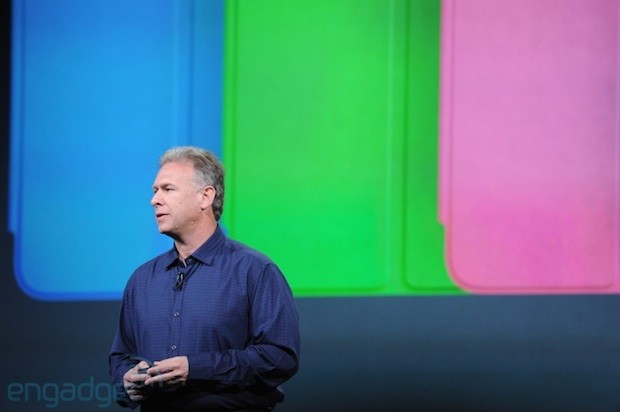
Apple introduces new Smart Cover for iPad mini

Not a huge surprise here, but Apple has also introduced a new Smart Cover for the iPad mini. The new smaller version does away with the metal hinge found on its larger counterpart, and again comes in a variety colors -- six, to be specific, including a Product RED model.

[Source: Engadget]

Apple announces iPad Mini with a 7.9-inch, 1,024 x 768 display

There it is, the long-telegraphed iPad mini has just been announced at Apple's late-2012 press conference. The 7.9-inch display device has the same 1,024 x 768 resolution as the iPad 2, which doesn't bode well for the elder slate's future. The new hardware is 7.2mm thick, .68 pounds heavy and has been manufactured with a new process with the same anodized edges as the iPhone 5. While Phil Schiller didn't mention the Nexus 7 or Google directly, he compared the new device against its rival in terms of its app library and screen size. He claimed that the .9-inch increase in diagonal space gives Apple's slate 35 percent more display area than Google and ASUS' collaboration.

If you were hoping for equal specifications to the current-generation iPad, you'll be mildly disappointed. The iPad Mini has Apple's A5 CPU, although it will run LTE and has a 5-megapixel camera. The lack of retina display may contribute to the reported 10-hours of battery life, despite its small size. For the base 16GB, WiFi only model, it'll set you back $329, while the 16GB, LTE version costs around $130 more per model. The WiFi models will begin to ship November 2nd.

[Source: Engadget]