Google Wallet update purportedly leaks plans for a real-world card, transfers and transit passes

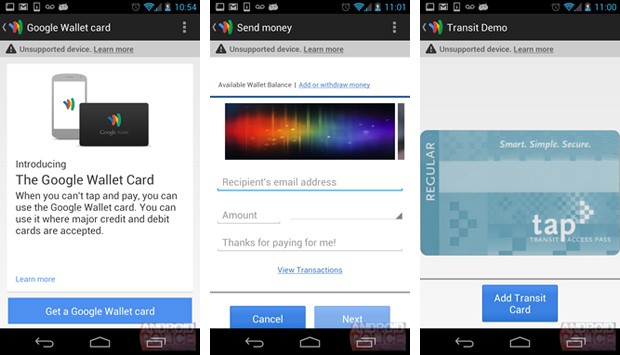
Google Wallet hasn't had much uptake in the real world. When most of its use has revolved around one carrier, few payment points and even fewer phones, most of us have had to sit on the sidelines. If anAndroid Police source really did come across a leaked future build of Google Wallet as he claims, though, we may know how Google surmounts that problem: going old school with a real-world card. Screenshots in the app supposedly show a mail-in option for plastic that could completely replace credit and debit cards without turning to NFC. Any charges after a typical swipe of the magnetic strip would simply go to whatever payment source is set as Wallet's default, letting minimalists slim down their actual wallets while sharing in the same discounts as their phone-wielding counterparts. Digital-only purists would still get something out of the deal, as the update could also bring person-to-person money transfers and support for mass transit cards. How soon the as yet unconfirmed app would appear is still a mystery, but it dovetails with Google teasing a Wallet revamp that's rumored to take mobile use beyond its Android-only roots; we just didn't anticipate that the company might bypass our phones altogether.

[Source: Engadget]

Apple files anti-theft patent that uses accelerometers to detect theft-like movement

What kind of movement does a theft entail? Apple's in the process of figuring that out, today filing a patent application for a, "acceleration-based theft detection system for portable electronic devices." Apple pickers: you've just been put on watch. According to the patent filing, said device would activate an alarm of some form after determining, "whether a theft condition is present." It'll apparently figure that out based on the accelerometer built into many of Apple's mobile devices -- the same thing that figures out which way you're holding your phone. Beyond just the hardware, said theft protection system would work in concert with software to determine if the movement matches a pre-determined "profile characteristic of theft."

[Source: Engadget - Click here to read more]

Stanford researchers create 'world's first' all-carbon solar cell, do it on the cheap

Harnessing the awesome power of the Sun isn't just dependent on the efficiency of solar cells, but also on making them affordable. Current techniques aren't exactly cheap, but researchers from Stanford University think they've made a bit of a breakthrough by producing a relatively inexpensive photovoltaic cell using nothing but carbon. We're sure other scientists might disagree with the 'world's first' claim, but those at Stanford think it's a matter of language, and that these other pretenders are "referring to just the active layer in the middle, not the electrodes." The team selected a trio of carbon types to use in their cell: a mixture of nanotubes and buckyballs make up the light-absorbing layer, while graphene is being utilized for the electrodes.

[Source: Engadget - Click here to read more]

Google Wallet checkout gains support for mobile websites

It wasn't long ago that Google Wallet delved into the online payment sphere, but as of today, the Mountain View juggernaut has extended its checkout service to mobile websites. According to Google, 97 percent of mobile shoppers abandon their carts, which is primarily due to the litany of information that needs to be manually entered. Now, when you stumble upon a mobile website that supports Google Wallet checkouts, you'll merely need to click the buy button, enter your login credentials and then complete the order. The immediate downside is the paltry number of outlets that support the service: 1-800-Flowers, Rockport and Five Guys. Then again, we suppose you could have a pretty nice evening with flowers, new shoes and a couple of burgers.

[Source: Engadget]

Red gets Epic price cut, drops M, X and Scarlet brains by up to 45 percent

Competition is heating up in the high-end digital cinema market, and Red is responding with a slew of massive price cuts. According to CEO Jim Jannard, this "attitude adjustment" is simply a benefit of scaling up production, yielding a decrease in component and assembly costs, and an enormous reduction in assembly time -- the first Epic took 12 hours to build, while current models require just 13 minutes. As a result, the Epic-M has dropped to $24,000 (from $39,500), the Epic-X is now $19,000 (formerly $34,500), the Scarlet is $7,950 (from $9,700) and the EOL'd One MX is priced at $4,000 (once $25,000). The Dragon sensor upgrade will not be included with any new Epic models, and will remain priced at $6,000. Red customers who took the plunge on cameras with former pricing within the last month (on or after October 1st) will receive a discount off future accessory purchases of $4,000 for Epic and $1,000 for Scarlet. With this latest round of discounts, Red cameras are by no means inexpensive, but they're certainly more affordable. If you were already planning to pick one up, Christmas just came a couple months early.

[Source: Engadget]

Google Translate gets new features, makes sure you choose the right words

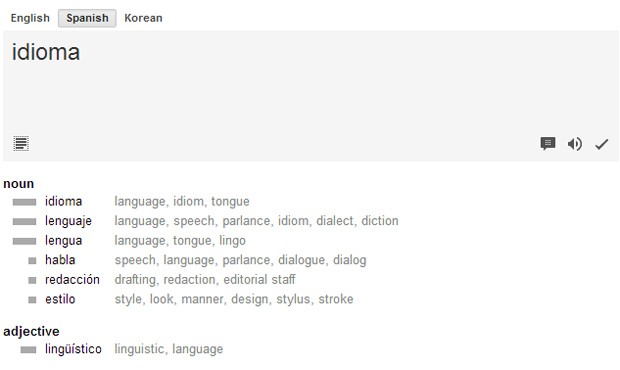
Google has added functionality to the web version of its Translate service, now making it even easier for us to use and understand foreign tongues. Instead of a single result, you'll be presented with a list of the most common translations, ordered and labeled by how frequently each one is used. What's more, synonyms are also displayed next to the assortment of results, but this particular feature only works when translating into English, although more languages are expected to be supported soon. We've had a quick play around with it, and suggest you head over to the Google Translate page and try out the new elements for yourself. Now, if only the website translator could make those Japanese pages a little easier to read.

[Source: Engadget]

iOS 6.0.1 released, brings myriad improvements and bug fixes

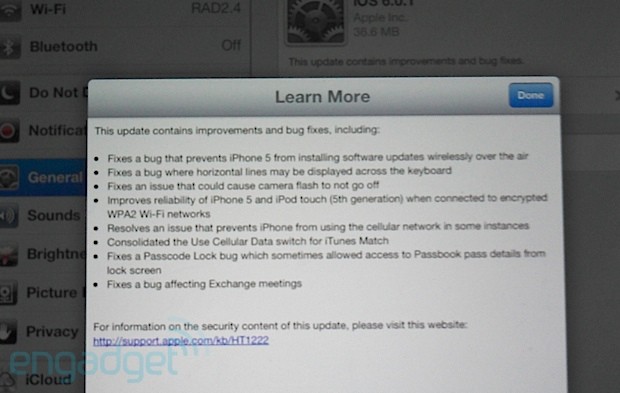
Been waiting for Apple to refresh its mobile operating system? Well, the wait is over, as Cupertino has just released iOS 6.0.1 with the promise of improvements and bug fixes. We just grabbed the update ourselves, and among the highlights are: a fix for the iPhone 5's inability to receive OTA software updates, problems with connecting to encrypted WiFi networks, and other cellular connectivity issues as well. There's also fixes for a passcode lock bug, a graphical keyboard glitch and a bug that prevented the 5's camera flash from firing. Sound good? Go grab the download and let us know how it's treating you in the comments.

[Source: Engadget]

Windows Phone 7 Connector for Mac updated for WP8, rebranded simply as 'Windows Phone'

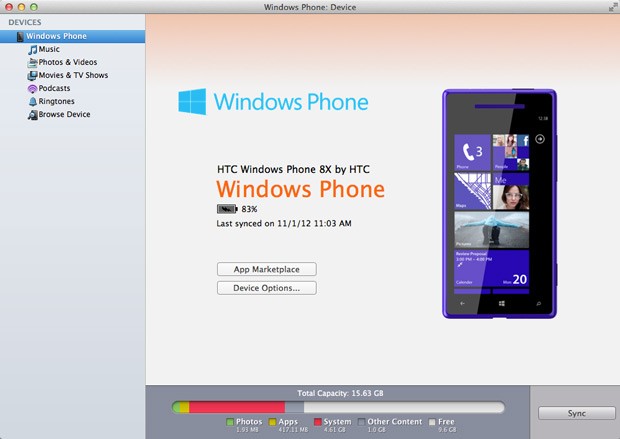
For Mac users who prefer Microsoft as their mobile partner, Windows Phone 7 Connector has been the one bridging the divide so far. The sync app has just been updated to v3.0, gaining support for Windows Phone 8 and a concise new name -- "Windows Phone" -- to match its Windows 8 counterpart. The new app plays well with Retina Macs too, while other goodies in the changelog include drag-and-drop capability for transferring files in either direction, along with support for iPhoto 9.3.2 and Aperture 3.3.2. Incoming WP8 devices such as the HTC 8X and the Lumia 920 will also get enhanced ringtone features and allow battery life to be monitored via the app. Persuaded? Then collect your goods at the source link below.

[Source: Engadget]

MSI launches the 27-inch Wind Top AE2712 all-in-one brandishing Windows 8, military specs

The Windows 8 all-in-one arena is already pretty crowded, but if MSI's new model had to fight it out with the rest battle-bot style, then it might just come out on top. That's because the Wind Top AE2712 comes with MSI's usual military class components, alongside a brutish 27-inch 1080p display with ten-finger touch, Core i3 or i5 processors and optional NVIDIA GeForce GT630M graphics (on the 'G' model). Also included is the company's Smart Media cloud that lets you share data with DNLA-enabled TVs and mobile devices. The PC's already popped up on Amazon UK with a £830 sticker and November 9th ship date, so if you need an AIO tough enough to withstand, say, an all-out rugrat assault, check out the source link.

[Source: Engadget]

Amazon Game Studios releases its first mobile game, Air Patriots, for iOS, Android and Kindle Fire

Amazon made its first push into in-house game development this summer with the launch of Amazon Game Studios and its first title, the Facebook-bound Living Classics, and its now made its second big move. The company announced today that its first mobile game, Air Patriots, is now available for iOS, Android and Kindle Fire devices (and free on each, albeit with in-app purchases). Not surprisingly, Amazon has paid particular attention to the Kindle Fire version, taking advantage of GameCircle to track achievements and high scores, as well as Whispersync to let you save your progress on one device and pick up where you left off on another. As for the game itself, Amazon says it's a "new kind of tower defense game," with players drawing a path for the planes to fend off the oncoming tanks. Head on past the break for a quick video.

[Source: Engadget]

China's Tianhe-2 supercomputer could hit 100 petaflops in 2015, may have a race on its hands

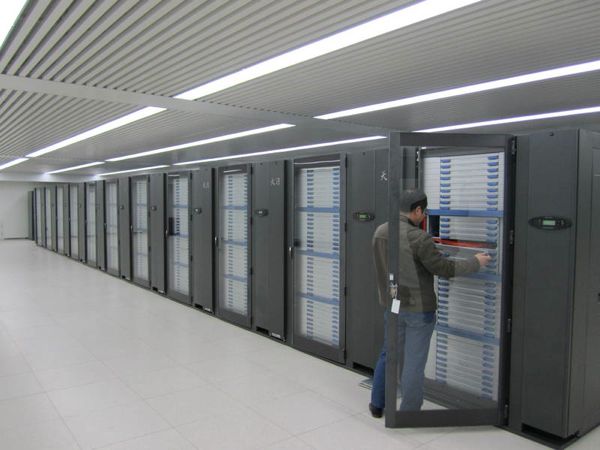
China's supercomputer development is as much driven by national reputation as by military prowess and science; the country chose to build the Sunway BlueLight MPP with domestic chips knowing that it wouldn't get the absolute performance crown. It won't be quite so modest the next time around. China's National University of Defense Technology wants the Tianhe-2 supercomputer due in 2015 to crack an extremely high 100 petaflops, or five times faster than the record-setting Titan over in the US and a whopping 40 times faster than the Tianhe-1A. Before we hand the crown over, though, Top 500 supercomputer chart keeper Jack Dongarra notes to ITworld that China might have to sprint if it wants the symbolic title: the EU, Japan and US are all striving for the same benchmark, and they're not backing off anytime soon. The nation's trump card may have to be long-term plans for an exaflop-strength supercomputer by 2018, at which point we suspect the bragging will simmer down. For awhile.

[Source: Engadget]

Microsoft: we misspoke, actually, they're 'Windows Store apps'

It happens all the time -- someone misspoke. During an address at Build yesterday, a Microsoft employee told a crowd that the company has taken to calling its apps "Windows 8 Store Applications." Turns out that's not quite right -- the proper terminology is the slightly more elegant "Windows Store apps," as per a note from a Redmond spokesperson. So there you go. No more Metro, no more "Windows 8 Store applications" -- just plain, old "Windows Store apps."

[Source: Engadget]