GeekanoidsTwitterInstagramFacebookBrotherUKAdvertAdvert

Range of 4G smartphones makes it a network for everyone

Autumn saw the introduction of a new service in the UK that promised us mobile web speeds up to five times faster than what had previously been available. As Britain’s first 4G network provider, EE offered a great way to get the most out of the next generation of smartphones – and even came with a range tailored to all tastes.

Arguably the most notable of these devices will be the iPhone 5, which managed to grab all the technology headlines in the run up to the 4G launch in October. The fifth generation model of the Cupertino gadget giant’s game-changing mobile phone improved on its predecessor with a new operating system, a bigger screen and a faster processor. This was great news for many, but was hailed as a disappointment by some people who had already set their sights on The Samsung Galaxy S III.

One of the biggest critics of the device was Samsung itself, which is of course locked in a pretty high profile on-going legal debate with Apple. The South Korean manufacturer has highlighted its slick design, Android operating system, 4.8-inch HD Super AMOLED display and super-fast processor as being superior to what the iPhone 5 can offer, as well as features like picture in picture display and the S Voice vocal command system. Of course, both are absolutely brilliant and each can claim to be better than the other in different fields – but what if you don’t want either of them?

Well, luckily there are other options from EE that may be of interest. The HTC One XL, for example, not only comes with a brilliant 4.7-inch (which is again bigger than the one on the iPhone), but it also boasts Beats Audio Integration – which could be a big deal for those who use their handset for music. 

Not to be outdone, the Finnish have also been keen to stake their claim on 4G with smartphones like the Nokia Lumia 920 Windows phone. This model has a Puremotion HD 4.5-inch touchscreen display and an eight megapixel camera with Optical image Stabilisation. This handset also has a lower price point than its rivals, as does its sister device the Lumia 820.

It has been another big year for smartphones and all the major companies have been busy preparing for the 2013 market that will undoubtedly see more of us take up 4G services. It will certainly be interesting to see what the mobile landscape looks like this time next year. [spon]
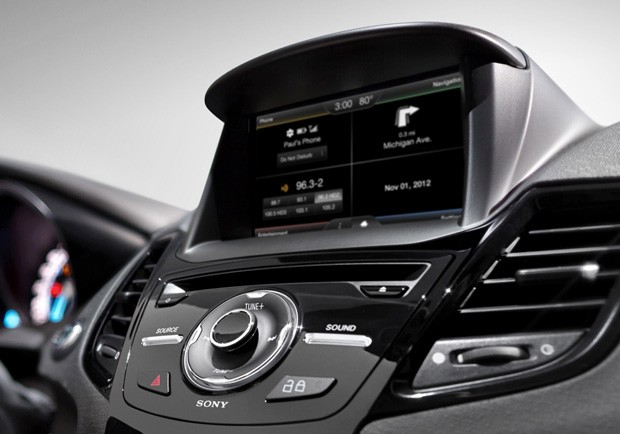
2014 Ford Fiesta gets MyFord Touch, smarter Sync voice commands

For all of Ford's emphasis on Sync, it's hard to deny that Fiesta drivers usually sit on the bottom rung of the automaker's technology ladder when they're denied MyFord Touch and the related perks of larger vehicles. Pick up the keys to a higher-spec 2014 Fiesta, however, and you'll be in for a treat. The compact will stuff a 6.5-inch touchscreen and MyFord Touch into the center stack, with a few software upgrades over what we've already seen in cars like the Focus and Fusion. The highlight is undoubtedly the more direct voice command system -- the Nuance-driven recognition no longer demands that we specify music categories or radio formats to start playing tunes. Bluetooth smartphone pairing and navigation by address should be streamlined at the same time. Motorists will have to wait until 2013 to reap the rewards, but it could be worth the wait to drive away with Ford's better electronics in an affordable ride.

[Source: Engadget]

Sharp ships its first phone with an IGZO display on November 29th, ushers in a low-power LCD era

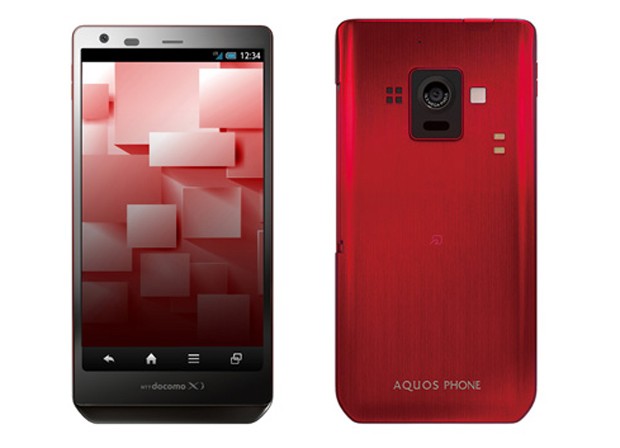
The gray clouds of Sharp's gloomy earnings are about to get a silver lining: NTT DoCoMo is at last launching Sharp's new flagship phone, the breathlessly wordedAquos Phone Zeta SH-02E, on November 29th. When it arrives, the SH-02E will be its* first smartphone to carry an IGZO-based display and show us just how well the high-brightness, low-energy invention fares in a 4.9-inch, 720p LCD. There's no known fixed pricing, although it's likely the Android 4.0 device will be sitting at the very top of its Japanese carrier's range through its Snapdragon S4 Pro, 16-megapixel camera and LTE data. Not fully convinced of IGZO's worth? Fujitsu's more conventional Arrows V F-04E is arriving a day earlier with a regular LCD and a Tegra 3, although we'd say that it's worth waiting the extra 24 hours to be a technology vanguard.

[Source: Engadget]

HTC opens store-within-a-store in Germany, hopes it's your One-stop shop

Electronics giants who want to compete for retail attention but can't always justify a full presence have a common trick: open a mini store. Apple did it, Microsoft did it, and Samsung virtually based the Galaxy S III launch on it. HTC is next at bat. While it has its own stores in Asia and parts of Europe, the smartphone designer is trying out a store-within-a-store at the giant Saturn-Markt shop in Hamburg, Germany. Swing by and you can buy or test a device like the One X+ or Windows Phone 8X alongside accessories -- including Beats headphones, naturally -- with dedicated staff to help. HTC didn't immediately have details of larger plans when we reached out, but there's talk at MyDrivers of further such stores as well as seminars that would help make sense out of Sense. There's no guarantee that HTC will benefit from carving out its own retail space in what's often considered hostile territory; even so, the move can't hurt when the company is fighting for relevancy.

[Source: Engadget]

Nintendo TVii will launch with the Wii U in Japan on December 8th, IR remote costs $1

Nintendo's Wii U has yet to launch in Japan, but over there it's been revealed that the innovative Nintendo TVii app will be available when the console launches December 8th. Interestingly, the IR remote functionality that we've already seen packed in will cost 100 yen ($1.21) from Nintendo's eShop. The TV guide data will be pulled from Rovi's G-Guide service, ready to pull up even when you're not using the console, or in the middle of a TV show or video game. We still don't have an exact release date for the i.TV-based feature in North America (it's due in "select" European regions next year) but at least gamers can enjoy their Netflix, Hulu, Amazon and YouTube access until then.

[Source: Engadget]

Lenovo IdeaPhone P770 stuffs 29-hour battery and Jelly Bean into a lower-cost smartphone

Motorola may face a new contender to the Droid RAZR MAXX HD's battery capacity crown. Lenovo's quietly introduced IdeaPhone P770 at least theoretically challenges its American counterpart by cramming a 3,500mAh lithium polymer battery into a thicker 11.9mm (0.47-inch) body. That's 200mAh more than Motorola's energy champion, and enough for the company to flaunt a 29-hour talk time. That's not quite as long as Motorola's claimed 32 hours, but Lenovo has done something its American rival seemingly can't -- launch a phone with Jelly Bean. Motorola might rest easier in knowing that the the P770 is an unrepentantly budget-focused behemoth, carrying a 4.5-inch qHD display, a (possibly MediaTek-made) 1.2GHz dual-core processor, 4GB of built-in storage, an 8GB microSD card and both 5-megapixel rear as well as VGA front cameras. For the ¥1,699 ($273) Lenovo is asking for an off-contract model in its native China, the P770 could still be the first pick of many local phone owners on long-haul trips. It's just a shame that the lack of 4G (and Lenovo's domestic-first mobile strategy) likely means we won't see a launch in the US.

[Source: Engadget]

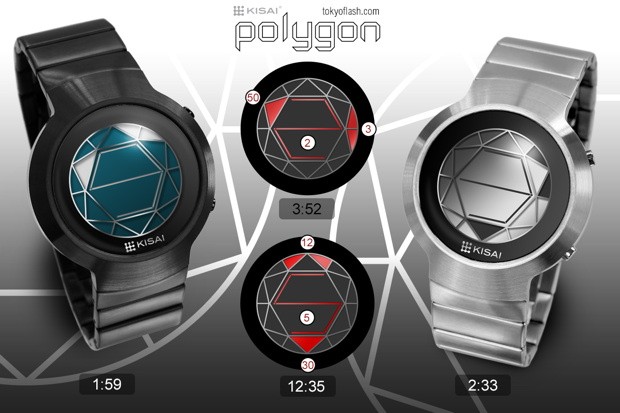
Tokyoflash mixes time and geometry to make its Kisai Polygon watch

This week's Tokyoflash watch will certainly tickle the fancy of those who sleep with a set square beneath their pillow. The Kisai Polygon has a ring of triangles representing the hours and the nearest 10 minutes, with the individual minute being shown as a single digit through the middle. If you'd like to indulge in some retail therapy, you can take advantage of the company's pre-sale. Available in black, mirror, blue or pink, it'll set you back $99 (€77, £61) until Thursday, after which it'll cost $129 (€100, £80). Fancy learning how to read it from the team to built it?

[Source: Engadget]

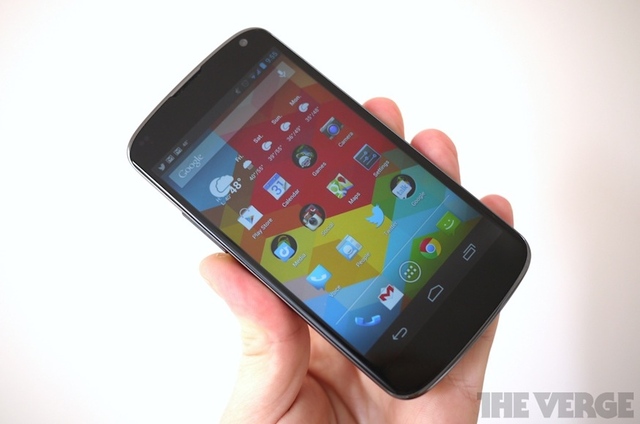
Nexus 4 works with LTE after simple tweak

Some enterprising tinkerers on the XDA Developers forums are demonstrating that despite the lack of a working signal amplifier and filter in LG’s Nexus 4, it’s still possible to force the phone onto an LTE network from the phone’s debugging menu — at least on LTE band 4 (1700MHz and 2100MHz) on Canadian carriers Telus and Rogers.

Last week, Anandtech reported that "Band 4 (AWS) could essentially be supported with the power amplifiers and transceiver that already are onboard the Nexus 4, but again it ultimately comes down to a particular OEM choice whether these get supported." As we've written previously, getting LTE support across multiple carriers across the US and internationally is a minefield, which is why Google chose not to include support for multiple LTE bands on the Nexus 4.

[Source: The Verge]

Cambridge University center to examine potential threat posed by artificial intelligence

The UK's prestigious University of Cambridge is to play host to a new center where experts will analyze the possible dangers of advanced artificial intelligence. Founded by philosophy professor Huw Price, cosmology professor Martin Rees, and Skype co-founder Jann Tallinn, the university says its Center for the Study of Existential Risk is set to open on campus next year. While acknowledging the far-fetched nature of a HAL 9000-style AI rebellion, Price told the AP that "it seems a reasonable prediction that some time in this or the next century intelligence will escape from the constraints of biology."
[Source: The Verge]

Microsoft 'Xbox TV' device due in 2013 with casual gaming and streaming

Microsoft is building an Xbox set-top box. Multiple sources familiar with Redmond's plans have confirmed to The Verge that the company plans to introduce a low-cost alternative to its Xbox console, designed to provide access to core entertainment services. The move will allow Microsoft to further increase its presence in the living room, providing consumers with a choice between a set-top box or a full next-generation Xbox console.

We're told that the set-top box is part of a two-SKU strategy for Microsoft's next-generation of Xbox hardware that will be unveiled in 2013, with a release date ahead of the holiday shopping season. The device will run on the core components of Windows 8 and support casual gaming titles rather than full Xbox games typically found on a dedicated console. Although hardware specifications aren't fully locked down, we understand Microsoft will use a chipset to enable an "always on" device that boots quickly and resumes to provide near-instant access to TV and entertainment services.

[Source: The Verge]

Internal Apple video documents Apple Store philosophy

Washington Square Films (NYC) gives us a rare look at one of the internal videos that Apple has shown its Store employees. This one is obviously over a year old with Ron Johnson at the helm (the date says 7/7/2011). The video is a pretty impressive piece of work from director Peter Sillen for something that never aired publicly. Among other interesting tidbits, the video shows store mock-up inside Covent Garden (London) space in 2008 before construction with Apple execs examining design elements.

The video seems to be the type you might see on TV and – just guessing here – with the departure of Ron Johnson may have been scrapped without stable store leadership to fill in. Bob Bridger, Apple VP for Retail Development, gets significant ‘face time’ as well.

To watch the video, click here.

[Source: 9to5Mac]

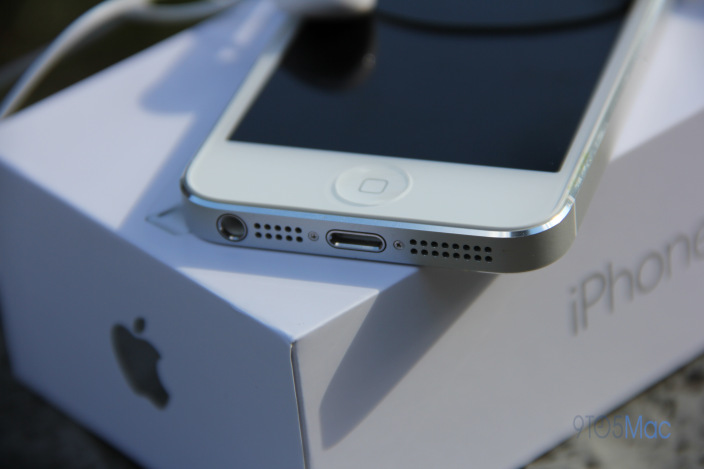
Apple had to acquire Lightning trademark from Motorcycle manufacturer Harley-Davidson

In order to get its new Lightning technology out on the market, Apple had to acquire the trademark “Lightning” from the popular motorcycle maker Harley-Davidson. According to Patently Apple, two trademark applications published on Sunday by the EU Patent & Trademark Office show the transfer of the trademark officially went down on Saturday. The term “Lightning” is still protected until 2013 under the original filing, and Harley-Davidson still owns some rights to the term. Still having access more than likely gives the Motorcycle manufacturer the right to use Lightning on some of its products, which includes helmets and electrical parts, while Apple also has free reign. It seems kind-of odd a term like “Lightning” can be trademarked.

[Source: 9to5Mac]