CORNING TO SHOWCASE LATEST GLASS TECHNOLOGIES FOR CONSUMER ELECTRONICS AT CES 201

Corning Incorporated (NYSE: GLW) today announced its plans for the International Consumer Electronics Show (CES) in Las Vegas next week. The Corning booth, #14813 Central Hall, will highlight the company’s newest specialty glass solutions and their benefits for today’s consumer electronics device trends. 

Corning plans to introduce two new products at CES 2013: Corning® Gorilla® Glass 3, a new glass composition with durability enhancements; and Optical Cables by Corning, fiber-based, device-to-device connectivity solutions that significantly extend the data transmission range past the limits of copper-based cables. Full product details will be included in announcements planned for Monday, Jan. 7.

“This year at CES, Corning will demonstrate its industry leadership in specialty glass and fiber optic technologies with the introduction of two products designed to enhance and extend the capabilities of consumers’ favorite devices,” said Wendell P. Weeks, chairman, chief executive officer, and president. “These new innovations build on the increasingly important and continually evolving role of highly engineered glass technologies in delivering improved product performance and functionality through touch capabilities, protective cover glass, and device connectivity.” 

In the Corning booth, experts will be on hand to discuss and present hourly demonstrations of the toughness of Gorilla Glass 3 as well as the connectivity and flexibility of Optical Cables by Corning. The booth will also showcase the benefits of Corning Gorilla Glass in larger format, multi-touch displays for education, entertainment and other applications.

[Source: Corning Gorilla Glass - Click here to read the full story]
ROCCAT unveils Ryos gaming keyboard ahead of CES, individually lit keys in tow

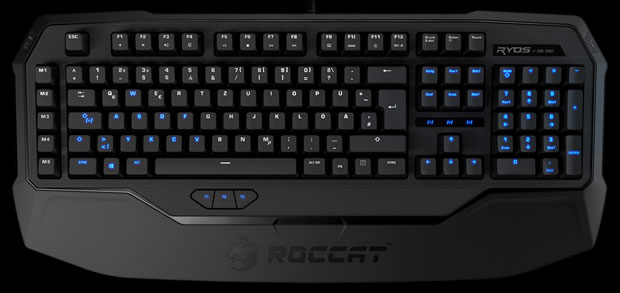
ROCCAT made its debut in the States a year ago and now the German gaming outfit is looking to get a jump start on the happenings at this year's CES. The company has announced the Ryos, its first mechanical gaming keyboard with per-key lighting and up to two 32-bit ARM Cortex processors. This method of illumination allows the peripheral to display key functions and macros in addition to information like health stats. The unit also sports 2MB of internal flash storage, up to four Cherry MX key switches in a variety of colors and an included SDK. No word on pricing yet, but the Ryos is expecting to ship during Q1 2013. If a few more details are what you're after, take a gander at the PR that awaits just past break.

[Source: Engadget]

Android Dashboard update shows Jelly Bean on 10 percent of active hardware

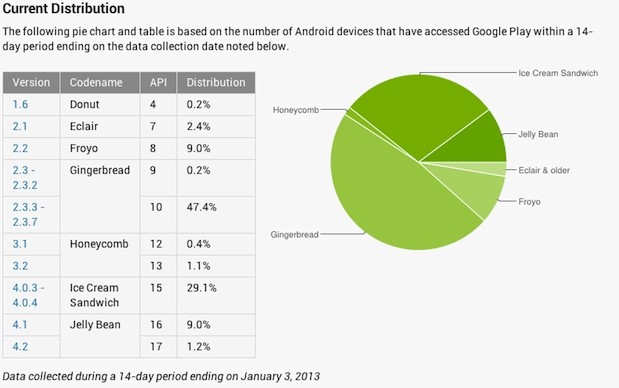
The last time we checked out Google's Android Device Dashboard, penetration of the latest version had reached 1.8 percent of active hardware. A couple of months later and Android 4.1 / 4.2 Jelly Bean is accounting for more than 10 percent of devices that accessed Google Play in the last 14 days. The share of Android 4.0 Ice Cream Sandwich devices also grew to represent 29.1 percent of active hardware, and while 2.3 Gingerbread still has the largest slice, it slid below half to 47.6 percent. That means developers can more confidently taking advantage of the latest APIs, but while the environment is much improved over when thedashboard launched in 2009, those fragments still mean some hard choices on exactly what to target with apps. Hit the source link for a larger look at the current numbers.

[Source: Engadget]

Wind tunnel PC case pushes the air cooling envelope, does its thing for cancer research

Pushing air cooling to its limits might mean buying a bigger fan to the mortal PC builder, but for Mike at Total Geekdom, it meant constructing a wind tunnel case. Built from a box fan, medium-density fiberboard, lexan and aluminum, the tunnel increases airspeed by about 240 percent and cools its contents with a brisk 9 mph breeze. At full bore, however, the fan churns out air speeds between 26 and 30 mph inside the case's sweet spot. As for computer hardware, the rig packs an Ivy Bridge 3770K processor, a pair of Radeon 7970 (Sapphire Dual-X) GPUs, 8GB of RAM and a 40GB SSD. There's still room to overclock the beast, but it currently keeps its CPU humming at 4.5GHz with temperatures between 64 and 65 degrees Celsius, and can run its GPUs at 1225MHz with core temperatures at 46 and 56 degrees Celsius. So, what does one do with a wind tunnel-cooled PC? Why donate time and computing processes for cancer research through the World Community Grid project, of course. For photos, performance specs and a full break down of the construction process, hit the bordering source link.

[Source: Engadget]

Google bringing YouTube Android app pairing, updated UI to more TVs

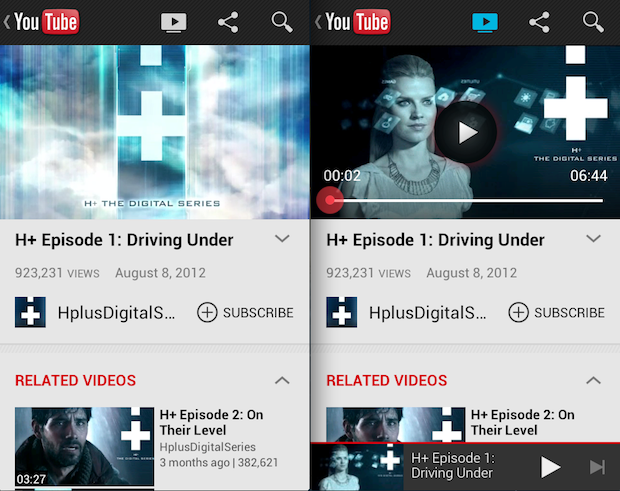
Google updated its YouTube app for Android back in November to allow for pairing with TVs equipped with Google TV, and it looks we'll soon be seeing quite a few more sets ready to work with your smartphone or tablet. The company confirmed today that new TVs from Bang & Olufsen, LG, Panasonic and Sony will be making their debut at CES, with additional sets and set-top boxes coming from Philips, Samsung, Sharp, Toshiba, Vizio, Western Digital and others over the course of 2013. In related news, Google's announced that its new UI for YouTube on TV -- previously seen on the Wii U and PlayStation 3 -- will also be featured on those new devices, offering full 1080p videos and a fairly minimalist interface.

[Source: Engadget]


Nearly 400K for Nexus 4

A wonderful piece of crowdsleuthing by the fervent Android fans of theXDA forums has revealed how many Nexus 4s have been built. The astonishingly cheap phone was one of the most popular phones of 2012 -- coming second inCNET UK readers' Phone of the Year awards -- but production shortages left many would-be buyers frustrated. So how many Nexuses are out there?

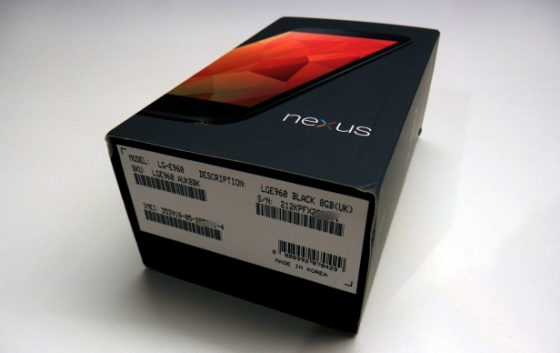
In a post spotted by TechCrunch, XDA user Alexander T deduced that the first four figures of the serial number on the box reveal when and where your Nexus was made. Get your box out and have a look -- the first figure is the year of production, so 2 for 2012, 3 for 2013. The second and third figures are the month, so 11 for November, 12 for December, 01 for January. The fourth letter determines where the phone was built: K for Korea, C for China.

After several people confirmed the system worked by posting their first four digits and when they received their phone, user draugaz suggested, "Now it would be interesting to decode the rest of the numbers so we could roughly estimate the actual production counts."

The last six figures of the code, which correspond to the last six digits of the IMEI number inside the phone, appear to be a simple counter of the number of units produced. By looking at serial numbers in Nexus 4 YouTube unboxing videos, the intrepid draugaz began to work out rough production counts for October, November and December. Soon other users were joining in and a good spread of data appeared.

Read the full article here [source Crave]

Hackulous closure prompts rise of portals that allow bootleg iOS apps without a jailbreak

The somewhat unexpected shutdown of Hackulous' community, and the corresponding departure of related tools like Apptrackr and Installous, left iOS app pirates in something of a panic: many of those who jailbroke their devices expressly for ill-gotten goods suddenly lost one of their main sources. While they haven't earned much sympathy, they've also triggered a surge in services that don't require a jailbreak at all. Months-old pay service Zeusmos has seen a spike in popularity, but more recent upstart Kuaiyong is drawing the most attention. It's offering others' commercial releases through the web, for free -- and on a scale into the thousands of bootleg installs per app, suggesting that it may be abusing enterprise policies rather than Zeusmos' apparent reliance on developer slots.

[Source: Engadget]

Samsung unveils the Series 7 Ultra, refreshes the Series 7 Chronos with a slimmer design

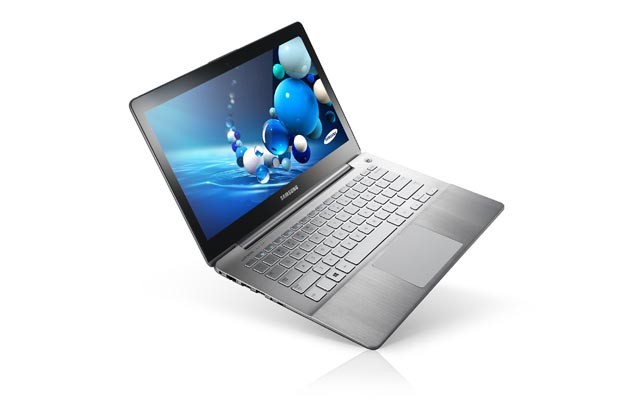
We've gotta hand it to Samsung: announcing new products before CES is a clever way of grabbing our undivided attention. With days to go before the show officially kicks off, the outfit's already unveiled some new monitors, and put out teasers for at least three other items. Now the company's PC division is getting a headstart as well: Samsung just added two notebooks to its high-performance Series 7 family of products. These include the Series 7 Ultra, a 13-inch Ultrabook, as well as a refreshed Series 7 Chronos with AMD graphics.

[Source: Engadget]

Vodafone's Nearly New program entices penny-pinchers with pre-owned smartphones

If you cherish saving coin and don't mind owning secondhand devices, Vodafone's Nearly New program is angling to hook you up with previously-loved smartphones. The UK firm's new effort takes handsets returned by users in "very good condition," repackages them with the appropriate accessories and doles them out at cheaper prices with pay-as-you-go or contract plans. According to Vodafone, the offering is particularly aimed at bringing pay-as-you-go users into the smartphone fold without breaking the bank. Available devices will vary each month based on return inventory, but the outfit already has iOS and Android choices on tap. Customers happy with off-contract service can choose between an iPhone 3GS or iPhone 4, with an 8GB flavor of the latter ringing up at £250. Folks who have their eye on a contract plan can pick between a Samsung Galaxy S III, which is free with a £33 subscription, or an HTC One X. On-contract Nearly New devices are already available online and in select stores, while commitment-free phones are up for grabs in-store and will find their way online next week.

[Source: Engadget]

Google and Kia partnership will bring Google Maps and Places to new cars this year

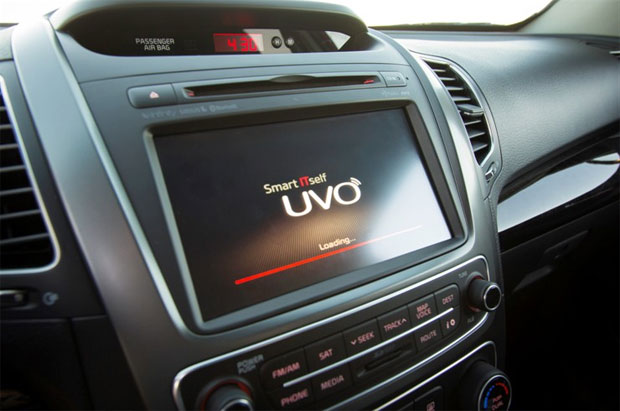
Korean car-maker Kia is set to give its UVO eServices telematics a huge shot in the arm, teaming up with Google to offer its next-generation navigation system. The new setup will debut in this year's Sorento CUV, which is scheduled to arrive in Q1. Kia's updated (once Microsoft-assisted) UVO system will allow users to send directions and locales from their smartphone (or the web) to your new ride. Baked-in Google Places will also inform you of your nearest dealership (even when you're already in that new Kia) while existing music management, hands-free features and improved voice recognition will all be wrapped into the same interface. Kia explains it all in the full press release after the break.

[Source: Engadget]

GameStick brings a new Android game console to your TV, fits inside its own controller

OUYA likely won't be the only Android-based game console in town this spring. PlayJam is going beyond its smart TV roots to build the GameStick, a TV-based system that fits into a shell not much bigger than a typical flash drive -- it's small enough that the finished version should stow inside its own Bluetooth gamepad and draw power from the HDMI port, like Roku's Streaming Stick. The Jelly Beansystem's dual-core Amlogic processor isn't as powerful as the Tegra 3 in the OUYA, but it should also lead to a slightly more tempting $79 price. PlayJam's remaining challenge is the familiar one of reaching a crowdfunding target: the company says it needs $100,000 to go through its last development hurdles and ship the production GameStick in April. If the firm makes its goal, however, the low-cost gaming world will be delightfully crowded this year.

[Source: Engadget]

Amazon slashes $50 off Kindle Fire HD 8.9 models during January, but only for students

While many of us are still recovering from New Year's celebrations, Amazon is considerably clearer-headed: it wants us ready for the winter school term that's about to start. Appropriately, it's offering a surprisingly steep discount on the Kindle Fire HD 8.9 for students. Americans headed back to class can get $50 off the price of the larger tablet for the whole of January, regardless of the capacity or the presence of LTE. The catch, apart from needing a .edu email address for the Amazon Student program, is the requirement for an active Prime subscription -- although that's no great shakes when Amazon accepts both the free six-month offer and the $39 yearly student plan. At $249, the discounted Kindle Fire HD is tempting for anyone who can do their course shopping at the Kindle Store... or just wants a convenient distraction during mid-terms.
[Source: Engadget]