BT Infinity goes Totally Unlimited, ditches throttling

Ease up off the throttle, BT. BT Infinity is getting rid of limits on how much Internet browsing you can do with new Totally Unlimited broadband deals.

Internet service provider BT is scrapping traffic management -- the practice of restricting your broadband speed at busy times, also known as traffic shaping, or throttling -- on many of its broadband packages. And it's also doing away with 'fair use' restrictions, which are limits on how much you can download in a given period.

Only the cheaper entry-level broadband deals will now suffer from caps on usage, but anyone on the beefier Totally Unlimited broadband packages can download as much as they want no matter what time it is, making the most of their high speeds.

BT has also dropped its prices. BT Infinity now starts at £23 for download speeds of up to 38Mbps, while unlimited BT Infinity 2 is £26 for speeds of up to 76Mbps. Doubling your speed for only three quid more -- it's like buying extra-massive popcorn at the cinema.

It's a bold move from BT, flying in the face of complaints from other ISPs that we're all eating too much data with our cloud this, streaming that, and downloading t'other. TalkTalk and Virgin Media are among those that routinely manage traffic, while Sky blamed its recent sluggish broadband performance on the number of new customers coming along and hogging all the precious bandwidth. Incidentally, it was recently revealed that Britain's average broadband speed is slower than some Eastern European countries

What's the catch? 

Is there a catch? There's always a catch, old friend, and in this case it's that you have to sign a new 18-month contract. Even if you're a short-timer with just days left on your contract you have to re-up for a year and a half. Meanwhile, new customers get the first six months free.

Although the Totally Unlimited packages live up to their name, you'll still be capped on the entry-level £13 deal and Infinity 1, which costs £18 per month.

BT has also revealed BT Cloud, offering free online storage for broadband subscribers.

[Source: CNET]
Raspberry Pi Model A costs £19, makes sun-powered robots

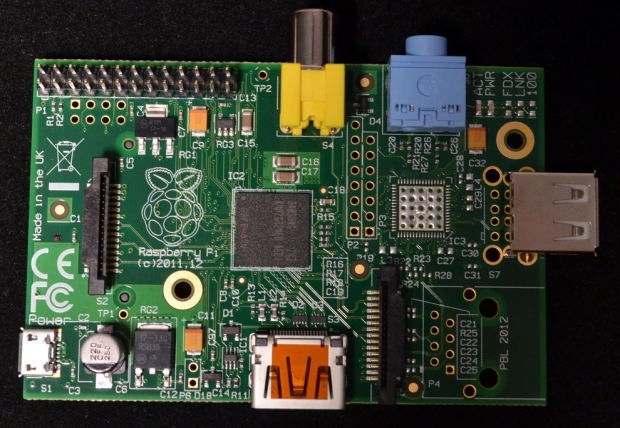
A new, cheaper model of the Raspberry Pi is now on sale, delivering a tiny computer for an even more affordable £19.33.

The 'Model A' micro PC is now out in Europe, available to buy from RS components for under twenty quid. It ditches the Ethernet port, but has a single USB socket and 256MB of RAM.

On its official blog, the creators of the UK-built device explain that the stripped-down computer would come in handy for tinkerers looking to build machines that are powered by a battery or solar power, because it uses "roughly a third" as much power as the existing Model B.

Robots, sensors and Wi-Fi repeaters glued to bus stops are some given examples, but it will be interesting to see what bizarre technological creations the ambitious Raspberry Pi community can cook up.

The Model A has half as much RAM as the Model B Raspberry Pi, but prior to November of last year that earlier version also had just 256MB. As such, you should still be able to craft the Model A into a bargain-priced media centre -- check out our guide if you're keen on giving it a go.

In January, the Raspberry Pi foundation revealed that it had sold roughly 1 million of the little blighters, while Google has splashed out to put 15,000 of the tiny computers in British schools -- a ploy designed to give the UK's programming industry a kick up the backside.

[Source: CNET]

Vodafone UK launches a full Windows Phone 8 roster on February 6th

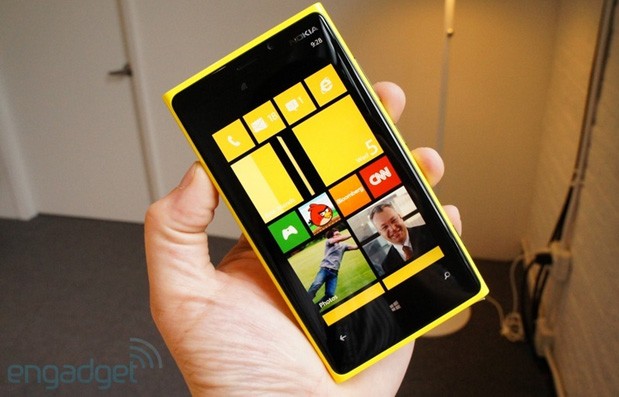
Vodafone's British division has been shy to embrace Windows Phone much at all in recent months. There'll be no such reservation as of February 6th, when the carrier starts offering a wide array of Windows Phone 8 devices. HTC's Windows Phone 8X and 8S will ship in subdued colors, while the (partly expectedLumia 620820 and 920 will be available in livelier hues. We've yet to hear about pricing -- and there's no mention of Samsung's ATIV S, for completists -- but the launch remains good news for UK residents who want to try Microsoft's approach to smartphones without leaving the Red Dot network.

[Source: Engadget]

Tweetbot 2.7 for iPhone adds Vine, Flickr previews

The awesome Twitter client from Tapbots has just been updated.Tweetbot 2.7 for iPhone(US$2.99) adds some welcome additions that make it easier to take advantage of some video and photo sharing services.

If you've downloaded and installed the Vine app for sharing video clips with others, you're going to love Tweetbot 2.7. The update now provides inline viewing support for Vine and photo sharing app Flickr.

Some of us don't use Safari on our iOS devices, preferring the Google Chrome browser instead. Now Tweetbot settings provides a way to select your favorite browser to open links in. Finally, users can tap and hold a link and select "Open in Chrome". The release notes also state that there's an ability to open links in 1Password, although that's only true for versions 4.0 and later of the secure password keeper app.

The update is available for immediate download for existing users of the app.

[Source: TUAW]

University of Cambridge chip moves data in 3D through magnetic spin

Chips that have 3D elements to them are very much real. Moving data in 3D hasn't been truly viable until now, however, which makes an experimental chip from theUniversity of Cambridge that much more special. By sandwiching a layer of ruthenium atoms between cobalt and platinum, researchers found that they can move data up and down an otherwise silicon-based design through spintronics; the magnetic field manipulation sends information across the ruthenium to its destination. The layering is precise enough to create a "staircase" that moves data one step at a time. There's no word on if and when the technique might be applied to real-world circuitry, but the advantages in density are almost self-evident: the university suggests higher-capacity storage, while processors could also be stacked vertically instead of consuming an ever larger 2D footprint. As long as the 3D chip technology escapes the lab, computing power could take a big step forward. Or rather, upward.

[Source: Engadget]

Three won't charge extra for 4G, unlike EE

Three won't charge extra for 4G when it launches later this year. Unlike the pricey EE, the company promises there won't be separate 3G and 4G price plans -- which means you could get 4G for as little as £7 per month, if it doesn't change its current deals.

Three's 4G service will launch in the second half of this year, using the 1,800MHz airwaves it's buying from EE. You'll need a phone with LTE gubbins built-in to benefit from the faster mobile Internet connection, but once you've got the right phone there's no extra cost.

When 4G launches in or after the summer, existing customers won't need to change price plans or SIM cards. If you own an iPhone 5Nokia Lumia 920 or Sony Xperia Z you won't even have to change phones. The latest Apple iPad mini and iPad with retina display tablets are also ready for 4G.

Soon the choice will be even wider with the likes of the Samsung Galaxy S3 LTE andBlackBerry Z10 arriving on Three imminently.

Three vs EE

The first 4G phone network here in the UK is EE, the network formed by the merger of Orange and T-Mobile. EE has come under fire for its prices, or more specifically, the stingey data limitsincluded with each price plan: £36 for 500MB of data, anyone?

By contrast, Three's SIM-only deals start at a mere £6.90 per month for 500MB of data -- you do have to buy the phone yourself, but as a monthly fee that's a quarter of the cost of EE's cheapest 4G deal.

Opt for Three's One Plan and you can bag yourself unlimited all-you-can-eat data from £12.90 per month. That's a 12-month contract too, so you're not tied into a two-year deal like many of EE's plans.

What is Ultrafast? 

Three is adding 4G LTE to its Ultrafast network, which currently uses the DC-HSDPA standard. DC-HSDPA is a faster version of 3G -- think of it as 3.5G -- and allows compatible phones to connect to the Web faster than 3G, even when you can't get 4G.

DC-HSDPA currently reaches half the UK population in 50 towns and cities. It's planned to reach 80 per cent of the population by the end of March. Three hasn't yet revealed how wide its 4G coverage will be.

The other phone networks don't have access to the 1,800MHz spectrum and have to buy different airwaves in an auction currently being held by Ofcom. The telecoms watchdog expects the first rival 4G services to launch in May.

[Source: CNET]

Google Glass Shows Up in San Francisco Bar, Freaks Everyone Out

The potential of Google Glass is exciting. A computer on your face—how futuristic! It’s a concept plucked straight out of science fiction, and people—at least tech enthusiasts—are ready to embrace it. But how will the public react to someone wearing such a strange device on their face?

At one San Francisco bar, reception was mixed. Tom Madonna, one of the co-owners of Shotwell’s, was a bit freaked out when he saw a couple casually stroll in wearing Google Glass. This could be telling for how others receive Google’s tech, and could lead to a new level of prejudice. 

As the Atlantic’s Alexis C. Madrigal describes, Shotwell’s is a “bar-bar:” beer, cash-only, pool table, salty snacks, etc. But it’s also a frequent haunt for the tech-elite, “right near the beating heart of the tech world,” Madrigal said. But Google Glass, a product one might think would be casually received in a place like Shotwell’s, was seen as absurd. “‘They were wearing Google Glasses!” Madonna explained on Facebook. “In public! In A BAR!”

Madrigal spoke with Madonna about his encounter.

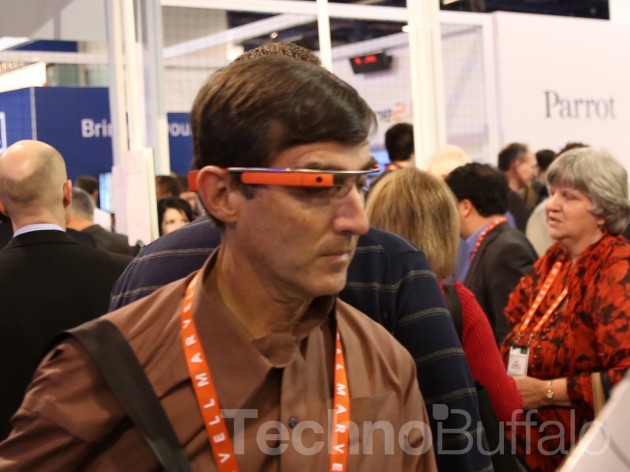
“Anyone that cares what they look like is not gonna wear Google Glasses,” Madonna said. It’s true. We saw Google’s face computer at CES, and it was a spectacle, even among all the insane 4K TVs and weird accessories.

Madonna’s experience isn’t indicative of how every single person will react, but it does tell you that there will be an enormous stigma attached to Google Glass. Technology has a pervasive presence in every aspect of our lives, best encompassed by a smartphone. But you can turn a smartphone off, put it in your pocket—it can be out of sight. With Google Glass, it’s on your face, staring at everyone staring at you. It’s like those gaudy blinds glasses, only those are a joke.

[Source: TechnoBuffalo]

Beta version of Tesla Model S app comes to the Play Store

After being iOS-only for some time, Tesla owners can now control their car with an Android app as well. One perk of having an all-electric cardesigned for a consumer electronics-focused market is great integration of systems, and there's no better way to show it off than with an app that controls your car. The Tesla Model S Android app lets you check your remaining range or charge state, control heat or A/C before you get into the car, open/close the roof and unlock/lock the doors from a distance.

The app has just been released and holds a "Beta" tag, citing occasional UI glitches, but we're just happy to see it released publicly. If you're lucky enough to have your hands (and a good chunk of your bank account) on a Tesla Model S, you'll want to head to the Play Store and grab this app right away.

[Source: AndroidCentral]

Google Glass to use bone conduction to transmit sound

If you were wondering exactly how Google's augmented reality specs are going to work, here are some more details. According to documents filed with the FCC (Federal Communications Commission), the specs will use bone conduction to transmit sound. In other words, they'll vibrate very subtly to make you hear, rather than using speakers.

Which is good news, as anyone who's had to endure N-Dubz leaking from someone's headphones will testify.

The audio element will work in a similar way to some children's toothbrushes, according to Ars Technica. A vibration transducer sets the bones in your noggin buzzing, which translate the vibrations to the cochlea part of your ear which reads them as sound. The technology can be found in some headphones, like Panasonic's prototypes found at CES this year. It's said to be far clearer than a traditional speaker in a normal pair of cans.

In Google's filing, the bone conduction element is only mentioned for when a video plays, but it could have many other uses. Music, and voice calls, for example. Or alerts.

The filing also reveals the tech specs should have 802.11 b/g 2.4GHz WLAN, and a low-energy Bluetooth 4.0 radio. Previously, we saw mention of a laser keyboard, that would project onto any available surface so you can type wherever you are.

So when will we see them? Google's Sergey Brin hopes to get units into developers' hands this year, with a full consumer launch slated for next year. Though considering the many hurdles involved, I wouldn't hold your breath.

The technology does look really cool though. And considering what Google Now is capable of, integrating that and more into a pair of glasses could really change how we interact with our gadgets. It's already inspired a raft of imitations.

[Source: CNET]

Nintendo says it won't cut Wii U price, despite slow sales

It's no secret the Wii U isn't selling too well. Many claim the console has confused 'casual' gamers with its tablet-style controller. And as a sign of how it's struggling, Nintendo has slashed its outlook on Wii U sales for the March quarter. But it won't drop the price, it's said in a stout defence of its strategy.

"With Wii U, we have taken a rather resolute stance in pricing it below its manufacturing cost, so we are not planning to perform a markdown," the company said, BGR reports.

Just in case there was any doubt, the Nintendo spokesperson spelled it out. "I would like to make this point absolutely clear. We are putting our lessons from Nintendo 3DS to good use, as I have already publicly stated. However, given that it has now become clear that we have not yet fully communicated the value of our product, we will try to do so before the lineup is enhanced and at the same time work to enrich the software lineup which could make consumers understand the appeal of Wii U."

So that's that. Got it?

Nintendo cut the price of the 3DS after launch, so it's not one to blindly stick to its guns. And the Wii U only went on sale a couple of months ago, so a price drop so soon would show Nintendo had very little confidence in the console. It would also annoy anyone who paid full whack such a short time ago. So I can see why Nintendo is keen to avoid slashing the price.

I think critics are right when they say the Wii U is confusing for the average punter, especially after the simplicity of the original Wii. But I think maybe the age of consoles is on its way out, with the threat from far cheaper games for mobiles and tablets. Let's see how the PS4 shapes up when Sony lifts the curtain on it in a couple of weeks.

[Source: CNET]

Lynx A Camera

It's the world's first point-and-shoot 3D camera. It's not a conventional camera, but it's like a camera - particularly when it comes to learning curve and ease of use. If you can use a point-and-shoot Nikon, you'll find the Lynx even easier to use. Instead of outputting 2D images, it produces 3D models of whatever you point it at.

It's a light, plastic device shaped like a tablet. It has specialized, front-mounted optics including a 640x480 color camera and a 3D sensor. On the front, there's a large, 14" color LCD screen for an instant and accurate view of imaging results. You can navigate your captured models using joysticks, just like a videogame controller. The device has a powerful graphics card for capture/render and high-capacity storage. The battery is good for four hours. It fixes the annoying stuff (bad battery life, small screens, costly storage) of conventional cameras.

Capturing with the device is really cool. From the startup screen, you can select from three features: scene modelingobject modeling, and motion capture. Each starts instantly and has a simple start/stop interface. 

Scene modeling is more like a paintbrush. Scan surfaces around you and watch the 3D model get painted in the viewfinder. Scene modeling is more appropriate for large scenes because it stores the models in an extremely efficient manner.

Object modeling is like sculpting with a chisel. You walk around the object of interest and it slowly carves out a watertight 3D model of the object. 

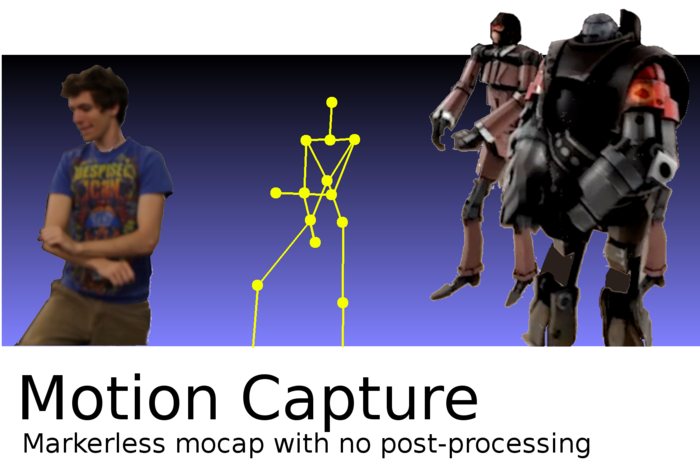
Motion capture is like having a motion volume in front of your camera. Point the camera at an actor, press record, and just have the actor start moving around. When you press pause, the results are instantly ready.

With all 3 of these features, you can immediately output the files into the formats you currently use in your workflow including PLY, OBJ, STL, XYZ, JPS, BVH, and more.

One of the most disruptive features of the device is the price. If you cobbled together all the hardware and software you would need to accomplish these tasks, you'd end up dishing out a couple hundred grand. That's not accessible at all. The Lynx device sells for about the same price as a full-framed DSLR, making it a serious value for small outfits and innovators trying to break into these technologies.

[Source: Kickstarter]

Google Chromebooks now in 2,000 schools, usage doubled in three months

Google has really ramped up its education efforts lately, and it looks like it's paid off: according to the Mountain View company, its Chromebooks are now in use in 2,000 schools, which is twice as many as there were three months ago. Three of the more recent participants include Transylvania County Schools in North Carolina with 900 devices, St. Thomas Aquinas High School in Florida with 2,200 and the Rocketship Education charter network in the Bay Area with 1,100. The education team has been making efforts in the global community as well, with cloud-promoting appearances at various education conferences such as the Florida Education Technology Conference in Orlando and the British Education Training and Technology show in the UK. We're not sure exactly which flavor ofChromebook the students are getting their hands on, but we're sure no matter what they use, they'll grow up well-versed in what could be the future of computing.

[Source: Engadget]