Google Play Birthday Celebration Includes Game, Movie Sales

Today is Google Play’s first birthday. That might sound a bit confusing, because prior to calling it that the store was simply named the “Android Market.”

Google’s celebrating by highlighting a number of free games (some of which were always free, such as Zenonia 5), and offering discounts on movies, music and books. The pilot of Breaking Bad is free for example, and Kung Fu Panda is available for just $2.99.

There’s nothing too juicy to be had, but we wish Google Play a happy first birthday anyway.

[Source: TechnoBuffalo]

Nikon Coolpix A: Point-and-Shoot Body With DSLR Dreams

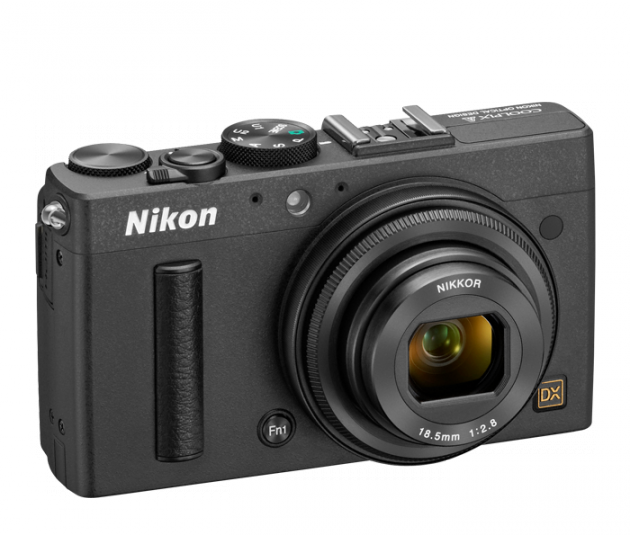
The Nikon Coolpix A looks like any old point-and-shoot: compact, attractive and handy as a possible vacation camera. But this is far from your typical shooter, and in fact further blurs the line between gear for professionals and the average consumers—at a cost, both in literal and figurative terms.

In the Coolpix A, Nikon managed to cram a DX-format sensor—16.2-megapixel APS-C—inside of a 4.4 x 2.6 x 1.6-inches body. Consider, if you will, how large a comparable professional DSLR is, and there’s reason to scoop this up for casual street photography, or maybe some easy landscape shots. The results, as you can see below, look pretty fantastic, showing off the Coolpix A’s range in different lighting situations.

The first downside is that the 18.5mm (equivalent to 288mm on a full frame) lens is fixed, and doesn’t zoom. That might not jive in a lot of shooting scenarios, but it’s a sacrifice. The max aperture of f/2.8 will be great for low-light situations when coupled with an ISO range of 100 to 25600. That black and white profile is an example.

Users will get plenty of advanced settings and manual modes, including a manual focus ring and multiple Scene Modes. There’s also a 4 frame-per-second burst mode to better capture action, and a dashboard menu on the LCD, along with additional body controls.

There’s no optical viewfinder, interchangeable lens support or zoom, but it’s compact, produces high quality results, and creeps toward what you’d expect in some of today’s entry-level DSLRs. But it’s also $1,100, which is a hefty price tag for something that sacrifices on features for size. Look out for the Coolpix A when it grops next month.

[Source: TechnoBuffalo]

Jelly Bean Marches to Greater Market Share

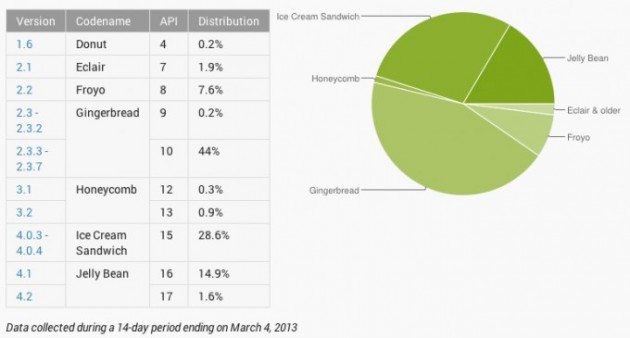
Another month, another collection of Android adoption data shows Jelly Bean’s slow march toward bigger marketshare. During a two week period ending on March 4, data reflects a jump up to 16.5 percent distribution compared to 13.6 percent in February. That’s actually a pretty big jump, owing in part to manufacturers pushing out updates and more recent phones releasing with the latest OS.

Gingerbread, which still dominates, fell slightly, as did Ice Cream Sandwich, but not by much. The leap is promising, and it’s great that all phones we’ve seen announced this year are coming with Jelly Bean outright. Gingerbread is still an imposing number, and will likely continue to be for awhile. Probably even during Key Lime Pie and beyond.

[Source: TechnoBuffalo]

XX

Microsoft landed with £486m EU fine in browser-choice row

Microsoft has been landed with a staggering €561m (roughly £486m) fine, after European regulators found the software giant hadn't offered PC owners enough of a choice when it came to their browser.

The fine was handed down by the European Commission, as punishment for neglecting an anti-monopoly settlement from 2009, the New York Times reports. In that settlement the company behind Clippy vowed to offer Windows users a choice of which browser they wanted to use, instead of simply defaulting to its own Internet Explorer.

The result was 2010's browser ballot, which you may have spied yourself if you've started up a new Windows PC in the last couple of years. The ballot offered rival operating systems such as Firefox, Google Chrome and Apple's Safari browser.

The order in which rival browsers would appear on the ballot was a subject of heated debate, but eventually Microsoft plumped for the five most popular Web browsers appearing in random order.

Good stuff, but Microsoft seemingly dropped the ball, with a version of Windows 7 (SP1) not offering users the choice. The company reportedly says it has updated both Windows 7 andWindows 8 to include the ballot, but that hasn't stopped anti-monopoly officials sending the firm a monstrous bill.

Microsoft's Internet Explorer browser remains popular, though critics say a huge part of that success is because it's been the default software on Windows PCs for a long time.

[Source: CNET]

Google+ (on the web) rolls out huge cover pics, new local reviews tab

Google+ today rolled out some interesting improvements to its web version. The biggest, obviously, is the gianormous new cover photos. What was once long and skinny is now long and not-so-skinny. (We know how it feels.) When fully expanded, the new cover photos have a 16x9 aspect ration and can be as large as 2,120px by 1,192px. That's big. So make sure your image doesn't suck.

Next is a new tab for your local reviews. If you've reviewed something in your hamlet, it'll show up here. You can use it to showcase specific reviews, or you can hide it altogether. Your call.

Editing your info also is easier now, with better separation of content in the About tab, with cards acting as category separators.

[Source: AndroidCentral]

Microsoft reverses course, says Office 2013 licenses can now be transferred to new PCs

There were plenty of Office users none too pleased with Microsoft's recent decision to tie Office 2013 retail licenses to the PC they were originally installed on, and it looks like the company has been listening to them. Microsoft announced in a blog post today that it's changing the policy, and will now allow users to transfer the license if they get a new PC or the old one fails. The company says that it will update the actual license agreement included with the software in a future release, but makes it clear that the change is effective immediately. Of course, there are still some limitations. You can't transfer the license more than once every 90 days unless there's a hardware failure, and you still can't have the software on more than one computer at the same time. You can find the full text of the new license at the source link.

[Source: Engadget]

KFC gets free UK WiFi through The Cloud: get some data with your drumsticks

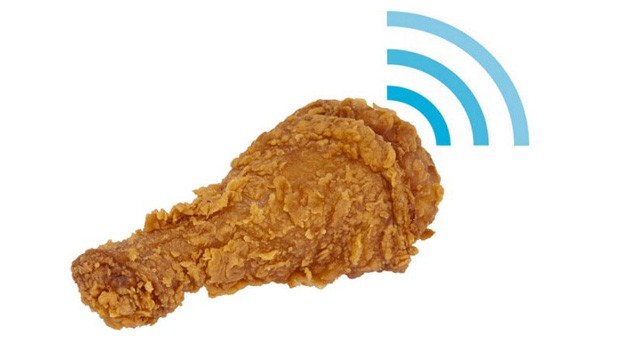
Hey, it worked for McDonald's, didn't it? KFC would certainly prefer that its British customers hang around for long enough to justify a bucket of chicken rather than a Snack Box, so it's teaming up with The Cloud to offer free WiFi in all of its UK restaurants. The gradual rollout will just ask that visitors face a KFC landing page before they wander over to cat videos and ex-partners' status updates. We're glad to have one more avenue for internet access when we're feeling peckish, although we may question our path in life when we're Instagramming a Boneless Banquet For One.

[Source: Engadget]

iBooks 3.1 brings paid content to iBookstore in Japan

Version 3.1 of iBooks is out today and while it might not bring much in the way of new features for Western users, it's a pretty big deal for book lovers located in Japan. That's because the latest update introduces paid content on the order of hundred of thousands of books -- encompassing novels, manga and more -- something that the country's iBookstore has been without up until this point. Before now, iOS users in Japan have needed to be content with public domain e-books.

In addition to the paid content rollout, the 3.1 update also introduces some improvements when reading Asian language books.

[Source: TUAW]

Microsoft ViralSearch project visualizes content as it spreads across Twitter

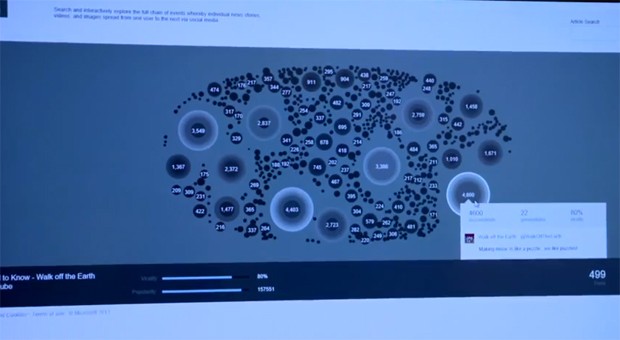
It's not a new component of Bing (not yet, anyway), but Microsoft has taken the wraps off a new small-scale search project at its TechFest event this week -- one with a particular focus on so-called viral content. Appropriately dubbed ViralSearch, the effort from Microsoft Research currently uses Twitter as a source for all its data, and offers a variety of ways to track and visualize how a story, photo or video spreads from one outlet or individual to hundreds or thousands of others. That includes a profile view of sorts, which lets you see how influential a particular person was in spreading an item, and how prolific they are in general. Unfortunately, it is still just a research project so you can't try it out yourself just yet, and there's no word on any plans for it to become a commercial product.

[Source: Engadget]

Evernote plans two-factor authentication following last week's hack

In a move that's often more reactive than proactive these days, Evernote has shared plans to add two-factor authentication to its login process. This latest announcement follows last week's hacking attack and subsequent site-wide password reset, and will be available to all of the site's 50 million users beginning later this year, according to an InformationWeek report. It's too early to say exactly how the Evernote team plans to implement the new security feature, whether through a dedicated app or text message password, but given the service's scale, we can likely count out a hardware fob option, at least. For now, your best course of action is to create a secure password, or, if you're especially paranoid, you may consider delaying your return until the security boost is in place.

[Source: Engadget]

Chinese ministry says Google 'controls too much' of its smartphone market

China and Google just can't seem to get along. The country's ministry is the latest to take issue with el Goog, stating that it has too much control within the smartphone industry because of its Android OS and is discriminating against local rivals. China's Ministry of Industry and Information Technology announced this in its recent white paper, adding that the country had the ability to craft its ownmobile OS if it wanted to. According to the document: "While the Android system is open source, the core technology and technology roadmap is strictly controlled by Google." It goes on to describe how the Mountain View crew had apparently delayed sharing source code with Chinese companies developing their ownoperating systems. The paper also took the opportunity to praise homegrown stars like Baidu, Alibaba and Huawei for their own systems. In short, it looks like an amicable relationship is still a while off.

[Source: Engadget]

Wii U System Update Improves Stability, Big Update in April

Nintendo released a brand new system update for the Wii U this morning. The update’s been labeled Version 2.1.3 U, and it’s available through the settings menu within the Wii U UI.

I’ve personally completed the update; a process that only took about 5 minutes, thanks to the ethernet cable and USB dongle duo I’ve recently installed. If you frequent the site, you might remember an article I ran back in December of last year. It was then that I spent a week trying to update my Wii U with no luck. I wound up calling Nintendo and, get this, they told me to move my console closer to my router.

It worked, oddly enough.

Regardless, today’s update is only a minor one. Here’s the full text from Nintendo’s support site:

Version 2.1.3 U available via an Internet connection includes the following improvements:

Further improvements to overall system stability have been made.*

*The previously announced system update, which adds new features and further improvements to the user experience, will be released in April.

The previously announced system update, of course, is the one that Nintendo promised back during a Nintendo Direct presentation a few weeks ago. That update will supposedly speed up UI performance and reduce load times.

We’ll have more on these updates and the Wii U as it comes.

[Source: TechnoBuffalo]