Rovio Angry Birds Cartoon Series Launching on March 16

Own a copy of Angry Birds? Then you’ll be able to tune in to a new cartoon series that will launch through the game beginning on the weekend of March 16 – March 17. Rovio announced the news on Monday, and said that the “dedicated channel” will be available inside of Rovio’s published games as well as on other connected devices, such as Smart TVs. Rovio said the new cartoons will also air on TV networks around the globe.

“We’ve long wanted to tell our fans the story of the Angry Birds and the Bad Piggies, to introduce their personalities and their world in detail.” said Rovio CEO Mikael Hed. “We’re delighted to introduce all this through our new channel, with easy and instant access to the stories in the palm of your hand. With over 1.7 billion downloads, we can reach a far wider and more engaged global audience than traditional distribution would allow.”

So how can you tune in? Easy. Update the game on March 17 (or tune into one of the networks showing the cartoon on March 16) and then open the application on your smart device and simply tap the icon representing the new video channel. Hopefully the cartoon is as addicting as the games.

[Source: TechnoBuffalo]

Microsoft to Enable Flash by Default in IE 10 on Windows, Windows RT Tomorrow

Microsoft announced Monday that it will automatically enable Adobe Flash content inside of its Internet Explorer 10 browsers on Windows RT and Windows 8 machines beginning tomorrow, March 12. The company suggested that there was a compatibility issue before now that prevented it from wanting to leave the option on by default.

“As we have seen through testing over the past several months, the vast majority of sites with Flash content are now compatible with the Windows experience for touch, performance, and battery life,” Microsoft said on its website. “With this update, the curated Compatibility View (CV) list blocks Flash content in the small number of sites that are still incompatible with the Windows experience for touch or that depend on other plug-ins.”

The update should be available to all users running Windows RT and Windows 8 tomorrow.

[Source: TechnoBuffalo]

Samsung Galaxy S4 revealed in first official image

This is it, folks: the first actual, official, honest-to-goodness glimpse of theSamsung Galaxy S4 -- albeit in tantalising moody backlighting.

This is the first teaser to actually show the phone, after a series of videos featured only ablonde-mopped tyke and a glowing box. And it seems the leaked photos spotted yesterday could be closer to reality than we thought, as the teaser shows the S4 sporting curved corners and a slim bezel. It would be fair to say that it looks almost identical to the S3 -- from what we can see at least.

"The countdown for #TheNextBigThing has begun," declares Samsung from its US Twitter account. "Who's ready for the Global Unpacked Event on March 14?"

Unpacked takes place late on Thursday in UK time, and there's no UK press event. Coupled with the use of the American Twitter account, the S4 launch is clearly focused on the US market -- which suggests our colonial cousins will be the first to get the new phone. Fingers crossed we won't have to wait too long for the S4 to cross the pond.

Fortunately, we're not going to let a little thing like an ocean come between us and the hottest phone of the year, so we've dispatched our buddies at CNET's American starbase to the New York launch event. Keep it CNET.com for the first news, previews and videos of the Galaxy S4.

[Source: CNET]

iPhone prototype is the size of an iPad

Let's jump into the time tunnel and head back to 2005, where we find this beast: an iPhone prototype the size of an iPad.

This early iPhone prototype was 5 inches wide and 7 inches tall, measuring a chunky 2 inches thick. A mystery Apple employee reveals the device in photos shown to Ars Technica.

The prototype was never designed to bear any relation to a finished design, rather it was a platform to test the technology. So we shouldn't read too much into the fact that it had a whole mess of ports: including an Ethernet port, a serial port and several USB ports, all of which were there to help developers work on the device rather than because Apple thought the finished product should have lots of sockets.

That said, the processor does show that Apple had an idea of what the chip would be like in the finalised phone: the prototype's 233MHz Samsung ARM9 chip evolved into an ARM11 chip in the model that hit shops.

When the iPhone was still just a twinkle in Steve Jobs' and Jony Ive's eyes, potential names considered include 'Telepod', 'Tripad' or 'Mobi' -- or confusingly, the 'Tripod'.

Later prototypes have also emerged, looking more like a phone but still a long way from the iPhone we know, with squared corners and small touchscreens.

[Source: CNET]

Apple suppliers had a very tough February

February is usually not a great month for the companies that supply Apple with its iOS and Mac device parts (Chinese New Year usually falls right in that month, and production in China always take a big downturn as people celebrate there). But this particular past February was especially bad, according to reports: Topeka Capital Markets analyst Brian White says that the suppliers for Apple that he tracks saw their sales data fall 31 percent over the past month, as compared to the usual 8 percent drop in past years. That makes for the worst February on record for Apple's suppliers, which may or may not soon have an impact on Apple.

Now, with Apple's suppliers showing low sales data, that could mean more opportunity for Apple to step in with its big pile of cash and make sure that it has more components than ever to build new devices with, so it's not entirely clear that this will be a bad thing for the company from Cupertino. But of course Apple depends on these suppliers, and if they suffer increased economic pressure for any reason, Apple could experience consequences for its own business.

[Source: TUAW]

Gmail's mobile web interface now looks just like the app

I use Gmail pretty much exclusively for my incoming email, with three or four different accounts that redirect to my always online, easily accessible, and seemingly bottomless inbox. I thought the app the company recently released with a brand-new look was pretty impressive, and apparently so did the web designers at Google: They have just switched the mobile website to make it look just like the official Gmail app.

Unfortunately, the changes haven't proliferated to my corner of the web, but the screenshots of the new design look great -- nice and clean, with just a few important bits of color to keep your incoming messages straight. This version is also available on Gmail Offline, says Google, though strangely enough it hasn't made its way to the official Android client yet. I find a certain irony in the fact that the web interface is catching up to the official app interface, especially considering how the iOS app environment started as a series of web apps.

And who knows -- maybe the desktop web interface will see some of these changes soon. I'm used to the way it works now, but I'd be up for some tweaks and twists if they help unify the platform.

[Source: TUAW]

Apple’s eBay store offers significantly better deals on Apple.com refurbs

9to5Mac first broke the news that Apple sold refurbished merchandise through its own eBay store last year, equipped with the same price tags, full warranties, and approved inspections, and now the company has dropped prices on many of those items below what it offers at store.apple.com.

9to5Toys and eventually Dealnews recently noticed a $100 price cut for Apple’s 13-inch MacBook Air with 1.8GHz i5 and 128GB of storage (now over). It costs $100 more at store.apple.com for the same refurbished unit.

An even better eBay deal has emerged today: Apple’s 11.6-inch MacBook Air with 1.8GHz, 4GB SDRAM and 256GB SSD is only $949. It’s certified refurbished unite, while the same refurb model goes for $1,059 on Apple.com, and the 256GB MacBook Airs start at $1,299 new. All items come with free standard shipping, and eBay adds sales tax for only a few states at purchase and allows folks to pay with PayPal and BillMeLater.

[Source: 9to5Mac - Click here to read the full story]

Latest Apple TV reveals smaller A5 chip, adds to rumors of split with Samsung

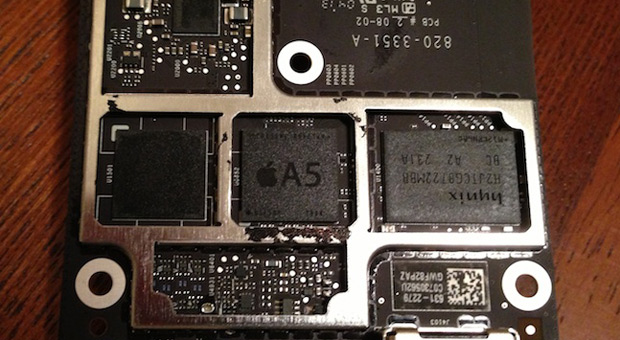
Quiet, mid-cycle component upgrades are a thing with Apple, and they're sometimes worth watching out for. The iPad 2 got a chip update last year, for example, which significantly extended its battery life by using a 32nm A5 SoC instead of a 45nm one. Well, much as expected, a very similar processor update has just come to the Apple TV. MacRumors popped open the latest version, known as "AppleTV3,2", and found good evidence of a further die shrink: the central block of silicon is just 6 mm x 6 mm, which is even smaller than the 8 mm x 8 mm chip in the newest iPad 2. This inevitably leads to speculation that Apple has shifted to a 28nm fabrication process, possibly snubbing Samsung's 32nm foundries, but we'd need a proper silicon-level analysis to be certain. In the meantime, though, we'd guess that this update may not be worth hunting down to the degree that the new iPad 2 was -- the level of shrinkage here doesn't seem enough to have a huge impact on power draw, and in any case that's less of an issue for a device that's fed from the wall.

[Source: Engadget]

Is this the Samsung Galaxy S IV or is it in disguise again?

Mere days before Samsung unveils its newest phone, a Chinese forum post has offered some purported shots of the Galaxy S IV. Now it's worth mentioning from the outset that Samsung plays a good game of subterfuge. It masked the Galaxy S III ahead of its reveal last year in a blockier plastic frame and it could be that this phone, with a very Note-esque face and outline, is also a filler ahead of the final reveal. It could also be yet another phone that will slot in elsewhere in Samsung'sever-expanding Galaxy family, or even a Shenzhen knock-off that's jumped the gun -- we spotted that the front-facing camera hole doesn't quite align properly.

However, with that said, there's still plenty here to muse on. The shots appear to be taken in a phone unlocking shop somewhere in China, with this GT-i9502 model apparently bound for carrier China Unicom. Interestingly (at least for a flagship), it appears to be a dual-SIM version, with the mono-SIM version apparently picking up model number GT-i9500 -- a number that would fit in with the series so far. According to the leak, it's running a fresh version of Android (4.2.1) with a 1080p display (no word on dimensions just yet), 2GB of RAM and a 13-megapixel camera on the back. The mention of a "5410" CPU suggests it's Samsung's Exynos Octa chip powering it and while AnTuTu might only recognize that as a quad-core chip, we noted during our hands-on with the new chipset that only four cores were being used at a time. We're still hoping Samsung's final design pushes the envelope a little further than a repositioned camera sensor and a new glossy texture -- we've added a shot of this after the break. Rest assured,Jeremy will be letting us in on the big secret later this week.

[Source: Engadget]

LG 55-inch OLED TV launching in July, costs £10,000

I know we've heard about LG's 55-inch OLED TV set before, but it's so far failed to make it to shop shelves. Well now comes word it'll land here in the UK in July, exclusively for sale from Harrods. And the price? Glad you asked. It'll set you back a cool £10,000.

Recession? What recession?

We saw the LG OLED 55EM970V a while ago, and a limited number went up for pre-order last summer for £8,000. Converting the price from South Korean won, we were expecting to have to shell out £6,300 when it went on sale properly, so the £10,000 price tag is a bit of a kicker. Still, I'm sure you can find an extra four grand knocking around somewhere. Have you checked down the back of the sofa?

Us Brits will be second only to LG's native South Korea to be able to buy the set. Andrew Mackay, UK commercial director of home entertainment and home appliances, said in a statement: "Following the LG launch and supply to the Korean market earlier in the year, the UK is proud to be the next market to launch LG OLED TV, as this innovative and premium model launches first in Europe to UK consumers."

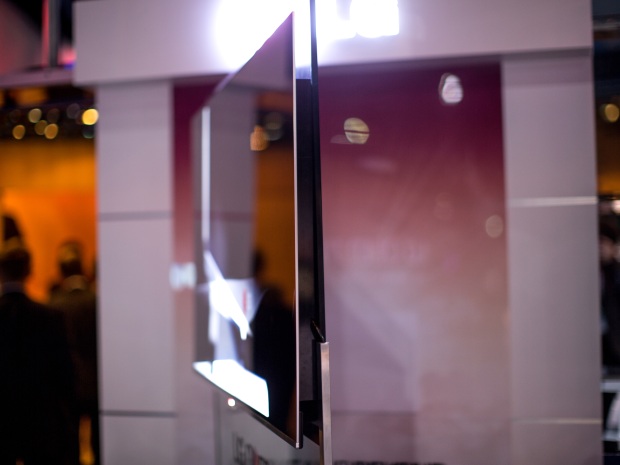
The set is certainly a looker. OLED (Organic Light-Emitting Diode) TVs make for much truer black levels, because they don't have backlights. Each pixel makes its own light instead, meaning blacks look black, instead of grey, as on some sets. The TV is also ridiculously slim, at just 4mm. That's almost half the thickness of an iPhone 5, on a TV with a 55-inch screen. Madness.

The only catch is the price. OLED sets will come down eventually -- Sony's first effort was just 11-inches across, and was crazily expensive. If you do invest in LG's 55-incher, do us a favour and send us some snaps. Then we can all imagine what it must be like to have it in the lounge.

[Source: CNET]

Philips Releases Open APIs and SDK for iOS Controlled Hue Lighting System

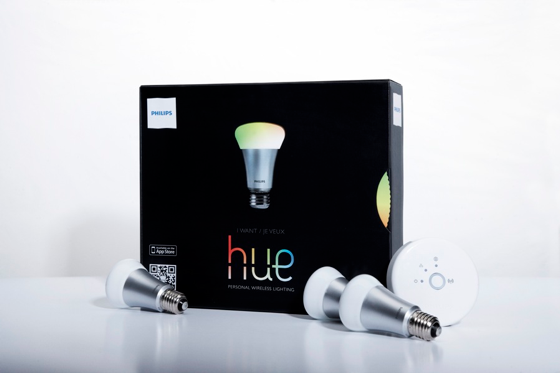
TechCrunch reports that Philips has created an official developer program for its Wi-Fi connected Hue home lighting system, which includes an SDK for iOS and APIs to allow hardware and software developers to integrate Hue into their products. 


Hue, which is exclusive to iOS, allows users to control LED lightbulbs via the iPhone and an accompanying bridge that uses the ZigBee communication protocol. 

"We're now at a point where there are already about 10 applications that have been shared and built from the unofficial developer community for new applications around Hue," explained George Yianni, Hue System Architect in an interview. "Now what we want to do as Philips is we actually want to help and grow and encourage this community, and give them tools and proper documentation. Also, we want to give them commitment that this is the API and we’re going to support it and it won’t change overnight."

Though Hue-integr additional ated third party apps such as last week’s Ambify have been released, these solutions do not use official APIs. According to Yianni, the unavailability of official APIs is the main reason that the Hue has yet to be integrated into apps and connected home devices. 

The new Hue tools are freely available for all developers interested in creating a product or an app that connects to the system

Philips plans to add additional functionality to the Hue in the future, focusing on geofencing, scheduling, and other sensor capabilities. The company is also working on expanding the Hue line with new lightbulb types.

[Source: MacRumors]

Facebook buys Storylane blog, to go with new News Feed

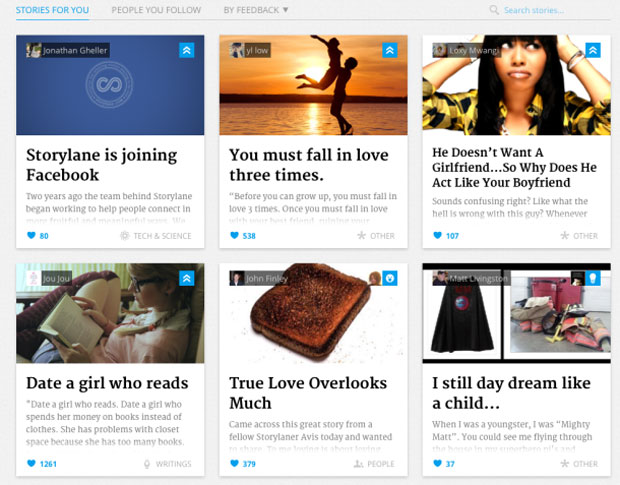
Facebook has snapped up Storylane, a blogging site with a community feel that lets people share stories. The social networking behemoth has acquired the team behind the site, rather than the site itself, so if you've posted anything, rest assured, Zuckerberg won't get his mitts on it.

Jonathan Gheller, founder of Storylane, posted the news on the site, reassuring users that anything they'd shared wouldn't fall into Facebook's hands.

"The beautiful stories you have decided to share with us are yours to keep and share in however way you want," Gheller wrote. "We are building tools that will help you migrate the content to other services if you so desire. I will be in touch with you about those specific tools later, but I can confirm that Facebook is not acquiring any of your data; and we're working to make sure you can migrate your content in a manageable way."

Facebook just unveiled its new News Feed, which Mark Zuckerberg said should be like a "personalised newspaper" for each person. Obviously it's a bit late to integrate some of Storylane's features into it, but we could well see some built in at some point in the future. The new News Feed has bigger images -- a staple of Storylane -- and lets you customise it as you see fit. It's also designed to be more consistent across mobile devices and desktop browsers.

It's more of a mix too, with news articles, images, maps, photos, and the rest, much like Storylane, or a Pinterest board.

Storylane only launched last October. Yahoo was also reported to be interested in snapping it up. That seems the way to get rick quick, come up with a killer idea and sell it to Facebook or Apple.

[Source: CNET]