iOS 7 Beta 5 Tidbits: Icon Settings Redesign, New Control Center Options

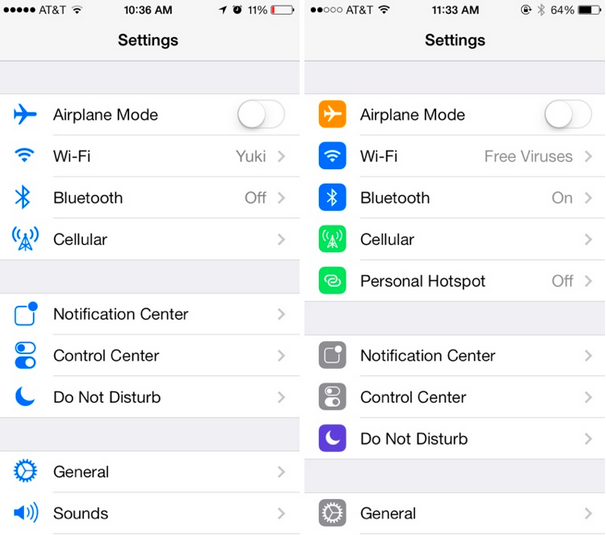
Apple today released the fifth beta of iOS 7, which brings a number of improvements, changes, and bug fixes to the operating system, including newly redesigned Settings icons and a Control Center option that allows the feature to be disabled within apps. 

iOS 7 beta 5 also offers a slew of minor interface tweaks and improvements that continue to make iOS 7 feel both faster and more polished. Our forum members have noted multiple enhancements that have been bundled into the release...

Read the full story here... Source: Mac Rumours

Why is THAT in my News Feed? Facebook explains

Facebook offered a deep dive into its its News Feed ranking algorithm on Tuesday, expounding on why it moves up old stories and how it picks which stories it thinks you want to see.

Lars Backstrom, the engineering manager in charge of News Feed ranking, explained how Facebook sorts through the "tens of thousands" of potential posts users put on Facebook each day. While there is a median of 1,500 potential stories that a user can see daily, Facebook inserts about 300 based on an algorithm that guesses how interested you will be in a post by factoring users' reactions to previous posts and the users. Each post is given a score and placed depending on that score. The more likes and comments people make, the more data Facebook has to work with...

Read the full story here... Source: CNET

Nokia Launches Lumia 925 Advertisement Bashing iPhone Camera

Nokia has taken a page from Microsoft's advertising book and has today launched (via UKMR) a new advertisement comparing the company's Lumia 925 to the iPhone 5. 

The ad focuses on the phone's photographic capabilities and is based on Apple's well known "Photos Every Day" commercial, which began running back in April. It uses a similar voice over and style, focusing on Lumia users taking photographs with their devices...

Read the full story here... Source: Mac Rumours 


Apple sales ban veto: A sign enough's enough with patents

For the first time in more than 20 years, the White House squashed a verdict handed down by a top U.S. trade court, a result of an ongoing patent dispute between Samsung and Apple. 

The move came as a surprise to industry watchers, despite coming only a couple of months after the government set up a task force to "protect innovators from frivilous litigation." The Obama administration has long had professional and political links with Apple, the iPhone and iPad maker at the center of the dispute with Samsung over patents crucial to industry standards...

Read the full story here... Source: CNET

Samsung Galaxy Note 3 all but confirmed in IFA invitation


KOREAN PHONE MAKER Samsung has sent out its IFA invitations, and they all but confirm that the Galaxy Note 3 will appear at this year's German technology show.

Samsung's IFA invitation pictured above arrived in our inbox on Monday afternoon, telling us to "Note the date" of Samsung's 4 September press conference alongside a trio of Samsung Unpacked images. This is our biggest clue yet that Samsung will announce its next generation Galaxy Note smartphone, the Galaxy Note 3 at the Berlin technology show, just as speculation had suggested...

To read the full story... Source: The Inquirer


Bob Mansfield to Focus on New Products, Other Execs Take Over Management Duties

Earlier this week, Apple executive Bob Mansfield stepped down from his management duties at Apple in order to focus on 'special projects' -- reportedly working on the development of entirely new products for the company.

Now, 9to5Mac has additional details about how the shake-up affects other executives.

Dan Riccio, who was promoted to lead Apple's hardware engineering teams when Bob Mansfield first retired last year, will gain oversight of the company's antenna design teams in addition to his current leadership of Mac, iPhone, iPad and iPod engineering.

Jeff Williams, who, as Senior Vice President for Operations, has been Tim Cook's right hand man for years, will take over the job of managing Apple's special projects engineering teams, while Mansfield gets to continue working with Apple's newest and most cutting edge designs without the distraction of management.

 According to a source familiar with the former Technologies team, there has been a lack of formal internal communication regarding the reasoning behind the management shift. However, the company did make the new executive roles clear to these employees. Even with the lack of communication, sources say that the change is not unprecedented. Over the last couple of months, Mansfield is said to have been increasingly focused on chips (and some aspects of wireless) while delegating his other teams to other executives.

9to5 goes on to note that though Mansfield would like to retire at some point, he will likely never fully leave the company. Given the lengths that Tim Cook went in order to keep Mansfield at Apple, it's likely he will be given free reign to work whatever hours and on whatever projects he wishes.

Source: Mac Rumours


Google to release Apple-like 'Find My Phone' app at long last

One of the few OS perks iPhone owners have still held over the heads of their Android compatriots is Apple's official -- and free -- app for locating and remote wiping a lost device.

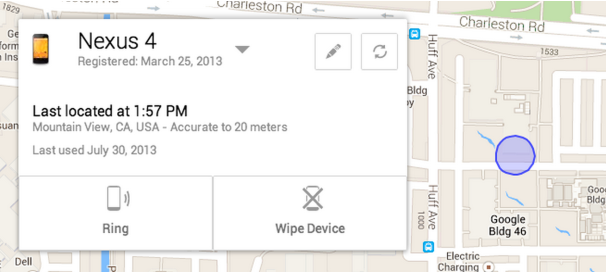
After years of user complaints and shoddy third-party variants, Google has finally answered iOS's "Find My iPhone" feature with a locator of its own: the Android Device Manager.

To be released later this month, the app will let Android users find and ring a misplaced or stolen device on a map in real time, as well as wipe its contents remotely. The feature will be available for users running Android 2.2 or later.

Google's solution to the increasing problem of device theft comes at a time when smartphone manufacturers have seen mounting pressure from authorities to add software-side features that could help curb what has been called a violent crime epidemic. Some initiatives, discussed at a meeting between lawmakers and tech giants like Apple and Samsung in June, have included the potential for a "kill switch," which would permanently brick a stolen device and make it worthless for resale.

But just how violent is smartphone theft -- which has picked up the unique law enforcement nickname of "Apple picking" -- becoming these days? Examples abound, including the killing of a 26-year-old Museum of Modern Art employee for his iPhone in the Bronx and the mugging of a Crown Heights, Brooklyn woman over her Android device at gunpoint.

Source: CNET

Apple proposes new terms in e-books battle

Hours after the Department of Justice and 33 U.S. states proposed a set of remedies for Apple to comply with following its July loss in the e-books price-fixing case, the company came back with its own set of terms and called the government's proposals vague, overreaching, and unwarranted.

In a brief filed Friday, the company called the government's proposed measures a "draconian and punitive intrusion into Apple's business, wildly out of proportion to any adjudicated wrongdoing or potential harm."

Apple maintained that it did not violate antitrust laws, and that an earlier settlement struck with publishers means the behavior that the court found to be anticompetitive has already ended and can't recur.

But if the court does issue an injunction, Apple said, it recommended that it place "reasonable limitations on Apple's ability to share information," prohibit agreements with publishers from having "most favored nation" pricing pacts that give Apple the best price, and "reasonable antitrust training obligations for Apple, lasting a reasonable term."

Earlier Friday, the Department of Justice proposed a remedy that would require Apple to terminate its existing agreements with five major book publishers, staff a court-appointed monitor to keep an eye on internal antitrust compliance policies, and allow competing companies like Amazon to link to purchasable content within their e-book apps.

A plan from either side still requires court approval. The court will hold a hearing on proposed remedies on August 9.

Last April, the Justice Department sued Apple, along with five of the six largest book publishers in the U.S., accusing all parties of conspiring to set e-book prices and break Amazon's hold on the market with its Kindle e-book reader. Apple became the sole defendant in the case after the publishers made deals with the Justice Department.

A federal judge last month ruled that Apple violated antitrust laws, following a trial in the Southern District of New York. Judge Denise Cote said the Justice Department proved that publishers conspired together to eliminate price competition for e-books, and that Apple played a central role in that conspiracy. Apple has said it plans to appeal the decision.

Source: CNET

Moto X software: it’s aware of you, so you should be aware of it

The Moto X is finally here. We knew quite a bit ahead of time, but now that it’s official, we can talk about it… officially.

The hardware is definitely not top of the line, but the workaround for that is software. If you have a phone in which the software takes great advantage of the hardware, it forgives the shortcomings quite a bit. So, how will the Moto X take asdvantage of the hardware? Waht software feature(s) will set it apart? The answer is one you probably already know.

Contextual awareness, or creepiness?

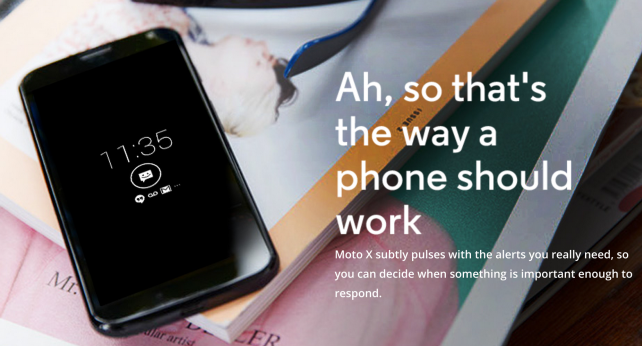
Android 4.2.2 backs everything up, and it’s a strong base layer for everything that’s going on here. Most importantly, the contextual awareness is there. Our initial reactions to that feature were wonderful. Now that we know the phone will learn your voice exclusively, the contextual application appeals to us much more. People won’t be able to accidentally activating your device, and kids in the car won’t have another way to bug you from the back seat.

The Moto X is always listening, too. That’s really good for a hands-free environment, like driving a car or riding a bike, but some find that a bit creepy. Fortunately, it seems to be activated by those key words of “Okay, Google Now”. So, you can curse drivers on your bike, and the Moto X won’t necessarily know you’re blaspheming all over the city.

The Camera

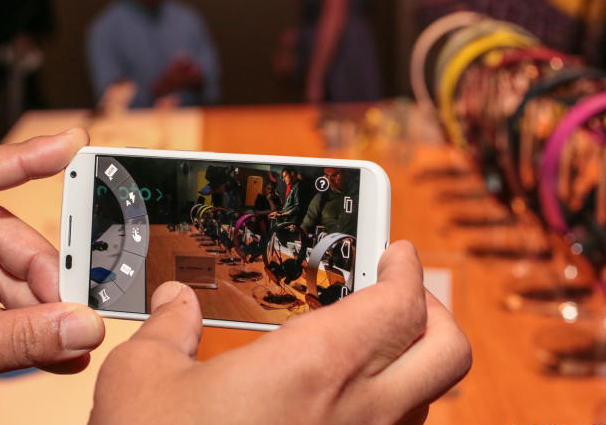
Many reports on the camera software note it’s terribly stripped down, and that settings are somewhat hidden. This is because the device is meant to capture all of your moments, and quickly. A simplified UI for a camera would allow for quick shots, and the “shake to take” feature is also helpful for that. We haven’t seen much from the camera yet, but we’ll be sure to give it a thorough overhaul in our review.

Soft on software

If you’re going to have limited hardware, you’re going to need good software to make it appealing. Motorola has done that much, with a very slight skin over Android and a really nice contextual twinge. There is enough about this one to question, and camera UIs are subjective, but the software seems to fall in line with the real aim of the device: simple, and simply useful.

Source: Android Authority

Apple Acquires Low-Power Wireless Chip Developer Passif Semiconductor


Apple has purchased Silicon Valley-based wireless chip developer Passif Semiconductor, reports technology writer Jessica Lessin. The company, which Apple has reportedly been after for several years, specializes in low-power communication chips that could be used to improve battery life in wearable devices such as Apple’s rumored iWatch. 

Passif develops communication chips that use very little power. Its technology, which includes a radio that works with a low-energy version of Bluetooth called Bluetooth LE, is promising for health-monitoring and fitness devices that need extra-long battery life. (Apple, of course, is working on one of those.)

Apple has confirmed the acquisition, with Apple spokeswoman Amy Besette givingAllThingsD the following statement: "Apple buys smaller technology companies from time to time, and we generally do not discuss our purpose or plans." 

According to rumors, battery life is one area where Apple has struggled in its iWatch development. A report in March suggested that the batteries in Apple’s iWatch prototypes were only lasting a couple of days, with the company targeting at least 4–5 days of battery life. 

After trademarking the iWatch name in a number of countries, Apple has been pouring its resources into the smart watch in recent months. The company hired a number of new employees to join the iWatch team, including health sensor experts, as the iWatch is said to focus on health related applications and biosensors. 

Passif's low-power chip technologies could also be used in other Apple products going forward, improving battery life across the board. In addition to Passif, Apple has acquired a number of other small companies in recent months, including Locationary and HopStop.

Source: Mac Rumours


Moto X: The first true anti-iPhone

The iPhone 5 may have found its polar opposite in Moto X.

For better or worse, Moto X -- which was unveiled Thursday -- is everything the iPhone is not. Rather than a tightly controlled look and feel for the device, Motorola will let customers tweak the colors and materials. Instead of the latest specifications, Moto X employs a solid -- but not cutting-edge -- set of hardware features. Instead of a proprietary operating system built for one device, it runs on an open platform available to hundreds of other phones.

"This is the blueprint for where Motorola and Google are going to go from here," said Ramon Llamas, an analyst at IDC.

While Moto X can be considered the anti-iPhone, it is not is an "iPhone killer." Despite the gratuitous use of that title over the last few years, the iPhone has not been felled by any device, and Motorola's latest won't be that lucky phone...

Read the full story here. Source: CNET

Virus Protection on your Mac - Do you need it ?

For many many years I have used an Apple Mac, my platform of choice. This is not for any reason other than it seems to disappear into the background and allow me to get my work done. Having used Windows based computers for many years and having worked as an IBM Engineer, my feelings were somewhat tainted with ongoing support issues for many co-workers experiencing downtime due to viruses. This is not to say that things have not improved a great deal for Windows users, with many solutions out there.

Back on track now… I want to cover the subject of Mac OS X users and if we are now under threat like our Windows friends and users? Well, to a certain degree yes we are. As the Mac platform has grown in popularity there are definitely virus & malware threats out there. In addition to this, there are also concerns about people snooping on our data and phishing for personal information. For virus protection, we have limited choice on the Mac and I personally am still not convinced we need to load up our Macs with virus software. There is another solution out there though, that can certainly protect us from a lot of online threats and that is a VPN. In the video below I discuss my thoughts further on this subject and invite you to share in the comments any Mac virus experiences you have had.

You can check out HotspotShield here … a great VPN option.