Huawei Reveals the World’s Fastest 4G LTE Smartphone

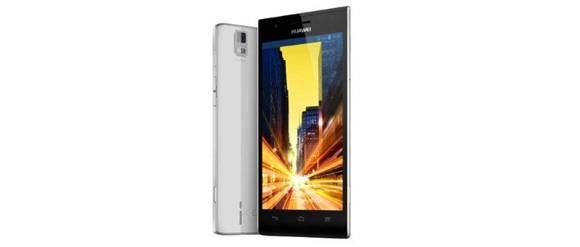
Huawei, a leading global information and communications technology (ICT) solutions provider, today introduced the HUAWEI Ascend P2, the world’s fastest smartphone, at the 2013 Mobile World Congress (MWC). The Ascend P2 features a 1.5 GHz quad-core processor and LTE Cat 4 providing an ultrafast web experience with download speeds of up to 150 Mbps. Continuing the fashion legacy of the Ascend P-series, it is only 8.4mm slim with an infinity edge 4.7-inch IPS HD in-cell touch display with second-generation Corning® Gorilla® Glass, and will be available in black and white.

“Ascend P2 is the perfect combination of elegance and power, and further proof that there’s no need to compromise when desiring a perfect smartphone. It is evidence of the outstanding smartphone experiences and great technology that we are committed to bringing to consumers globally,” said Richard Yu, CEO of Huawei Consumer Business Group.

The HUAWEI Ascend P2 will be on sale in France through Orange in June 2013.  

“We’re pleased to be working with Huawei again to enable our customers to have easier and faster access to all their favorite content,” said Yves Maitre, Senior Vice President, Mobile Multimedia & Devices, Orange. “We are impressed by the design and look forward to putting the Ascend P2 into the hands of consumers as soon as possible.”

“The technological capabilities of the HUAWEI Ascend P2 will enable our customers to have the fastest access to all their content, with speeds up to 150 Mbps on our brand new 4G network,” said Florence Paour, Device Marketing Director, Orange France.

The HUAWEI Ascend P2 runs on the Android 4.1 operating system, with Huawei’s own Emotion UI 1.5. Powered by a 2420 mAh battery and 1.5 GHz quad-core processor, the Ascend P2 downloads HD movies in minutes, and loads online videos, web pages, songs or e-Books in seconds. Huawei’s proprietary ‘swift sharing’ supports uploads and downloads two to three times faster than other smartphones in a Wi-Fi environment. With its NFC module*, Ascend P2 enables e-payments and can act as an electronic ticket. Huawei's unique Quick Power Control (QPC) and Automated Discontinuous Reception (ADRX) power-saving technologies, reduces power consumption by 30% and charging time by more than 25% compared to other smartphones.

Continuing the fashion focus of Huawei’s Ascend P smartphones, HUAWEI Ascend P2 evokes the image of an infinity pool with its seamless, elegant design and curvy contours. Using in-cell technology, its LCD 4.7-inch IPS HD touchscreen is an impressive 8.4mm slim. Its ‘magic touch’ feature provides enhanced screen responsiveness even with gloves, and instant keyword translation and Wikipedia searches can now be done on a single window with ‘smart reading’. The screen also calibrates its brightness automatically under any light conditions, allowing users to perform any function, under any light.  

The HUAWEI Ascend P2 provides optimal photo and video features including a 13 MP BSI rear-facing camera with HDR, and a 1.3 MP front-facing camera to support self-portrait and video shooting. A dedicated camera key on the side of the phone also allows instant access to picture taking, click once for the camera to be activated and another time to take the shot. With Huawei’s advanced camera algorithm, high-definition images can be captured even in backlit conditions. Auto adjustment modes further enable Ascend P2 to produce photos that rival professional cameras.

The Huawei Emotion UI*, available on the Ascend P2 is easy to use and customize. The UniHome function combines home panels with the main menu, while Huawei’s patent-pending Me Widget better utilizes screen real-estate by combining all the information and functions you need in a single, customizable widget. Emotion UI is also pre-installed with a smartphone housekeeper function to support real-time data traffic tracking, automatic blacklisting and blocking, periodical system cleaning, and spontaneous exiting of idle programs and cache cleanup, in addition to anti-virus, energy saving, privacy protection, software management, and more. 

For more information, visit Huawei Device online: www.huaweidevice.com
Do Mobile Phones Pose a Health Hazard?

The mobile phone has become one of the biggest necessities that a person could own and the one thing people are still debating about is the issue of what health hazards that your modern day mobile phone could cause to the human body.

Many people are concerned about the low levels of radiofrequency energy that mobile phones emit, and how the radiation could cause cancer or other serious health problems. Many studies have been conducted over the past 15 years by scientists who are looking at the effects on the human body caused from the frequency of the mobile phone, but the studies have failed to prove that any frequency from the handheld device has any impact on the said person's health.

Studies show that almost 80 million mobile phones in the UK are in operation, therefore the threat of causing any damage to your health directly from the mobile is one in which each corporation must consider as part of their business module. With times changing, the modern day mobile phone has a considerable amount of data flowing through it compared to 5 years ago. 

Ed Yong, who is head of the health information at Cancer Research UK, has released information to the global population in which he states that despite the dramatic rise in mobile phone sales since the 1980s, the rate of brain cancer has not increased at the same rate as the production and usage of the handheld device has.

There is not yet enough known information to completely rule out the risk of health implications due to using a mobile phone, but very little research suggests that this could be the case.

What do you think about this controversy? Post your thoughts below.

Microsoft was hacked in the same wave as Apple and Facebook

Microsoft has been hacked, in the same wave of attacks targeting Facebook and Apple. The company made the announcement in a blog post on its website.

You can sleep safe if you use Windows 8 or Windows Phone 8 though, as Microsoft says there's no evidence of any customer data being compromised. Funnily enough, the company says some of its computers in its Mac business unit were among those hacked.

Microsoft says it didn't make a statement immediately, as first it wanted to find out what exactly happened. Only a "small number" of computers were infected by malicious software "using techniques similar to those documented by other organisations."

Last week, Apple announced it had been hit by malware that attacked Java, and a few days earlier, Facebook said it too had been targeted. Just don't tell Jeff JarvisTwitter was also hacked last month, with 250,000 accounts affected.

Newspapers including The New York TimesWashington Post and Wall Street Journal have all accused China of cyber attacks, though the origins of the hack targeting Microsoft haven't been revealed. Google's Eric Schmidt has penned a book on the subject, calling China "the world's most active and enthusiastic filterer of information", as well as the "most sophisticated and prolific hacker of foreign companies."

Microsoft acknowledged these kind of attacks are par for the course in the modern tech landscape. It said in its blog post: "This type of cyber attack is no surprise to Microsoft and other companies that must grapple with determined and persistent adversaries… We continually re-evaluate our security posture and deploy additional people, processes, and technologies as necessary to help prevent future unauthorised access to our networks."

[Source: CNET]

New Retina MacBook Pro Processor Bumps Offer Minor 3-5% Performance Improvements

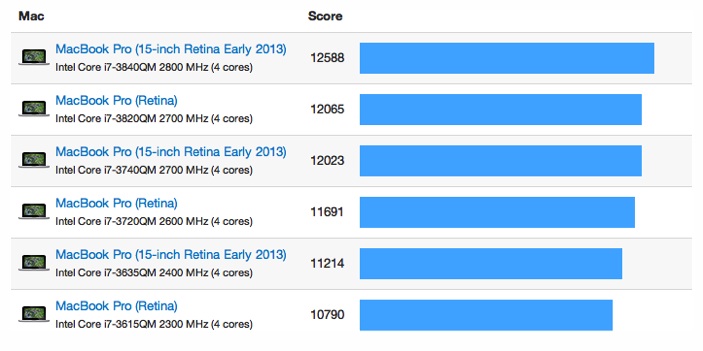
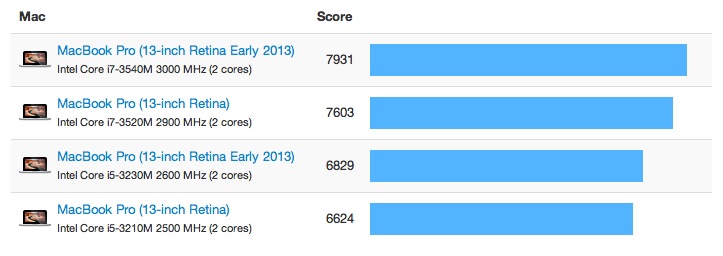
Following last week's introduction of new processors for the Retina MacBook Pro lineup, Primate Labs has analyzed benchmarks coming in from the new machines through the company's popular Geekbench 2 software. 

Unsurprisingly, the benchmarks reveal a roughly 3-5% increase in Geekbench scores for each of the processor bumps. For the 15-inch Retina MacBook Pro lineup, Apple bumped each of the three available processors by 100 MHz, accounting for the minor benchmark improvements. 


One thing to note is that the new mid-range Retina MacBook Pro has the same speed processor as the old high-end Retina MacBook Pro. However, the new mid-range model is slightly slower than the old high-end model. While this seems surprising at first, the difference is easily explained by comparing the two processors: the old high-end processor has more cache than the new mid-range processor.

For the 13-inch lineup, the 100 MHz speed bumps were limited to machines based on the high-end stock configuration starting at 256 GB of storage, with those machines also seeing a 3-5% improvement in Geekbench scores. 


Aside from the processor improvements for the Retina MacBook Pro lineup, Apple also reduced pricing on the 13-inch models by $200-$300, increased RAM on the high-end 15-inch stock configuration, and reduced pricing on storage options.

[Source: MacRumors]

More than 7m Brits are yet to use the Internet, government says

You might hate me for saying this (if you're over, say, 25), but I genuinely can't remember a world without the Internet. But it seems 15 per cent of UK adults have managed to avoid it completely -- more than 7.4 million Brits have never used the Web, according to an official report from the Office for National Statistics.

While those figures may sound surprising, the majority of the population who have yet to experience the wonders of the Internet are aged 75 or over. Internet use is highest among those between the ages of 16 and 24, of course, with very nearly 100 per cent of the population having used the Web. There were still 53,000 among the younger generation who had not, however, with poverty the main cause.

300,000 people who have not accessed the Internet put this down to earning less than £200 a week -- in stark contrast to the 100 per cent earning over £2,000 who are plugged in.

More and more people are accessing the Internet all the time though, with 1.2 million users having connected to cyberspace since last year.  

The report showed men were also more likely to use the Web, with 12 per cent of men having never been online as opposed to 16.9 per cent of women.

The older generation was not the only demographic with a particularly high proportion of people having never used the Internet: 32.8 per cent of people with disabilities live offline.

The report revealed that, unsurprisingly, single people were most likely to live their lives online with just 5.2 per cent having never accessed the information superhighway (you may have noticed I'm running out of synonyms here).

The problem with the social divide of Internet users could soon become much worse, with many government services being moved to its online portal. The first major service to get a 21st century overhaul will be the Department of Work & Pensions' Universal Credit project, which will combine six benefits into one, that can then be managed and claimed online.

[Source: CNET]

HP Slate 7 Android Tablet Revealed – Launches in April for $169

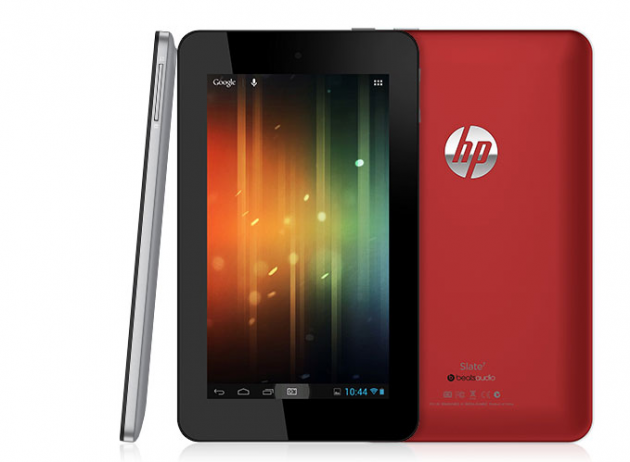
On the eve before Mobile World Congress officially kicks off in Barcelona, HP announced its first Android tablet, the Slate 7.

The device is a relatively mid-range 7-inch tablet with a 1024 x 600-pixel resolution. It packs a 1.6GHz dual-core processor, Android 4.1 Jelly Bean, Beats Audio support, a 3-megapixel camera, a VGA front-facing camera for video chat and 1GB of RAM. It packs just 8GB of storage, however.

The real meat of the story here is that HP is re-entering the tablet space after its failed launch of webOS powered tablets. The Slate 7 is expected to launch in April for a budget-friendly price of just $169. We’ll be trying to find one here at Mobile World Congress to bring you a closer look.

[Source: TechnoBuffalo]

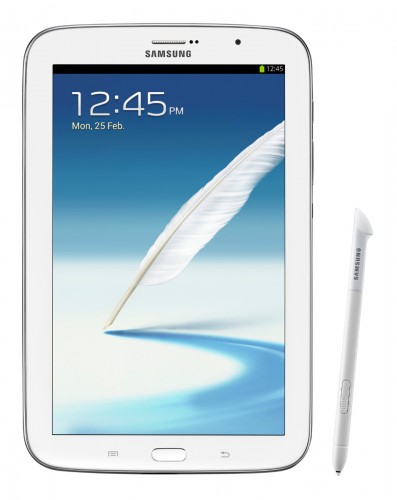
Samsung Galaxy Note 8.0 now official

Samsung has stepped forward and officially announced the Galaxy Note 8.0. We've sen and heard enough leaks and rumors to know that we would be seeing an 8-inch version of the popular Note series, but tonights' news clears up al the speculation and replaces it with information direct from Seoul. 

The Note 8.0 takes everything you love about the Note series, adds some great new features, and packages it all into a solid tablet form factor. The Note 8.0 will still be able to make phone calls in some countries, but the 8-inch screen puts this one squarely into the portable tablet genre. And that's a good thing. Users who didn't want a full-sized 10-inch tablet, but still wanted access to the great S Pen technology now have that option.

We've spent some time with the Note 8.0 on the eve of Mobile World Congress 2013, and have the answers to all your questions covered. The Samsung Galaxy Note 8.0 will be available world wide (Europe, Korea, North America, S.E. Asia, S. W. Africa, the Middle East, China, Taiwan, and Latin America) in Q2. Keep an eye on Android Central for exact dates and pricing. The full press release, press photos, and a Chat-On video featuring the Note 8.0 are after the break.

[Source: AndroidCentral - Read the full story here]

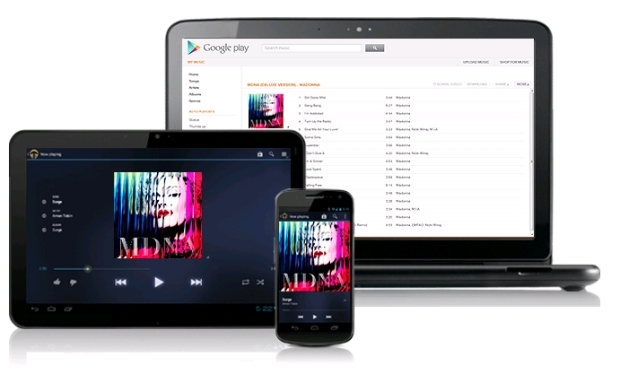
Google will launch a free music streaming service, FT says

As if branching out into hardware like phones and tabletsdriverless cars, and even augmented reality glasses wasn't enough, Google is also working on a free music streaming service, the Financial Times reports.

The service would try to drown out the likes of Spotify, Deezer, and Nokia Music. The launch is said to be "impending", so it seems Google is still just tuning up.

According to the FT, Google will offer subscriptions as well as free unlimited listening. Though you will have to put up with ads if you don't want to pay, just like on Spotify.

Why would Google go into unchartered territory then? Especially seeing as its Play Music service, which launched in 2011 as Google Music, is only available in the US and a handful of European countries. Well it's another way for Google to make money, seeing as at the moment 95 per cent of its revenues come from advertising. Streaming is big business, being one of the fastest growing areas of the music market.

Apple is also rumoured to be working on a streaming service, which would put it and Google in direct competition on yet another front. As if the smart phone war wasn't already bloody enough.

Google could preinstall the service on all Android devices. And seeing as the operating system is on three out of four smart phones, that should give Google quite some reach. Not that it wouldn't be short of competition though. I'm sure Spotify and its good buddy Facebook wouldn't be too happy about the Google boys crashing their party. The music industry is also no fan of Google -- just this week, the Recording Industry Association of America attacked the search giant for linking to pirate sites. It claimed Google had gone back on its promise to shunt such sites further down its search rankings.

[Source: CNET]

Twitter ratchets up phishing protection by adopting DMARC standard

Phishing emails often pose as being sent by major league sites rather than princes from far-flung countries, but Twitter's implemented a new measure to stamp out phonies that borrow its name. Costolo and Co. announced that, earlier this month, they began leveraging a tech called DMARC that establishes a way for email providers to authenticate senders and reject messages penned by impostors. While the DMARC specification does need support from e-mail services, outfits including AOL (which happens to be our parent company), Gmail, Hotmail / Outlook and Yahoo already make use of it. According to Twitter, it's now "extremely unlikely" that the majority of their users will receive emails masquerading as being sent from a Twitter.com address. We're sorry to disappoint, but it looks like you'll have to get your fix of foreign lottery notices from somewhere else.

[Source: Engadget]


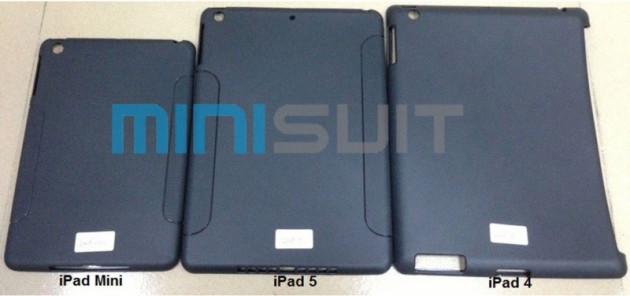
iPad 5 Case for Rumored Redesign Surfaces

With numerous specs circulating for the iPad 5, it isn’t surprising that we have seen the first potential case surface.

Case maker MiniSuit has supplied MacRumors with an image of a case the firm has already made for the fifth generation iPad based off of specs it has received from a source. The case is similar to the leaked iPad 5 rear shell that surfaced back in Jan. that showed a relocated microphone. It also follows along with the rumors we’ve heard that the new tablet will share more design characteristics with the iPad mini, and also come in somewhat slimmer than the fourth generation iPad.

It is not unusual for case manufacturers to begin work on cases based solely on rumors. While they could end up being wrong, if they’re right, and able to get their cases to market quickly after the announcement, it can be a financial windfall for them.

Currently rumors for the release of the fifth generation iPad range anywhere from March to October, but June seems to be taking the lead as of late as the probably release window.

[Source: TechnoBuffalo

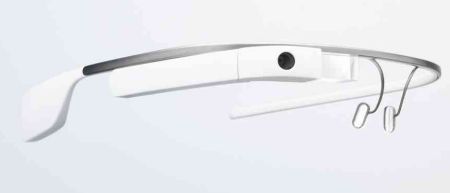
Google confirms Glass will work with iPhone

Google held an event this week to show off its upcoming "Google Glass" interactive headset/system, and from that meeting came one important note for us iOS fans. Google confirmed that the system will definitely workwith Apple's iPhone. The exact details of the relationship aren't clear, but there are of course a number of ways your iPhone could work with Google's glasses, from simply acting as a Bluetooth headset, to a more complex relationship with a Google app, sharing information or even an Internet connection back and forth.

Obviously, Apple and Google aren't on the best terms at the moment, with Apple forcefully uprooting its deal with Google Maps to go with a more native solution. But Apple's also been very open to having Google apps on the App Store, so Google may work out some sort of solution where Glass plugs in through the Bluetooth connection or even right through the Lightning connector.

At any rate, it sounds like your iPhone and Google Glass will play nice. Consumer versions of the Glass units are expected later on this year, though the price will be steep -- somewhere around US$1,500, according to the speculation. The tech will only get cheaper, so it might not be long at all before you're wearing your interactive glasses and connecting to your iPhone.

[Source: TUAW]

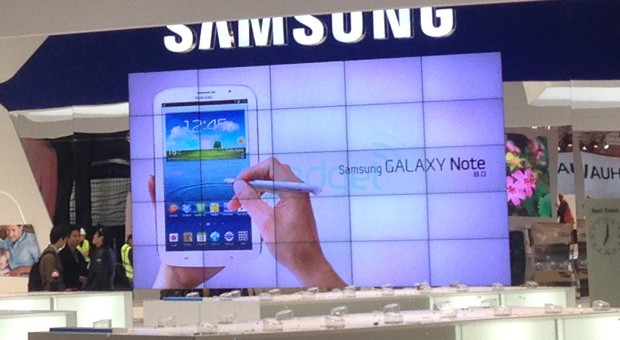
Samsung Galaxy Note 8.0 spotted at MWC, almost hides your entire hand

At last, here's what we've been promised: an 8-inch flavor of Samsung's Galaxy Note lineup. Spotted by an anonymous tipster on the MWC show floor earlier today, the booth shows off said tablet designed with portrait usage in mind, meaning it'll pretty much cover up most of whichever hand you'll be holding it with. And obviously, the Note 8.0 comes with a stylus as well. There's not much more to share at this point, but we'll be seeing this new device in its full glory very soon, so stay tuned. One more shot after the break.

[Source: Engadget]