Samsung Galaxy S4 Announced

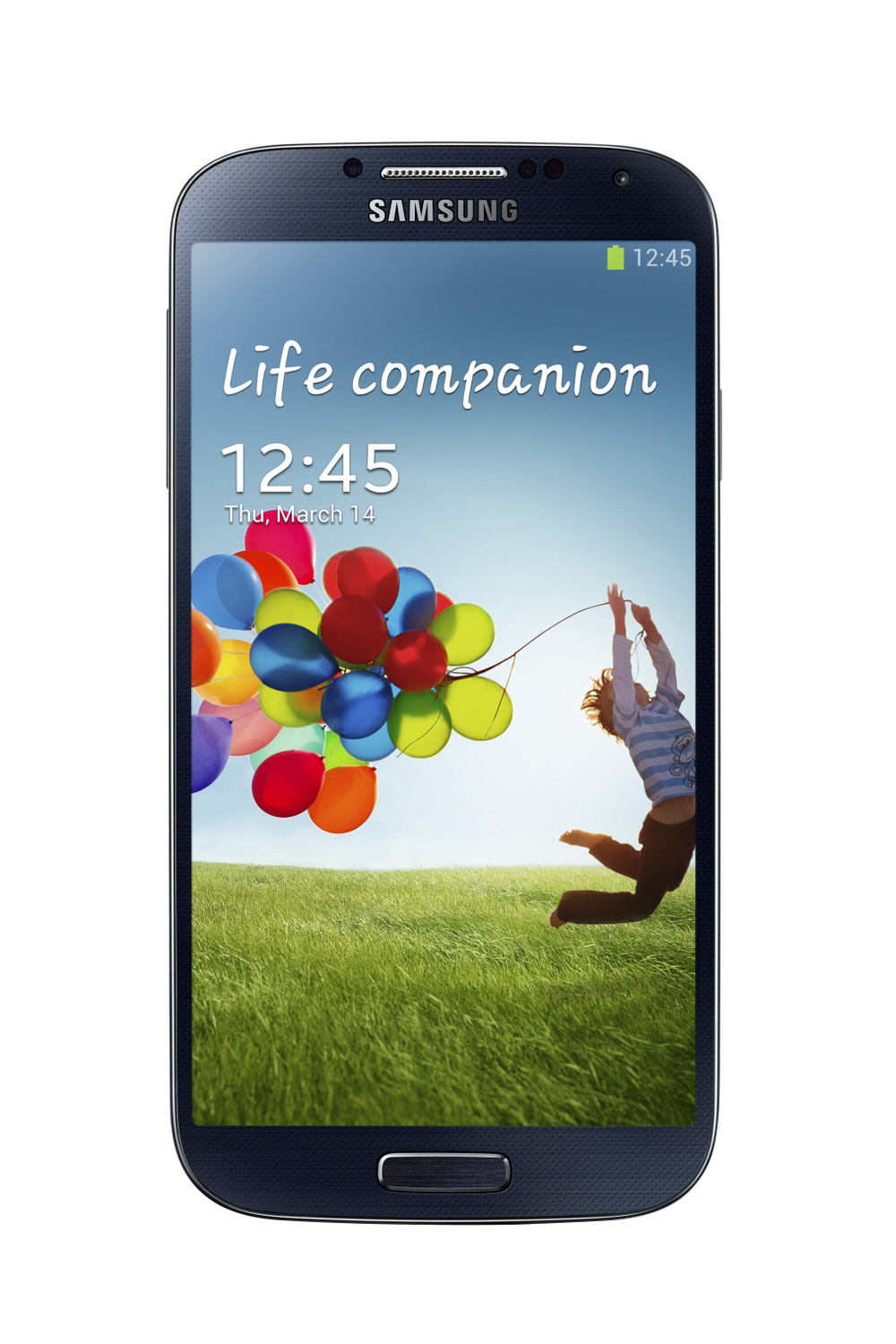
In the Android landscape, Samsung is an unrivaled titan, sitting atop the highest possible perch of smartphone glory and supremacy. Over the past few years, the company has gone from tepid challenger to olympic gold medalist. The Samsung Galaxy S sparked a revolution back in March 2010, and four iterations later, the Korean company is releasing its biggest Galaxy product ever—probably its biggest gadget across every product lineup it offers—the Galaxy S 4. Finally, at last, it’s here.

Samsung describes its new super phone as one that will get you close to what matters in life, designed in a way to heighten the user experience. It’s not a thing you only hold and look at and occasionally make calls on; the S 4 is, according to Samsung, something that understands the value in relationships… believes in the importance of an effortless user experience… empowers your life, helping take care of your well-being.

The overarching theme, you see, isn’t a focus on specs—they are decidedly next-gen, as expected—but how software and technology can improve your experience in a positive way. So there are features like Dual Camera, Dual Video Call, Story Album; Group Play, Share Music, S Translator, Smart Pause, Air View, Air Gesture, Smart Scroll, S Voice Drive, Optical Reader, WatchON; S Health, Adapt Display and Adapt Sound. That’s an enormously overwhelming laundry list of new features, all designed to make everyday use seem more natural and painless.

[Source: TechnoBuffalo]
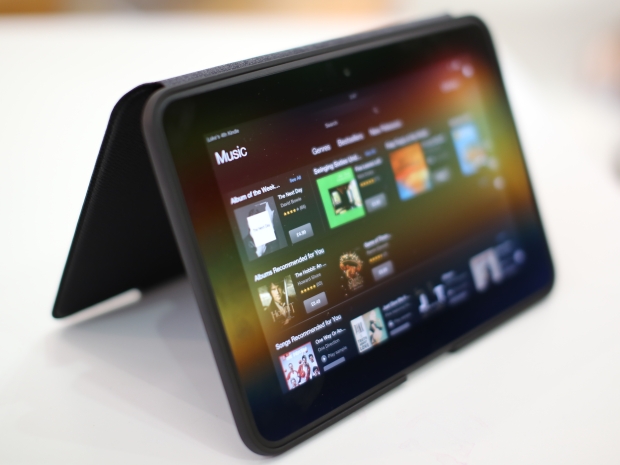
Kindle Fire HD 8.9 in the UK today, a bigger Fire for £229

Amazon is bringing its 8.9-inch Kindle Fire HD tablet to the UK, joining the 7-inch Kindle Fire HD five months after it made its debut in the US.

The Fire HD 8.9 is essentially the same as Amazon's existing tablet, putting books, music and movies from Amazon into an easy-to-use interface. The larger screen has a higher pixel count at 1,920x1,200, making it possible to play video in 1080p.

Amazon promises 10 hours of battery life, while the 8.9-inch Fire HD plays host to a slightly speedier processor -- a dual-core affair clocked at 1.5GHz, rather than the 1.2GHz chip in the 7-inch model.

£229 gets you the 16GB option, though if you've got a little more cash, a 32GB model can be yours for £259. An extra £10 means you won't see 'Special Offers' -- ie ads on the lock screen. A case is also available (see above), doubling as a stand when you fold its cover back, but it's not cheap, setting you back another £40. 

Amazon says the Kindle Fire HD is its best-selling product online worldwide, so there could be a lot of interest in this device. I wonder, though, if there's much appeal in the larger, pricier tablet when the 7-inch option is similar and more portable.

The 7-inch option won three stars in our review, as we praised its simple interface and good screen. But it was a real kick in the teeth that movies weren't available to download and watch offline, with the only option being streaming via Lovefilm. That's no good if you're travelling or on a plane, and is a gripe that's still present on the larger 8.9-inch tablet.

[Source: CNET]

Netflix Gets Social With Facebook Integration

Netflix has announced integration with Facebook that will now make it possible to get social recommendations of what you should watch next.

At long last you can see what your Facebook friends are watching on Netflix, and, in turn, you can share with them what you have enjoyed from the streaming service. Once you’ve connected the accounts the information from your friends will be shown in social rows of recommendations and is restricted only to the items that they have rated four or five stars.

Netflix has done some very smart things with this integration to make sure you have as much control as possible. For instance, the information will only appear in Netflix and not on Facebook unless you specifically tell it to do so. Additionally this isn’t an all-or-nothing scenario as you can choose to hide your guilty pleasure programming from the process, and even go back and make sure to do the same with items you have watched and rated before this was integrated. Feel free to keep watching the complete run of Basketball Wives while only sharing your love of Fellini films.

[Source: TechnoBuffalo]

More Than 750M Android Devices Have Been Activated, 25B Apps Downloaded

Google CEO Larry Page published a letter earlier today alerting the world that Andy Rubin, the company’s head of Android, is stepping down. There was a bit of golden information in that letter, however.

Page also noted that more than 60 manufacturers currently sell devices powered by Google’s mobile operating system, and that since the OS launched there have been more than 750 million Android devices activated around the globe. That figure includes tablets, smartphones and other connected devices. Page said that consumers have downloaded more than 25 billion apps from Google Play, too.

Just over a year ago Google’s Andy Rubin said that there were more than 300 million Android devices activated and that 850,000 devices were being activated daily. That means the figure has since doubled in just over a year.

[Source: TechnoBuffalo]

Smaller A5 Chip From Tweaked Apple TV Contains Only One CPU Core, Revamped Analog Circuitry

For the past few days, we've been following the story of the smaller A5 chip found inside of the recently tweaked Apple TV, seeking to understand what changes Apple has made in order to shrink the chip to roughly half the size of the previous A5 chip. 

Yesterday, experts at Chipworks determined that the new A5 was still being manufactured by Samsung using the same 32-nanometer process used for the previous version, indicating that Apple had undertaken significant design changes for the chip. 

Chipworks now has a full image of the A5 die, revealing that this smaller A5 chip contains only a single-core ARM CPU. Apple has listed the Apple TV as having a single-core A5 since the third-generation model launched last year, but the previous design involved a dual-core chip with one core disabled, while the new design contains just the one active core. The new A5 does still contain the same dual-core GPU found in the previous version of the chip.

Chipworks' Dick James tells us, however, that there must be more to the story in order to achieve a nearly 50% size reduction, but the firm has yet to determine exactly what other changes are contributing to the smaller die size. 

A separate observation of interest involves the analog circuitry included on the chip. This new A5 chip appears to take advantage of optimized analog components such as resistors, capacitors, and inductors, yielding a mixed signal chip that seems to be a rather significant technical achievement at the 32-nanometer process node.

My guess is that the analog sections have been re-designed, always a work in progress when we get this small, since analog circuitry does not shrink anywhere near as predictably as digital. And as Jim said earlier, we think this is now in a mixed-signal version of the 32-nm process that allows extra passive components such as resistors, capacitors, and inductors, that is much more suited to analog stuff.

It is still unclear exactly why Apple has elected to redesign the A5 for the Apple TV, as it has been assumed that the company's "hobby" does not generate enough shipment volume to warrant such an investment in and of itself. As a result, it is possible that Apple has plans to use this chip in other products, although the single-core nature of the CPU design will likely limit the range of devices for which it would be suitable.

[Source: MacRumors]


Phil Schiller Goes on Offensive Against Android and Samsung

Apple marketing chief Phil Schiller went on the offensive against Android in a unusually forthright interview with The Wall Street Journal.

Mr. Schiller, Apple's senior vice president of world-wide marketing, also said that Android users are often running old operating systems and that the fragmentation in the Android world was "plain and simple."

He added that "Android is often given a free replacement for a feature phone and the experience isn't as good as an iPhone."

In addition to the above comments, Schiller saidthat Android devices and the operating system "don't work seamlessly together" because they come from different vendors, unlike Apple which makes both the software and hardware in its devices.

Samsung is expected to announce an update to its flagship Galaxy S smartphone line tomorrow.

[Source: MacRumors]


Google Glass Will Work With Prescription Glasses

Google’s augmented reality Google Glass project is amazing: it’s wearable technology that will allow us to learn more about the world around us simply by viewing it through a small lens that hovers over our eyeball. There’s been concern that it won’t work well with people who require prescription glasses, however, and Google is laying those concerns to rest.

“The Glass design is modular, so you will be able to add frames and lenses that match your prescription,” the Google Glass team said today. “We understand how important this is and we’ve been working hard on it. Here’s a picture of +Greg Priest-Dorman [see above], a member of the Glass team and an early pioneer in wearable computing, wearing one of the prototypes we’re testing.”

Google is also allegedly working with Warby Parker, the now famous prescription glasses company, on creating fashionable designs for its project.

[Source: TechnoBuffalo]

Samsung Galaxy S4 second teaser video lands

Squee-bloop wheee-eee! Parp the Samsung Galaxy 4 teaser bagpipes, because there's a new official video heralding the coming of the year's most eagerly awaited new smart phone.

Continuing on from the first teaser, there's no sign of the phone itself, as a moppet bafflingly chosen to see the phone first attempts to hide it from prying eyes.

In the first episode, mop-topped Richie Rich-type rich kid Jeremy Maxwell was inexplicably handed the S4, peeking into a box that glowed with an eerie light.

Heading home, Jezzer encounters a curious ladychild and hides in his room for a closer look at the new device. "It's my favourite colour... it's unreal. Totally amazing!" coos the precocious phone-fondler. Are the Oreos a clue that the phone will come in black and white, as rumoured?

[Source: CNET - Click here to read more]

HMV could be saved by Asda as WH Smith sells CDs, DVDs again

Bottom-patting supermarket Asda could be about to step in for HMV, as WH Smith looks to fill the high street CD and DVD void left by the ailing music and movie chain.

The Telegraph reports that Asda is in talks with HMV's administrator Deloitte to take over the music, movie and game retailer. Restructuring company Hilco has already bought the chain's debt and was the bookie's favourite to take over, but Asda could swoop in for the remaining stores instead.

Asda is reportedly looking to continue selling under the HMV brand rather than simply taking over the buildings owned by HMV.

One of the deciding factors in who gets to rescue HMV is likely to be the support of record labels, film studios and other suppliers. Suppliers are said to have agreed favourable credit terms with Hilco, but are also likely to be on good terms with Asda, which also sells chart CDs, DVDs and games.

Asda could be looking to the HMV brand to rival Blinkbox, the online movie and TV show streaming and download service owned by Tesco.

Pile 'em high, sell 'em cheap 

Ironically, the arrival of CDs and DVDs piled high and sold cheap in supermarkets has been one of the factors contributing to the decline in record shops-- as a great man once observed -- albeit not as much of a factor as online sales and downloads.

Stationer and newsagent WH Smith is reported to be planning a return to selling CDs and DVDs in select locations, to plug the gap left by HMV for movies and music on the high street.

Just 116 HMV stores are set to remain open, roughly half the number open before the wheels fell off. HMV had 223 shops and 4,123 staff when it spiralled into administration in January, with well over 1,000 jobs still under threat.

[Source: CNET]

Google Now for iOS? Promo video appears, removed

Users of Android's recent editions have been exposed to Google Now, the "before you know you need it" search tool.

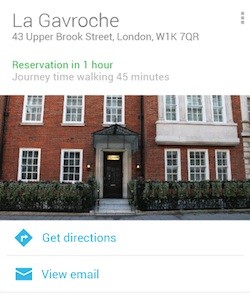
Google Now tries to look ahead at your schedule and physical location to let you quickly access the most relevant results -- traffic for your commute, flight schedules for your trips, local restaurant recommendations and the like. G-Now uses a card metaphor to pop the necessary info right onto your device screen with minimal intervention.

While Siri can handle quite a few of those search chores on iOS, she's not exactly the anticipatory type. SRI's recent Tempo calendar app gives you some of the same halo of savvy around your schedule, but you have to get cleared first (Tempo still has a waiting list several thousand users long).Google's own Field Trip app delivers location-based tidbits (local art, attractions, restaurants and more) as you move around, but it's not integrated into the main search tool.

There may be changes afoot. Engadget unearthed a promotional animated clip that seems to preview a version of Google Now for iOS; the original video appeared on YouTube and has since been removed. In style, content and narration the clip is entirely in line with Google's original promo for the Android launch of Google Now, which lends quite a bit of weight on the authentic side of the scale.

[Source: TUAW - Click here to read the full story]

Dropbox for Mac updated to version 2.0

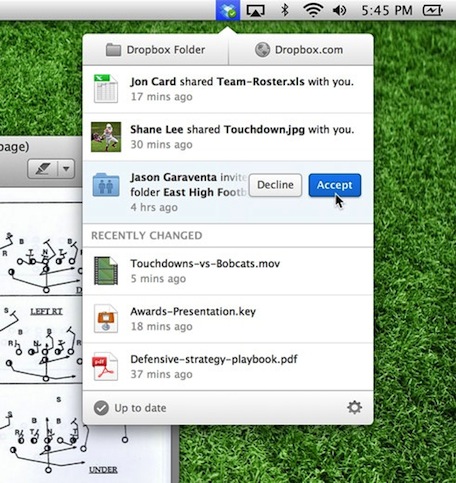
Dropbox has released an overhaul to its Mac client today. Version 2.0 of the client for OS X introduces a new tray feature. Now users can see the most recently shared files right from OS X's menu bar and share files directly from the drop-down menu. Users can also accept or reject shared items directly from the drop-down menu.

Dropbox noted the new features in a posting on its forums and a companyblog post:

Introducing a shiny new feature: a new tray popup that combines the old tray menu features with a timeline of the most important sharing events in your Dropbox. For instance, if someone shares a link with you, you can now see it immediately! Moreover, if someone shares a folder with you, you can now accept or decline the invitation directly from your desktop. Not only are you notified of these events in real time, but you can easily get to them later. Also, files recently edited are made available so you can easily view or share them.

This is a big change to the way the client looks, and it enables us to build powerful new user experiences. As such, we're calling this version 2.0!

[Source: TUAW]

Mozilla: Forget Firefox for iOS

Mozilla launched Firefox Home for iOS back in July 2010, but it wasn’t a full featured browser experience that Mozilla was particularly proud of, especially because it was limited to only providing access to Firefox desktop history, bookmarks and open tabs. Mozilla recently commented on that release, which was yanked in September, and said that because Apple is so limiting on its app store controls it won’t launch a full fledged browser for the platform.

Still, somehow Google has managed to keep a relatively decent experience on its Chrome for iOS browser, so we’re not entirely sure why Mozilla is limited where Google is not. To clarify a bit, Mozilla’s vice president of product Jay Sullivan told CNET that it’s about an inability to add the JavaScript and rendering enhancements that it wants to provide. Meanwhile,.Firefox offers a full browser on Android because Google allows the company much more control over the experience, but it faces steep competition from Chrome and Dolphin among other third-party browsers.

Perhaps the real story is that Mozilla doesn’t think it can compete effectively enough against Safari and Chrome on iOS. Still, it’s not the first company to complain about Apple’s limiting approval policy.

[Source: TechnoBuffalo]