Apple increases dividend by 15%, poised to embark on large stock-repurchasing plan

In conjunction with its earnings report for Q2 2013, Apple issued a press release announcing some major plans for its ever-growingstockpile of cash.

In March 2012, Apple announced that the company would be instituting a $2.65/share dividend on a quarterly basis with Apple's first dividend payment to investors going out in August of last year.

Now, about one year later, Apple announced its plan to increase its quarterly dividend to $3.05 per share. The next dividend payout to investors is scheduled for May 16, 2013.

What's more, Apple also announced a massive increase to its stock-repurchasing plan.

As part of this program, the Board has increased its share repurchase authorization to $60 billion from the $10 billion level announced last year. This is the largest single share repurchase authorization in history and is expected to be executed by the end of calendar 2015. Apple also expects to utilize about $1 billion annually to net-share-settle vesting restricted stock units.

When Apple first announced its dividend and stock repurchasing plan last year, it revealed that both initiatives would eat up about $45 billion from Apple's cash reserves. Under Apple's more aggressive dividend and stock repurchasing plan, Apple notes that the company will now be using $100 billion of its cash reserves to return money to shareholders and repurchase outstanding shares.

The company expects to utilize a total of $100 billion of cash under the expanded program by the end of calendar 2015. This represents a $55 billion increase to the program announced last year and translates to an average rate of $30 billion per year from the time of the first dividend payment in August 2012 through December 2015.

For a company that was long content to sit on its growing cash hoard under the helm of Steve Jobs, today's announcement represents a monumental shift in Apple's use of cash.

Regarding Apple's new use of cash, Apple CEO Tim Cook explained in a press release, "We are very fortunate to be in a position to more than double the size of the capital return program we announced last year. We believe so strongly that repurchasing our shares represents an attractive use of our capital that we have dedicated the vast majority of the increase in our capital return program to share repurchases."

Thus far, Wall Street seems to be pleased both with Apple's earnings report and news of its expanded cash program. In after hours trading, shares of Apple are up nearly 5 percent, trading up nearly 20 points.

[Source: TUAW]
RIP Mike Culbert, iOS and Newton pioneer

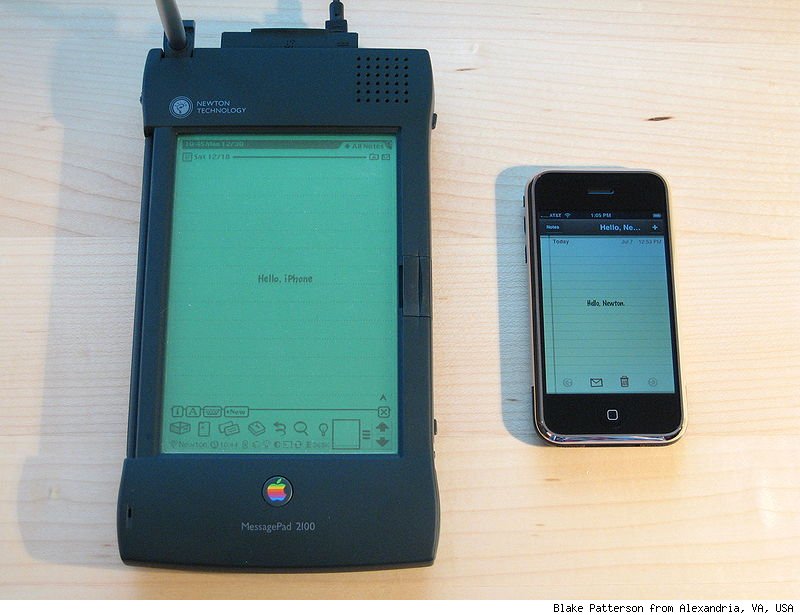
We've received direct word andnoted on Twitter that that Mike Culbert, a longtime Apple hardware engineer, has passed away after battling cancer. According to his friends, he was a "brilliant engineer, a wonderful human being." He will be missed.

Culbert began working at Apple over 25 years ago, ending up as VP of Architecture. His contributions include numerous patents for many iPhone and iPad innovations, we now take for granted. These include iOS video screen rotation, power saving patents, the ambient light sensor, digital content escrow for iTunes purchases, and more. He was also a key player on the Newton development team.

We at TUAW send our condolences to his family and friends.

[Source: TUAW]

How Apple handles the data processed by Siri

After raising questions about Siri's privacy policy, Wired received a response from Apple spokeswoman Trudy Miller that confirmed Apple anonymizes Siri data and stores it for up to 24 months.

According to the Wired report, your iOS device records what you say to Siri and sends that clip to Apple's servers for analysis. As part of the voice recognition translation and response, Apple assigns a set of random numbers to the clip to identify the user from which it originated. This number is used during the back-end voice processing to make sure the response is sent back to the correct phone.

Apple stores this clip along with the random number for six months. After six months, the number is stripped from the file and the file is kept for up to 18 months.

The practice of storing anonymized data for several years is common among tech companies that handle large volumes of data. Wireless carriers, for example, keep select user data like text message history for up to five years.

[Source: TUAW]

Chinese hackers launch pirate App Store, no jailbreak needed

Chinese hackers have launched a pirate app store that allows people to download pirated iOS apps with no jailbreaks needed. The online web store uses geolocation to determine a user's whereabouts. If the user is outside of China, he is not granted access to the store, instead being redirected to another page run by the hackers.

Out of respect for the hard work iOS developers do, we aren't linking to the store or revealing its name.

Piracy takes away from the development of apps on iOS. Many of the best apps today were created by a single developer or small development team that didn't initially have a lot of financial resources. If the apps being created are pirated and result in limited financial reward to the developers, why would they want to continue to come up with new and exciting apps? Some of the best apps in the App Store -- apps that are part of the reason your iPhone is so cool -- wouldn't exist.

So please, think before you pirate, because in the long run, you're hurting not just the developer, but the entire iOS ecosystem and yourself as well. And no, "I pirate an app to see if I'll like it and then buy it if I do" is not any kind of valid excuse.

[Source: TUAW]

iTunes maintains its music download dominance as Amazon plays catch-up

Nearly 10-years after the iTunes Music Store first opened up for business, iTunes remains the market leader in digital music downloads.

According to a research report published by the NPD Group earlier this week, iTunes accounted for approximately 63% of all digital music downloads in 2012. Trailing behind is AmazonMP3 with a somewhat respectable 22% share. While Amazon has a ways to go before even getting close to Apple, the world's largest online retailer has been making significant gains in that regard. In 2011, Amazon's share of the digital music download market checked in at 15%, representing a solid 50% increase year over year.

"Since the launch of Apple's iTunes store, digital music downloads have become the dominant revenue source for the recorded music industry and iTunes continues to be the dominant retailer," said Russ Crupnick, senior vice president of industry analysis at NPD. "There's a belief that consumers don't need to buy music because of streaming options, when in fact streamers are much more likely than the average consumer to buy music downloads."

The report adds that 44 million Americans downloaded a digital song or album last year.

To help contextualize the raging success that is the iTunes Music Store, Apple in early February announced that consumers had downloaded over 25 billion songs. That averages out to about 15,000 songs downloaded per minute.

The iTunes Music Store currently offers over 26 million songs to choose from and is available in 119 countries.

[Source: TUAW]

Apple could face 'legal undertakings' in UK over in-app purchases

Remember the UK police officer who reported his son to authorities for fraud after the 13-year-old ran up a US$5,600 bill for in-app purchases on the iOS App Store?

That kind of unexpected consumer cost has thrown the UK Office of Fair Trading (OFT) into a tizzy, and they've announced that they'll be starting a six-month investigation into whether children are being "unfairly pressured or encouraged to pay for additional content in 'free' web- and app-based games."

Our sister site TechCrunch confirmed that the OFT is contacting Apple and Google; not surprising, as the companies run the two largest app stores, but it's not clear whether either company could be held responsible for the actions of individual developers who abuse IAPs. While Google Play includes guidelines for developers and reserves the right to remove apps that abuse them, it does not review / approve individual apps for compliance in advance; Apple's App Store, of course, does approve or reject apps prior to release.

When the investigation is completed, the OFT could seek "legal undertakings from court" if it is displeased with the results. An OFT spokesperson told TechCrunch that companies ignoring court directions could face "an unlimited fine."

The OFT Senior Director for Goods and Consumer, the implausibly-named Cavendish Elithorn, noted in a statement that "The OFT is not seeking to ban in-game purchases, but the games industry must ensure it is complying with the relevant regulations so that children are protected. We are speaking to the industry and will take enforcement action if necessary."

Neither Google nor Apple have replied to TechCrunch with regard to the investigation.

[Source: TUAW]

Apple agrees to $53 million settlement in iPhone and iPod Touch warranty class action

Wired is reporting that Apple has agreed to a $53 million settlement in a class action suit regarding Apple's warranty practices regarding water damage in older iOS devices. The settlement agreement, which was leaked to Wired, has already been signed off on by Apple chief litigation counsel Noreen Krall and now awaits the official signatures of the remaining parties.

The lawsuit alleges that Apple improperly refused to honor warranty agreements for iPhones and iPod Touch devices which were seemingly damaged by water.

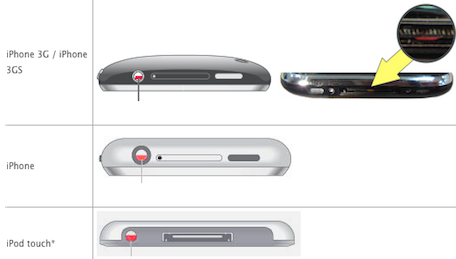
As a quick primer, iPhone and iPod Touch models come with Liquid Contact Indicators (LCI) which change color from white to pink or red when they comes into contact with water. Apple's warranty coverage, however, doesn't extent to water damage. As such, when an affected customer would bring in a damaged device with a red LCI, Apple refused to honor the warranty agreement by refusing to repair or replace it.

The problem with Apple's bright line rule, however, is that the the LCI was prone to change colors when exposed to humidity. Though Apple on its own website explains than an LCI is designed not to be triggered by changes in humidity and temperature, 3M, who makes the tape, said that such factors can sometimes cause the LCI to change color.

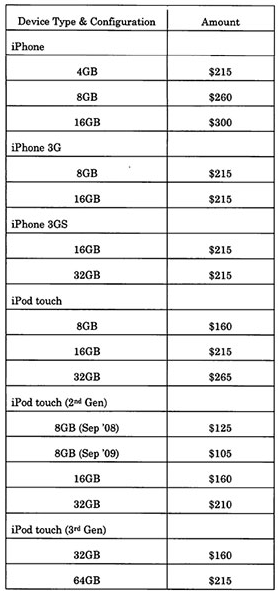
The devices encompassed in the lawsuit include the original iPhone, the iPhone 3G, the iPhone 3GS, and the first three generations of the iPod Touch. The ballpark estimate for payouts is about $200 per claim, but that figure could either rise or decline depending on how many affected users actually submit a claim. The type of device affected will also influence the extent of individual payouts.

The reason the last iPhone model included in the suit is the iPhone 3GS is because Apple in 2010 began requiring employees to look for other signs of water damage when a user brought in a device with a red LCI. Whereas employees under the previous protocol would void the warranty of an affected device out of hand, court documents posted by Wired indicate that Apple's liquid damage policies for the iPhone and iPod Touch were made less stringent in December 2009 and June 2010 respectively.

As part of the settlement agreement, Apple also agreed to set up a website where users can learn about the case and access all documents needed to either submit a claim via the web or by printing out a mailable form. Interestingly, the agreement requires that Apple make a published notice alerting the public to the settlement agreement in both the USA Today andMacworld magazine.

Naturally, Apple notes that it enters into the settlement agreement "without in any way acknowledging any fault, liability, or wrongdoing of any kind."

[Source: TUAW]


New Office for Mac to Come Next Spring, Office for iOS Not Arriving Until Fall 2014?

ZDNet has shared a roadmap it received from a source who claims it is the timetable for Microsoft's plans for both the Mac and iOS versions of Office.

The map says a new version of Office for Mac will arrive in April 2014, while the long rumored Microsoft Office for iOS and Android will arrive next Autumn, in October 2014.

I do not know how old this purported roadmap is, but my contact indicated it was likely current as of the start of 2013. I asked Microsoft Office officials for comment on the alleged roadmap, but they declined to do so.

The most recent report, from this past December, suggested that Apple and Microsoft were in negotiations over revenue share as part of Microsoft's Office 365 subscription service that launched in January. Apple wants the standard 70/30 split in revenue that is part of its developer license agreement for every developer.

Microsoft itself has leaked references to Office Mobile for iPhone, Excel for iPad, and PowerPoint for iPad, making clear that Microsoft does have iOS versions in the works.

[Source: MacRumors]

Yahoo Wants to Forge a Deeper Partnership With Apple

In addition to powering iOS’s Weather and Stocks apps, Yahoo is reportedly in talks with Apple to play a more prominent role in the Cupertino company’s ecosystem. According to theWall Street Journal, the two companies are discussing “new arrangements, including possible deals to get more content from Yahoo Sports, Yahoo News” and other properties. Apple-style BlinkFeed?

Talks are preliminary at the moment, meaning no deal is imminent. Yahoo also provides data for Siri, and could look to further integrate its data into Apple’s virtual assistant. The  Internet company is allegedly drawing up plans to entice Apple to make use of Yahoo’s Web-search results—through both Safari on the desktop and iOS—but current partnerships would make that deal difficult. Right now, Microsoft’s Bing powers Yahoo Search, while Google still remains the default engine on iOS.

Yahoo’s motives are apparently to grow the company’s mobile presence, and a deeper partnership with Apple could certainly achieve that. The window of opportunity to rely less on Google seems to be opening for Apple, but whether the company will capitalize remains to be seen. Sources claim Apple has stated that it isn’t willing to ditch Google if that means a worsened search experience, so it seems Yahoo will certainly have some convincing to do.

[Source: TechnoBuffalo]

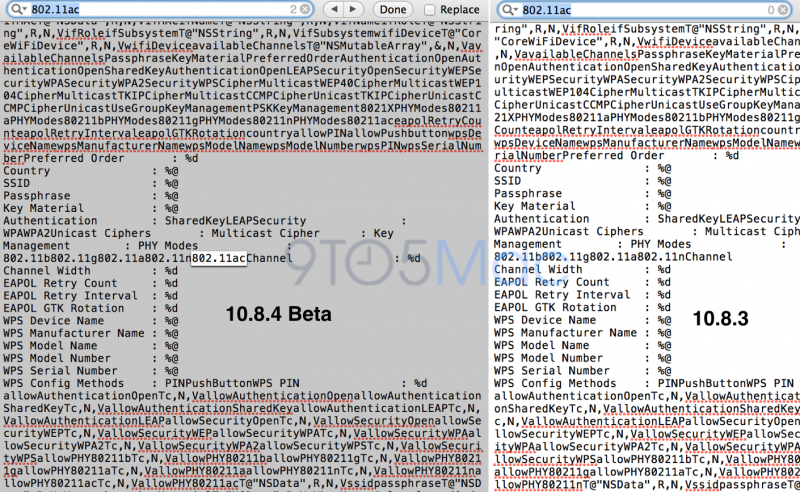
Code in OS X 10.8.4 Suggests Future Macs Will Offer 802.11ac Gigabit Wi-Fi Support

Code within the latest 10.8.4 beta release of OS X confirms that 802.11ac 5G "Gigabit Wi-Fi" support, which is not offered in OS X 10.8.3, will be offered on Apple's next generation Macs, reports 9to5Mac.

In January, Apple reportedly signed a deal with wireless chip firm Broadcom to bring the high-speed wireless access to its future Mac lineup. 

802.11ac offers triple the speeds that are available with the current 802.11n standard, supporting up to 450 Mbps on one antenna and up to 1.3 Gbps when used with three antennas. The speed boost allows for quicker file transfers between home computers. 

report from Digitimes earlier today suggests that Apple might be refreshing its notebook lineup near the end of the second quarter, which may translate to an introduction at Apple's annual Worldwide Developers Conference in June.

[Source: MacRumors]

27-inch iMacs hit Apple's refurb store

Apple introduced its new thin iMac models last year and now those beauties have landed in the company's certified refurbished outlet. As reported by Engadget and MacRumorsthe refurbished 27-inch iMac is available for up to $270 off the regular retail price. The refurbished base Core i5 model sells for $1,529 and includes a 2.9 GHz Core i5 processor, 8 GB of RAM, a 1 TB HDD and a gorgeous 2,560 x 1,440 display. A 3.2 GHz Core i5 model is available for $1,699, and the Core i7 models are available starting at $1,869. Each refurbished model comes with a one-year warranty from Apple.

[Source: CNET]

Intel announces faster next-gen Thunderbolt

Engadget is reporting that Intel has introduced the next generation of the Thunderbolt interface at theNAB conference. The update promises data transfer rates of 20 Gbps in each direction on Thunderbolt's two channels, twice the speed of the current generation rated at 10 Gbps. The demonstration Engadget witnessed showed the new Thunderbolt running at 1,200 Mbps, which is simply remarkable. Intel says the new Thunderbolt is also capable of simultaneous 4k video file transfer and display.

In addition to the improved speed, the company will be introducing thinner cables for devices in the next year. Current users shouldn't worry too much about obsolete accessories; the new Thunderbolt is backwards-compatible with previous connectors and cables.

Look for the new Thunderbolt sometime in 2014.

[Source: TUAW]