GeekanoidsTwitterInstagramFacebookBrotherUKAdvertAdvert

Google introduces Maps Tracks and Geolocation APIs, awaits your next location-enabled application

In its never-ending quest to dominate the global mapping scene, Google has just rolled out a new pair of APIs designed to help organizations build their own location-enabled applications. The first is Google Maps Tracks API, which gives developers the ability to concoct apps that can store, display and analyze GPS data on a map. In other words, those in need of a geofencing program -- fleet managers and the like -- need look no further. Secondly, there's the Google Maps Geolocation API, which "enables an application or device to determine its own location without the use of GPS by looking up the locations of nearby WiFi access points and cell towers." It's pretty clear that enterprises are the target here, but it seems like only a matter of time before consumer-facing location apps tap into 'em. After all, the world needs more indoor mall apps. Fact.

[Source: Engadget]

EU regulators urge Google to modify privacy policy, offers 12 recommendations (update: statement from Google)

It wasn't all that long after Google consolidated most of its privacy policies before people wanted clarification on what this meant to users. Even then, EU regulators weren't satisfied, asking the search giant to hold up a little while it took a proper look at the implications for European citizens. The result of that investigation? Well, Justice Commissioner Viviane Reding previously declared it to be in breach of European law, and now the EU is commanding that it be reexamined. The assertion comes in a letter to Mountain View from the EU's data protection regulators, who feel that consolidating so much personal data into one place creates untenable risks to privacy, and was signed by 24 member states (plus Liechtenstein and Croatia). The regulators also outlined 12 recommendations for Google to follow to bring its policy back to the favorable side of the fence. No official word from Google at this time, but we've reached out for comment.

Update: Peter Fleischer, Google's global privacy counsel issued the following statement: "We have received the report and are reviewing it now. Our new privacy policy demonstrates our long-standing commitment to protecting our users' information and creating great products. We are confident that our privacy notices respect European law."

[Source: Engadget]

iOS 6 tethered jailbreak updated with official Cydia, quicker installation for your A4-packing device

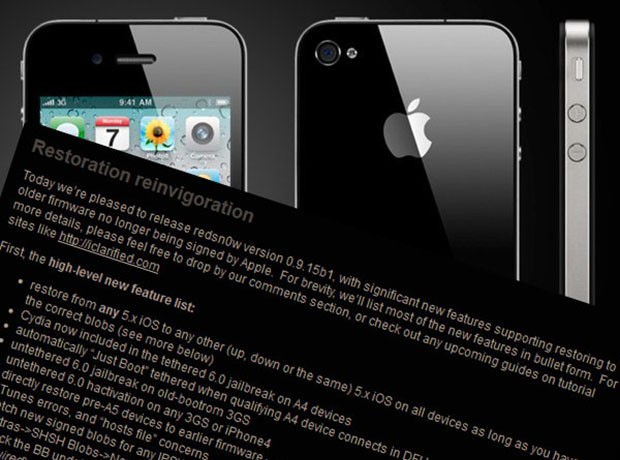
The iPhone Dev-Team has just outed a new version of Redsnow that opens up iOS 6 to an official version of the sinful, definitely-not-Apple Cydia store, but you'll still have to be tethered to use it. The process is now simpler, as the latest version recognizes your already-installed iOS 6 OS and installs only the necessary jailbreak files, and Cydia is now installed automatically as well -- rather than needing a complex workaround like the last version. If you're willing to put up with the tethering and have an A4-powered iPhone 4, 3GS or gen-4 iPod touch device, the laundry list of how to do it is at the source below -- but there's always the risk of bricking, so caveat emptor, of course.

[Source: Engadget]

Raspberry Pi Model B gets RAM boost to 512MB, keeps $35 price tag

So you got your Raspberry Pi all set up, you overclocked it and you even made it run Atari 2600 games. But then, it seems, many you wrote to the UK-based outfit to complain about the fixed 256MB of RAM. Indeed, the budget mini PC maker says that requests for a memory upgrade have been among "the most common suggestions" it's received since it launched the device. However, rather than introduce a pricier version, the company has decided to offer 512MB as standard with all future Model Bs (including all current and outstanding orders), while sticking to the original $35 price tag. Good news? Sure, even if your current unit just got relegated to secondary secondary PC status.

[Source: Engadget]

Google Maps or Apple Maps

Which one is better, Google Maps or Apple Maps? This is an important question for people looking to upgrade to a smartphone. Both the Android and iPhone offer GPS software, but each type offers its own strengths and weaknesses.

Let’s take a look at the pros and cons of each.

Apple Maps
Apple has a history of winning over buyers with their products, creating a loyal pool of customers who camp on sidewalks and wait in hours-long queues for each new item that the company releases. Apple devices are nice, no question about that. However, Apple may have dropped the ball with Apple Maps.

The newest version of Apple Maps that comes with the iPhone 5 has been identified by users as having numerous flaws with both the interface and the information it offers. The program has identified points of interest in the wrong locations, has labeled walkways and bike paths as driving routes, and has given outright false directions. It also only provides directions in text, but does not provide verbal directions, which is difficult for people who use Apple Maps while they are driving. Finally, it provides no information about public transport.

The problems were so widespread that Apple CEO issued a public apology and promised to fix the bugs, but also suggested that users download apps from competitors, including HopStop, Map Quest, and Google Maps.

Google Maps
Since the CEO of Apple is recommending Google Maps, what’s so great about it?

Basically, it excels wherever Apple falls short. Google Maps provides audio directions and gives the correct labels for landmarks and street addresses. It also allows users to get the most current information about public transport as well as the best routes for bikes.

Locations stored within the program tend to be more accurate because Google allows feedback from users and then makes the appropriate adjustments, thereby securing the most current data. Google Maps has been around longer than Apple Maps and therefore has had more time to work out the kinks. Many of the features in Google Maps were available before the release of the iPhone 5, such as routing for urban public transport, which has been available since 2011.

Therefore it is clear that the technology has been available for a long time from Google, but Apple has failed to keep up. Though the new iPhone might look snazzy, you can get a better quality product from Android with a smaller price tag.

Apple has declared itself committed to fixing its navigation app, but until then, you’d be better off to sell iphone and get an Android with Google Maps, or if you have decided to keep your iPhone, download Google Maps from the App Store.

[sponsored article]

Firefox 16 final launches with Reader on Android, VoiceOver on Macs and web app support

Mozilla knows how to keep on the fast track. Just weeks after the Firefox 16 beta first showed, the finished version is ready and waiting. Surprises are few if you were an early adopter, although the update still has some welcome changes for the right audiences. Mozilla is most keen to talk about preliminary web app support for the Mozilla Marketplace, but you'll also find device-specific additions like a Reader Mode for the Android flock and VoiceOver support automatically switched on for Macs. More responsive JavaScript and on-by-default Opus audio playback give existing surfers extra reasons to upgrade. Firefox 16 is immediately available through all the usual channels, so hit the relevant source link if you're ready to live on the not-quite-bleeding edge.

[Source: Engadget]

Samsung partners with Spotify, brings streaming music to its 2012 Smart TVs in Europe

Europeans who have been pining for a (nother) way to bring Spotify into their living rooms can rest easy, now that Samsung is on the case. The pair have teamed up to bring 18 million tracks to Sammy's 2012 E-Series Smart TVs with a new app designed for the platform. The software will arrive later this year, with existing Premium users finding their playlists already syncing, while those new to the service will be offered a short free trial to coax them into signing up. If you've yet to make an investment in one of the displays, the company is also planning to add the functionality onto its Blu-Ray players and Home Theater systems in short order.

[Source: Engadget]

Google Play in-app subscriptions get free trial option

In-app subscriptions found their way to Google Play this May, and now the folks in Mountain View are letting Android developers offer them with free trials. In order to make use of the freebie spans, you'll have to fork over your payment information to Page and Co. as if it were a run-of-the-mill purchase, but you won't get hit with the monthly fee until the dev-determined trial stretch is over. Developers looking to serve up samples of their episodic content can set a trial period that's at least seven days or longer right within the Developer Console, which means they can add the gratis option or alter its length without having to modify their apps. If the duration of the gratis subscription is changed, the tweak will only apply to new subscribers.

[Source: Engadget]

Facebook testing Pinterest-style 'Collections' to get brand pages more sales opportunities

It looks like Facebook is pulling a page directly from Pinterest's playbook. According to All Things D, the company is testing a new "Collections" feature that lets users collate product images from brand pages however they best see fit and share that collection with their friends. The feature is being tested today, but the company should be releasing it widely to the Facebook userbase later this afternoon; it doesn't appear to be live on our end yet. For starters, Facebook is testing Collections with seven retailers only, including Pottery Barn and Victoria's Secret — you won't be able to make collections from any random friend's images or even any brand page, at first. While other brands can't yet participate, Facebook will open the program up to all brand pages if they decide to keep Collections around beyond the test phase.

These new collecting features could certainly drive a lot more attention to brand pages, and Facebook is hoping to help make these pages more valuable — along with the photo is a price and purchase link. For starters, the company isn't charging a referral fee, but this could certainly turn into a new revenue stream for Facebook once the program matures. As for the end user, images won't show up in your new feed unless you're following the company or one of your friends interacts with and shares it — still, if this takes off like Pinterest has, there's a chance you could get bombarded with your friends' wishlists before too long.

[Source: The Verge]

UK government and industry heavyweights set up 5G Innovation Centre, want to go one better

The UK is almost ready to flip the switch on its first LTE network, but it's determined to be at the forefront of the next-generation, setting up a "5G Innovation Centre" at the University of Surrey. The government announced it's putting up £11.6 million (around $18.6 million) in funding, but another £24 million (around $38.5 million) will be coming from an industry group comprising the likes of Huawei,Samsung, Telefonica, Rohde & Schwarz, Fujitsu and others. The money will allow research to go beyond concept and theory, with the aim that all partners work together to develop and standardize 5G technology, which the university has been looking into for a number of years already. They will focus on energy and spectrum efficiency as well as speed, and although it's early days, 10Gbps has been banded around as a per-tower target, translating to roughly 200Mbps for each connection. Unfortunately, we've also got a number to kill your geek buzz -- it's upwards of a decade away. Still, at least you've got a long time to think about which case you'll be picking up for your 5G-ready Galaxy S XV.

[Source: Engadget]

Virgin Media begins pushing its UK broadband to 120Mbps, much to Usain's delight

If you're one of Virgin Media's top-tier internet customers, you may soon see your service getting a little speedier. The Branson-backed company is boosting its top speed from 100Mbps to 120Mbps, thanks to a £110 million ($169 million) infrastructure investment. The majority of the network -- around 60 percent -- has yet to be supercharged, but you can use the coverage checker linked below to see if you're in-line for an early Christmas present from Sir Richard.

[Source: Engadget]

BBC launches iPlayer Radio: a separate radio-only mobile app and web UI

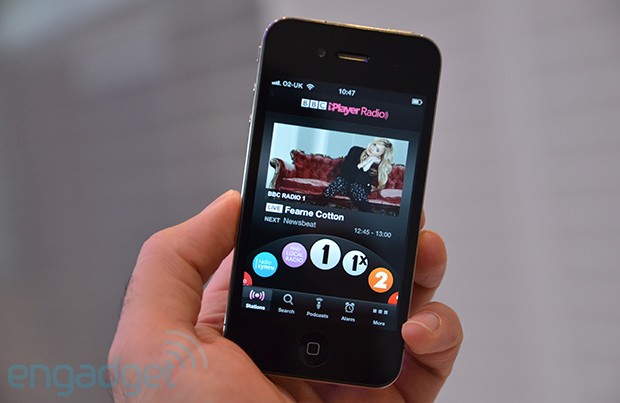
No one can accuse the BBC of neglecting radio in its quest for streaming nirvana -- not when the number of radio listeners on iPlayer has shot up 56 percent in a year (and 300 percent on tablets). Nevertheless, from tomorrow morning, iPhone users will find a brand new way to listen to their favorite content: a dedicated radio app with a spinning dial which -- compared to the regular iPlayer app -- will put much greater emphasis on live shows rather than catch-up. There'll also be mobile-friendly features like an alarm clock which will wake you up to your choice of show, reminders for shows you just can't miss, and the ability to identify current and recently-played songs at a glance. The app will reach Android too, as soon as some Flash-related difficulties have been ironed out, and its alarm function will benefit from slightly better multi-tasking on Google's OS, so you won't have to leave the app open before you fall asleep. If you don't want to wait or if you're outside the UK, check out the desktop iPlayer at the source link, or the gallery below, and you'll see just what the Corporation's philosophy about treating radio differently -- rather than as "TV minus video" -- actually looks like.

[Source: Engadget]