Just in time: Scientists propose vaporizing asteroids

The sky is totally falling.

As if it weren't enough that a meteor boomed across the Russian sky today, shattering windows and injuring about 1,000 people, an asteroid 150 feet across is about to sideswipe our planet.

Asteroid 2012 DA14, while unrelated to the meteor, is just as scary. It will graze us at just 17,200 miles from the surface, passing between Earth and our geosynchronous weather and communications satellites.

Possible asteroid strikes are no joke, and if you ask me (or the dinosaurs), they represent the biggest threat to our planet aside from human stupidity.

Fortunately, some non-stupid humans are finally getting serious about countering this threat.

Two California scientists are proposing a system that could eliminate threats the size of 2012 DA14 in an hour, or even asteroids 10 times larger in about a year.

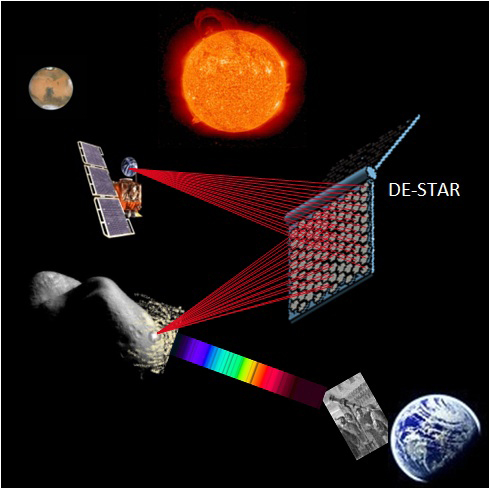
UC Santa Barbara physicist Philip Lubin and Gary Hughes, a researcher at California Polytechnic State University, San Luis Obispo, came up with something called Directed Energy Solar Targeting of Asteroids and Exploration, or DE-STAR.

This "directed energy orbital defense system" essentially harnesses solar power, channels it into a phased array of laser beams, and then evaporates dangerous asteroids or comets or changes their orbits.

Based on current technology, DE-STAR could be built in various sizes, from something that would fit on a desktop to an array about 6 miles across. The bigger it is, the more powerful it would be.

A system the size of the International Space Station could begin to nudge comets and asteroids from their orbits, according to the scientists.

But if DE-STAR were 100 times larger, it could bombard its target with 1.4 megatons of energy per day, destroying an asteroid 546 yards across in one year.

The system could also be used to determine asteroid composition, and help propel spaceships for interplanetary travel. Theoretically, the largest configurations could power a 10-ton craft at near the speed of light, enabling interstellar voyages.

Great, but who's going to pay for this ray gun with warp drive? The scientists don't have an answer but say we should start small and keep working.

[Source: CNET - Click here to read the full story]

Doctor Who returns 30 March ahead of 50th birthday special

The Doctor is back in the house this Easter. Doctor Who returns to our screens on Saturday 30 March, in the lead-up to the programme's historic 50th anniversary this year.

The TARDIS returns on the bank holiday weekend, so we can watch the Doctor's latest adventure while stuffing our faces with Easter eggs and not worrying about work.

There are eight episodes, once again starring Matt Smith as the bow-tied Time Lord, and featuring Jenna-Louise Coleman as mysterious new companion Clara.

Apparently this is the second half of season seven, even though it's six whole months since the first half of series seven ended. Honestly, when did this this mid-season break business become a thing? 

This year marks the 50th anniversary of Doctor Who, which first materialised on British tellies on 23 November 1963. To celebrate, the BBC is planning a birthday bonanza of Who-themed hullabaloo. Each month sees a screening of classic episodes from each Doctor at the BFI and the programme gets back to its educational roots in a partnership with the Science Museum. There will also be commemorative Royal Mail stamps in March.

A series of documentaries fill follow series seven, including a one-hour 50th anniversary special -- presumably on the anniversary itself, which handily falls on a Saturday, and is heavily rumoured to feature the return of every Doctor -- as well as An Adventure in Time and Space, a 90-minute drama about the genesis of the show written by Mark Gatiss.

[Source: CNET]

CES 2013: Intel Demos “Perceptual Computing”: Gestures, Voice, Facial-Rec Coming To Your PC Soon

One of the most fascinating bits of future tech on the radar is mid-air gesture control. (Think Kinect. Or Minority Report‘s computing gestures.) Leap Motion made a splash in 2012 by introducing an extremely accurate accessory that can read users’ motions within an interactive 3D space of 8 cubic feet. And unbelievably, the price is only $70 per preorder/unit. Most recently, the company has partnered with Asus, which will bundle its PCs with the wee little Leap Motion technology.

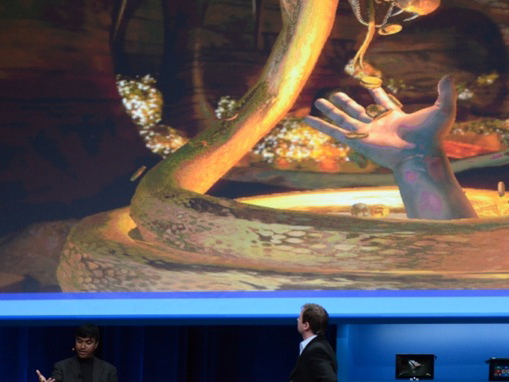
Not to be outdone, Intel has several partnerships going for its “Perceptual Computing” initiative. Intel’s director of Perceptual Computing, Achin Bhowmik, unveiled a whole host of new features today at CES (top, main) — including logging in via facial recognition, using gesture controls to execute computer commands, and even successfully playing Where’s Waldo, with a computer tracking his eyes as it found the correct spot on the screen.

[Source: TechnoBuffalo - Click here to read the full story]

The year on Twitter: from the ocean floor to Mars, tragedy to triumph

At the end of every year, Twitter loves to compile highlights from the previous 12 months. Its army of engineers and analysts look at the trends, the most popular retweets and new tweeters with an impact. Then all that info is packaged up in an easy to navigate standalone site that presents the world through a hashtag-tinted lens. 2012 had plenty of interesting moments, punctuated by status updates from the bottom of the sea and the surface of the red planet. We were given an unprecedented birds-eye view of a tragic storm and an intimate glimpse at a president celebrating the successful conclusion of a hard-fought election with his wife.

[Source: Engadget]

Engineer builds gingerbread house using CAD and lasers, aging droids approve

It's not that often we see the worlds of baking and technology mix, but when Johan von Konow went about making a traditional gingerbread house for the holidays, he added a laser to the recipe. The engineer and tinkerer first went about designing an accurate, miniature 3D representation of his summer house in a CAD program, with the help of his wife. He then printed outlines of the necessary building blocks onto sheets of baked gingerbread, and used a 50-watt laser engraver to cut them out and score icing guides for the final touches later on. Burnt edges rendered the confectionary inedible, but as its final destination was no longer stomachs, raw lasagna sheets were added for structural support, and hot glue used to bind it all together. If you've got all the kit and are feeling inspired by the picture above, the design layout and project walkthrough are available at the source link below. Hansel and Gretel needn't be worried this time around -- the tech used creating this particular gingerbread house has attracted a different kind of aged tenant.

[Source: Engadget]

AMD cuts silicon wafer order by three quarters, gets a nasty fine

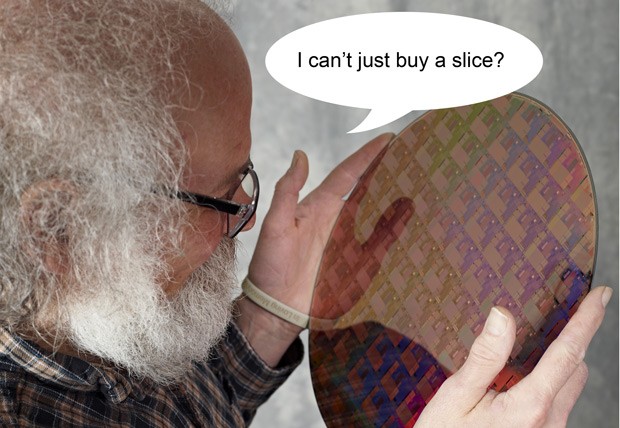
If you're in need of a concrete example of how the chip-making industry is trickier than ever, and how it rewards scale at the expense of flexibility, then please, look no further. AMD has just significantly reduced its order for silicon wafers from it sold mate Globalfoundries, in an effort to avoid the inventory surpluses and write-downs that have recently plagued its balance sheet. Instead of buying the originally agreed $500 million-worth of cake trays this quarter, it's now committed to spending just $115 million. Except it was never, ever gonna be that simple. In lieu of reneging on its contract at short notice, AMD will have to pay Globalfoundries a $320 million penalty on top, bringing the final cost of the deal to just $65 million less than what it would have paid for the full order.

[Source: Engadget]

Suunto Ambit update lets athletes build their own GPS watch apps

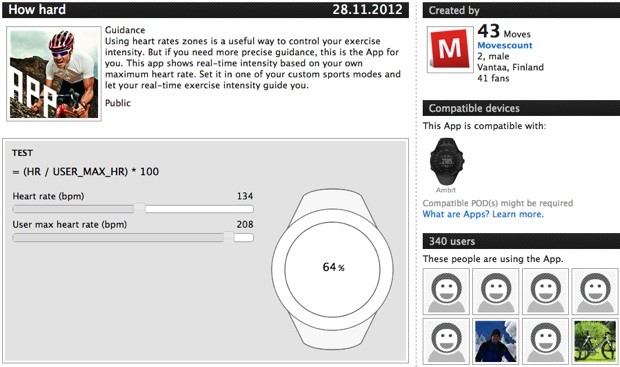
Extending watches with apps is one thing if you're building for a smartphone companion with a traditional, developer-centric app model. It's quite another when it's a GPS watch, and athletes are building their own apps -- yet that's what Suunto has managed with a 2.0 firmware update to its Ambit outdoor watch. The revamp uses a simple web interface to let us build free sports apps based on criteria as simple as distance and speed through to more specific measurements like heart rate and pressure. Adding predictive routines and arbitrary values allows for situation-specific code we might not get elsewhere, whether it's estimating the finish time of a marathon or guessing just how much post-run beer is possible before the guilt sets in. On top of the new software platform, the 2.0 update brings a handful of major extensions from Suunto itself, including support for ANT+ and Foot POD sensors as well as an interval timer. The apps and upgrades help justify a relatively steep $500 price for the Ambit by turning it into a Swiss Army Knife for the wrist; when features are dictated more by imagination than a developer's whims, they might just save the cost of an early hardware replacement.

[Source: Engadget]

2014 Ford Fiesta gets MyFord Touch, smarter Sync voice commands

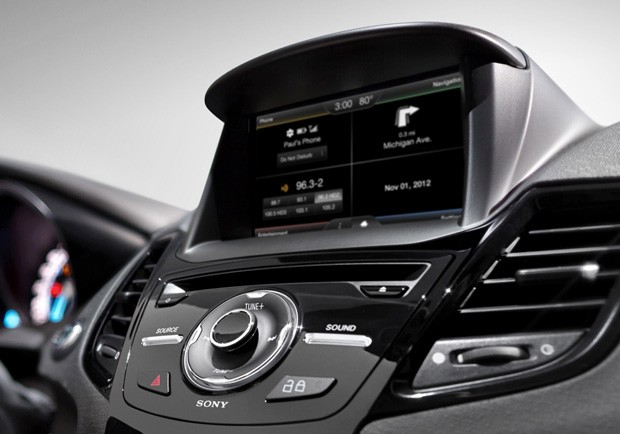
For all of Ford's emphasis on Sync, it's hard to deny that Fiesta drivers usually sit on the bottom rung of the automaker's technology ladder when they're denied MyFord Touch and the related perks of larger vehicles. Pick up the keys to a higher-spec 2014 Fiesta, however, and you'll be in for a treat. The compact will stuff a 6.5-inch touchscreen and MyFord Touch into the center stack, with a few software upgrades over what we've already seen in cars like the Focus and Fusion. The highlight is undoubtedly the more direct voice command system -- the Nuance-driven recognition no longer demands that we specify music categories or radio formats to start playing tunes. Bluetooth smartphone pairing and navigation by address should be streamlined at the same time. Motorists will have to wait until 2013 to reap the rewards, but it could be worth the wait to drive away with Ford's better electronics in an affordable ride.

[Source: Engadget]

Tokyoflash mixes time and geometry to make its Kisai Polygon watch

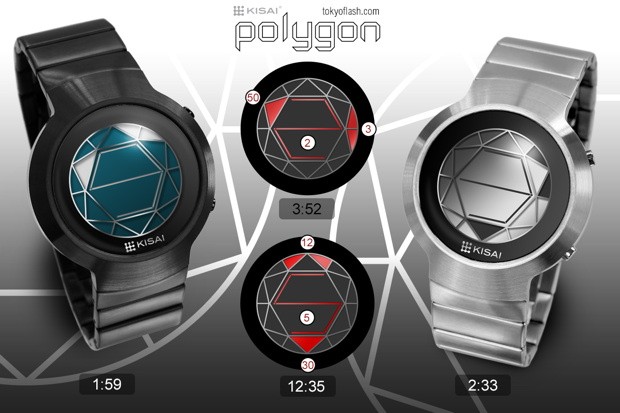
This week's Tokyoflash watch will certainly tickle the fancy of those who sleep with a set square beneath their pillow. The Kisai Polygon has a ring of triangles representing the hours and the nearest 10 minutes, with the individual minute being shown as a single digit through the middle. If you'd like to indulge in some retail therapy, you can take advantage of the company's pre-sale. Available in black, mirror, blue or pink, it'll set you back $99 (€77, £61) until Thursday, after which it'll cost $129 (€100, £80). Fancy learning how to read it from the team to built it?

[Source: Engadget]

ComScore: Black Friday online spending rings in at a record $1.04 billion

Considering the parody-worthy dangers of America's busiest shopping day, it's no surprise to hear that online consumerism is on the rise. According to ComScore, 57.3 million Americans took their wallets to digital storefronts on Black Friday, spending a record $1.04 billion in the process. "With Black Friday online sales up 26 percent and surpassing $1 billion for the first time, coupled with early reports indicating that Black Friday sales in retail stores were down 1.8 percent, we can now confidently call it a multi-channel marketing phenomenon," stated ComScore Chairman Gian Fulgoni. The organization also noted that digital content sales are on the rise, too, citing a 29 percent increase in the category over the same period last year. Finally, Fulgoni projected Cyber Monday sales in excess of $1.5 billion, based on observations culled from the years past. Read on for ComScore's official numbers.

[Source: Engadget]

Livescribe outs Sky WiFi Smartpen for $170, lets you record written notes and audio straight to Evernote

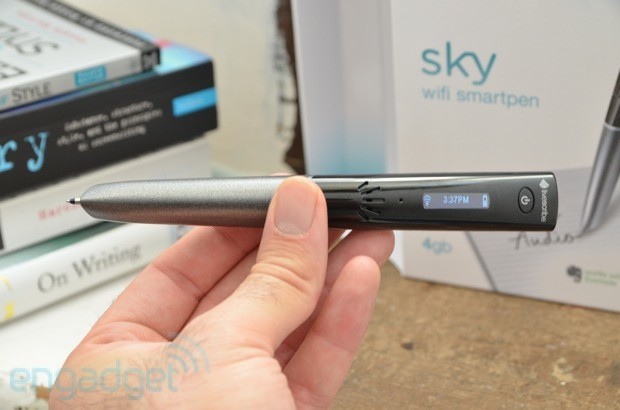
The Pulse pen couldn't do it. The more recent Echo couldn't manage it either. But sending notes and linked audio wirelessly is what Livescribe's latest digital pen is all about. Branded the Sky WiFi Smartpen, it works with proprietary physical notebooks to preserve your handwritten notes and linked audio files on a minimum of 2GB of onboard storage, and then it sends them directly to your Evernote account via WiFi -- from where you can access them on pretty much any PC, tablet or smartphone. If you're wondering a how the pen selects the right network and enters a password, then it's actually pretty straightforward: Livescribe's new stationery is printed with connection buttons that, in conjunction with the OLED display on the pen itself, guide you through the procedure in a few seconds. The latest notebooks also have buttons for sending your captured thoughts to Google Drive, Dropbox and Facebook, although those services won't be activated until early next year.

[Source: Engadget - Click here to read the full story]

Google takes us inside their data centers, shows you where the internet lives

Ever fancied a look inside one of Google's cavernous server farms? Given the security issues, the company isn't likely to just let anyone mooch around -- but understands if you're curious. That's why it's adding a special collection to its Street View data that lets you wander inside without a big trek to Iowa, Belgium or Finland. If you'd like to sample some of the delights, you can check out our gallery or head down past the break to get a video tour of the facility in Lenoir, NC.

[Source: Engadget - Click here to read more]