Facebook starts really, truly deleting removed photos

For those who haven't kept track, Facebook has had a years-long history of only maybe-sort-of-more-or-less purging our photos: they could be removed from a profile, but they would sometimes float around the site's content delivery networks for months or years, just waiting for a prospective employer to spot those embarrassing frosh week snapshots by accident. As Ars Technica discovered through experiments and official remarks, that problem should now be solved. In the wake of a months-long photo storage system migration and an updated deletion policy, Facebook now won't let removed photos sit for more than 30 days in the content network stream before they're scrubbed once and for all. The improved reaction time isn't as rapid as for a service like Instagram, where photos vanish almost immediately, but it might be a lifesaver for privacy advocates -- or just anyone who's ever worn a lampshade on their head in a moment of insobriety.

[Source: Engadget]

Kno textbooks arrive on Android with the Galaxy Note 10.1, take on a social side

Kno's post-hardware textbook platform has called the iPad its only tablet home for more than a year; it's about to spread its wings. Starting with a bundled presence on the Galaxy Note 10.1, Kno is an option for K-12 and college students who'd rather go the Android route. While all the 3D, note-taking and navigation features remain the same, there's an obvious selling point in supporting the S Pen (and hopefully other pens) to more directly put thoughts to virtual paper -- or, let's admit it, doodle in the margins. All of us, Android and otherwise, get a new Social Sharing component that lets us crib each other's notes before the big exam. We're still waiting on Kno for other Android devices as well as the already-promised Windows 7 support, but it's hard not to appreciate at least a little more variety in our digital learning.

[Source: Engadget]

RIM confirms BB10 standard screen resolutions for touch and keyboard devices

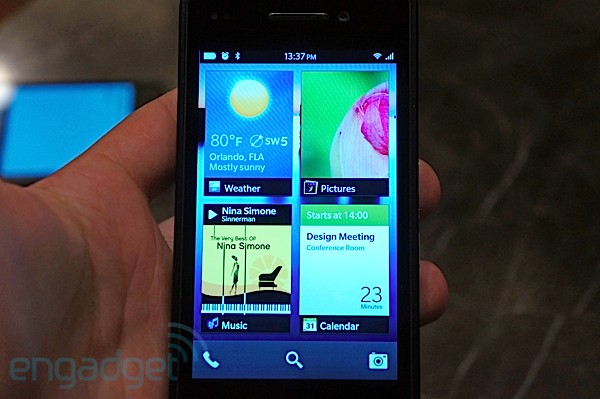
RIM took some time out from its worldwide tour to confirm that it's standardizing screen resolutions for BB10. Tim Neil took to the company's developer blog to say that forthcoming full-touch devices will ship with 1,280 x 720 displays, while keyboard-style phones would pack 720 x 720 screens. The only handset that won't play by these rules is the first (presumably flagship) BB10 handset, since it's too late to change its 1,280 x 768 screen. The company's urging developers to get tweaking to ensure apps run properly on the new gear -- or add letterboxing to offer a Sergio Leone feel to your mobile gaming.

[Source: Engadget]

More than $60,000 worth of ‘computers and personal items’ stolen from Steve Jobs home

According to a report from MercuryNewssuspects are now in custody for the recent burglary of the Silicon Valley home of Steve Jobs that contained more than $60,000 worth of computers and personal items:

The deceased Apple co-founder’s home on the 2100 block of Waverley Street in Palo Alto was burglarized July 17, said Santa Clara County Deputy District Attorney Tom Flattery, a member of the high-technology crimes unit…More than $60,000 worth of “computers and personal items” were allegedly stolen, but Flattery declined to say whether they belonged to Jobs, who died last year at the age of 56, or another family member.

Weeks after the burglary on July 17, police arrested Kariem McFarlin, 35, who is currently in jail on $500,000 bail, but other specific details regarding the crime are not available. We know that Laurene Powell Jobs and family were likely not living in the home at the time of the robbery, as during July the property was undergoing renovations with construction barricades and scaffolding surrounding the house.

[Source: 9to5Mac]

Sky+ iPad app update brings remote control and DVR scheduling

After being teased earlier in the year, v4.0 of the Sky+ app for iPad has arrived in the UK and brought a number of new features to subscriber's tablets. Now, it can be used as a remote control to change channels or select DVR functions, as well as view scheduled recordings and add to or change them, or just browse the TV guide's new look. Even with the changes however, Sky has more planned for later this summer when it will integrate zeebox technology to bring second screen features and data to accompany live TV. The free app is up in iTunes now, however customers will need the latest HD guide upgrade on their cable box that's connected to the same local network as the iPad to make it all work. There's a quick demo video of the new features embedded after the break plus more official information on the Sky website.

[Source: Engadget]

Putting An End To The Biggest Lie On The Internet

It’s long been said that “I agree to the terms of service” is the biggest lie on the internet. And even if you do read them, many TOS are so ridden with legalese that you practically need to be a lawyer to understand them. Also, as I wrote in a gloomy post last weekend, users have no choice but either agree to the terms offered by a web app or simply not use the service at all.

But a new project called TOS;DR wants to change that. The site aims to give more power to users by summarizing terms of service, flagging potential issues and rating apps on a scale from A (the best) to E (the worst).

So far the only company with an E, the worst possible rating, is TwitPic, which reserves the rights to sell users’ photos to news agency without giving the photographer a cut.

Project lead Hugo Roy tells me that he considers Wikipedia to be an exemplary service, though it hasn’t been rated by TOS;DR. He says both Wikipedia’s short, clear summary of its TOS and its practice of soliciting feedback from users before a change in terms should be widely adopted as best practices for the web.

[Source: TechCrunch - Read the full story]

Facebook’s Instagram Deal Moves One Step Closer: UK’s Office Of Fair Trading Gives It The All-Clear

Facebook has today moved one step closer in its proposed acquisition of photo-sharing app Instagram. The Office of Fair Trading in the UK has given the deal the all-clear.

The announcement was made via an RNS regulatory statement, which briefly says the OFT would not refer the deal to the Competition Commission. A spokesperson for the OFT has given us more detail:

“We examined this in light of them both offering social networking services, looking at potential competition in social networking services, and in the supply of photo apps and whether the merger might result in the merging parties limiting people from others using other apps or other sites,” he said. “In brief we concluded that there are several relatively strong competitors to Instgram which appear to pose a stronger constraint to Instagram than Facebook does.”

[Source: TechCrunch - Read the full story]

Twitter acquires Clutch.io, service essentially getting open sourced

Clutch.io is a service that allows iOS and mobile developers to easily and quickly do app testing, which helps them track just how customers use their apps. The service has been helpful in the past for a number of app developers and their products, but Clutch has now flipped over to just one client: The company has been acquired by Twitter. Clutch says it will work on the same type of work at Twitter, aiming to grow the company on a worldwide scale.

As for developers using Clutch now, there's both good and bad news. The bad news is that the service is getting shut down -- it will be supported until November 1, and after that Clutch's servers will no longer work. But the good news is that Clutch is basically open sourcing the whole thing. The company says it will release all of the necessary documentation and software for devs to continue to run the testing service on their own servers. And any currently running tests are designed to "fail gracefully" should Clutch's servers go down, so there shouldn't be any issues with end users at all.

All in all, it sounds like a good move for Clutch, and that developers who might be affected will at least have a way to deal with that. As for us Twitter users, I'm curious to see how this affects Twitter's mobile experience going forward. Twitter's one of my most-used services, so anything that makes it even better sounds good to me.

[Source: TUAW]

Google+ appeases audiophiles with new Studio Mode for Hangouts on Air

Since May, Google+ users have been able to show the world just how exciting their lives are via the Hangouts On Air feature. That works perfectly well for broadcasting your e-cooking lessons and all, but Mountain View has higher standards when it comes to live-streaming music. The just-announced Studio Mode for Hangouts On Air optimizes audio for music rather than speech, resulting in richer, clearer sound than what you'll get with the standard Voice Mode. Musicians simply select Studio Mode under settings -- other members of the hangout don't have to do anything. Check out a demo of the new feature below the break.

[Source: Engadget]

Google+ offers custom URLs for verified accounts, other profiles to come 'over time'

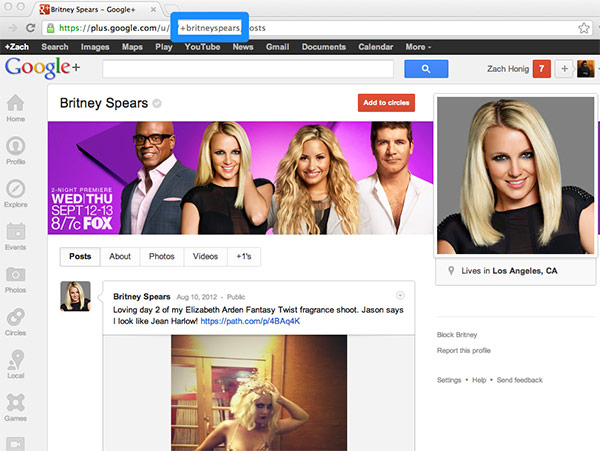
Do you happen to be David Beckham or Toyota? Well, congratulations -- you now have a Google+ vanity URL. The rest of us looking for the football star or car manufacturer need only type "google.com/+davidbeckham" or "google.com/+toyota" to reach those respective pages, enabling easy access to that must-see picture in front of a private jet, or a vehicle recall notice. Sadly, you're probably not eligible for a custom shortcut of your own -- here's the word from Google:

At first, we're introducing custom URLs to a limited number of verified profiles and pages. But over time we plan to offer custom URLs to many more brands and individuals, so please stay tuned!

So, for now, you better get comfy with "plus.google.com/108326689306432447266," or whatever the good Goog has granted.

[Source: Engadget]

Samsung's defense against Apple patents begins with DiamondTouch table, LiveTile UI prior art

Samsung may have convinced Judge Koh to toss a few international handsets out of Apple's lawsuit, but the Korean firm still has Cupertino's patent licensing accusations to contend with. Their tactic? Convince the court that Apple's claim to the inventions are invalid, and that the technology was developed prior to the disputed patent's filing. It's called showing "prior art," and Sammy's done it before -- famously showing a scene from 2001: A Space Odyssey in an attempt to put Apple's iPad design claims to rest. Today's examples were more grounded in reality, focusing on debunking Cupertino's claim to the "bounce back" effect that happens when a user reaches the end of a page and common multitouch zoom / navigation gestures.

Samsung pitted the famous "bounce back" feature against an old PocketPC interface called LaunchTile, which allowed users to navigate through 36 applications by zooming in and out and a panning across a grid-like "world view" of said apps. Movement between grids snap to each zone, marking the end of a page. Apple shot back, noting that LiveTile's snapping navigation didn't work on diagonals, and cited other differences as well. Samsung wasn't deterred, however, and brought out DiamondTouch, a projector based multitouch table that utilized both one touch scrolling and pinch-based zoom gestures. The table even takes aim at the aforementioned bounce-back patent with a technology called TableCloth, which bounces back images that are pulled off screen. DiamondTouch's creator, Adam Bogue, told the court that he had demoed the technology to Apple privately back in 2003, noting that it was also available to anyone who visited the Mitsubishi Electronic Research Laboratories' lobby.

If the jury takes to Samsung's claims of prior art, it could severely cut Apple's claims against it. Even so, Cupertino's lawyers aren't going down without a fight, and still have a number of navigation and design claims that Samsung hasn't addressed. The two parties are expected to keep up the fight for about a week, we'll keep you posted on the inevitable revelations as they come.

[Source: Engadget]

Telenav's Scout gives iOS users offline navigation in exchange for ten bucks

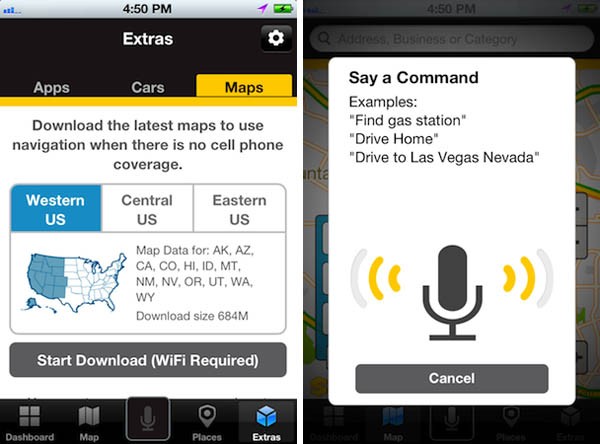
We know that iOS 6 will bless iPhone users with some in-house-made mapping, but that hasn't stopped Telenav from bettering its own Scout navigation offering for Apple's favorite handsets. Scout now does offline navigation by letting users download maps of the west, central or eastern United States over WiFi only. Plus, Scout now takes voice commands, so on your next road trip you can tell it to find the nearest Whataburger whether you have cell signal or not. Interested parties can head on over to the App Store to get their download on, but you'll pay for the privilege -- offline navigation costs $9.99 a year or $2.99 a month, though the free, data-dependant version of Scout for iPhone still includes speech recognition. Still not sold? Perhaps the video after the break will persuade you.

[Source: Engadget]