Twitter changes cause Tweetbot for Mac alpha to be pulled

We're starting to see changes to Twitter and Twitter clients following the announcement of new API rules. Late yesterday, Tapbots pulled the alpha version of Tweetbot for Mac. Paul Haddad explained that the company tried to work with Twitter to get around the user token limit during the beta-testing period. Twitter didn't find any solution acceptable, Haddad said, so the public alpha download was pulled. Those who already have the alpha client are still able to use it.

Haddad assured users that the final version Tweetbot for Mac will be available in the near future. He also urged those who tried the alpha and decided not to use it to revoke access and up the user token.

Meanwhile, The Next Web points out that Twitter no longer identified which client was used to post a tweet.

[Source: TUAW]

LG EA93 21:9 aspect ratio 29-inch LCD spotted on IFA show floor (eyes-on)

Fancy a wickedly wide 21:9 aspect ratio LCD that's more than a touch larger than what you'll find on that unique Toshiba Ultrabook? It looks like LG's got you covered, with its 29-inch EA93. We spotted a half dozen of the ultra-wide IPS displays during a preview of the show floor at IFA, and were able to grab a few frames. You need to see this LCD in person to get a feel for just how wide it really is -- with a 29-inch diagonal panel that's incredibly short and squat, you'll be compromising quite a bit of desk real estate in order to add some horizontal pixels.

From booth materials, it seems that LG is promoting this product as a multitasking solution -- the format is well-suited as a replacement for dual-monitor rigs, letting you view several windows at once without adjusting your eyes vertically. We already had a solid grasp on the EA93's specs, which include a 2,560 x 1,080-pixel panel, a four-way split screen feature and plenty of inputs, including two HDMI ports, DVI Dual Link and DisplayPort, though the product placard also revealed USB 3.0 connectivity and 7-watt stereo speakers. Pricing has yet to be confirmed, but if you're prepared to add such a device at any cost, we'd suggest clearing some desk space now -- these are set to ship in November.

[Source: Engadget]

Maingear Solo 21 receives a makeover, $899 all-in-one PC is now fully upgradable

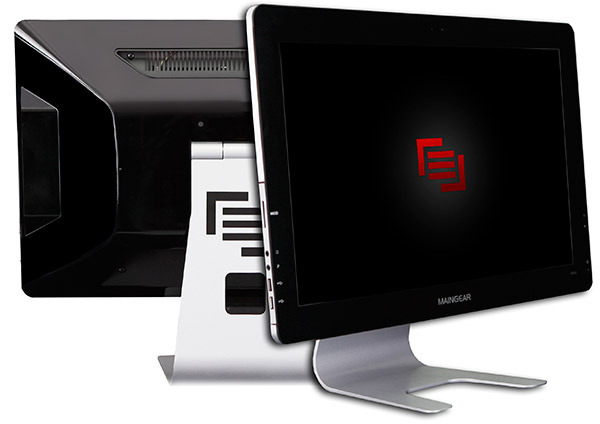
Back in March, Maingear entered the world of the all-in-one PC with the utilitarian Solo 21. Even though the unit is now only five months old, it's being replaced with a model that's more attractive, more functional and that carries a lower price. We're most excited that the redesigned Solo 21 is now fully upgradable -- and yes, this includes the Mini-ITX motherboard itself. Available from $899 on up, the baseline configuration includes a 3.3GHz Intel Core i3 2125 CPU (Ivy Bridge), 4GB of RAM, 500GB of storage, a DVD burner, Bluetooth, WiFi and Windows 7 Home Premium. The Solo 21 also supports mSATA SSD storage and can also be outfitted with Blu-ray in place of the standard DVD configuration. You'll also find it supports the VESA mount, should you decide to throw the PC on your wall. If you'd like to become a bit better acquainted with Maingear's latest refresh, you'll find the full PR after the break.

[Source: Engadget]

Strontium launches HAWK SSDs


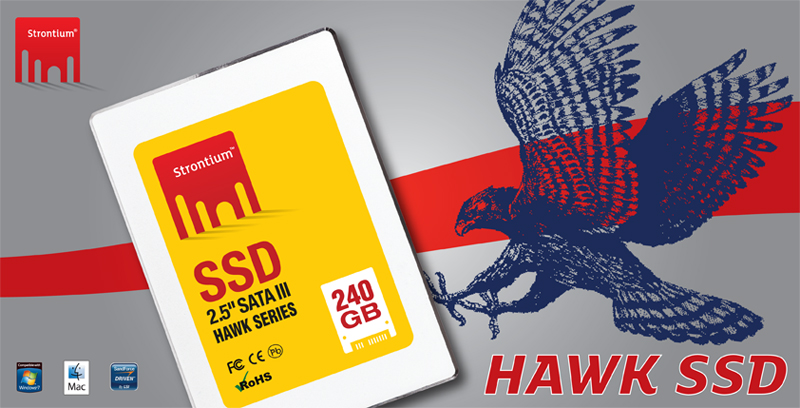
Strontium Technology has announced a new series of high-performance solid state drives (SSDs) named HAWK. These Hynix-built solid state drives with Strontium branding are based on SandForce’s SF2281 controller and SK Hynix Flash. These drives are said to be a good upgrade option featuring 500MB/s of read and write performance and also claim to offer faster performance for PCs and Macs. Needless to say, SSDs feature enhanced durability, shock-proof, silent operation and are more reliable as compared to traditional hard drives.

The 2.5-inch HAWK drive is available in 120GB and 240GB storage capacities. The sequential (256KB, MAX) read speed is 510MB/s and write speed is 470MB/s. The random (4KB, MAX) performance is 50,000 IOPS read and 38,000 IOPS write. It comes with support for SATA I/ II/ III interface, TRIM Support (O/S support required) and has a Mean Time between Failures (MBTF) of 1.2M. Strontium HAWK SSD has been designed to offer quicker boot up and shorter lead time in the loading of applications to enhance productivity.

Features: 

• 2.5” Drive

• SandForce SF-2281

• MLC NAND Flash for Fast Performance

• Available Capacities: 120GB and 240GB

• Sequential Performance (256KB, MAX): Read: 510 MB/s, Write: 470 MB/s

• Random Performance (4KB, MAX): Read: 50,000 IOPS, Write: 38,000 IOPS

• Supports SATA I/ II/ III Interface

• TRIM Support (O/S Support Required)

• Power Consumption: 0.82W (Active), 0.26W (Idle)

• Mean Time between Failures (MBTF): 1.2M

• 3 years hassle-free Strontium Limited Warranty

Evernote partners with Moleskine to offer ‘smart notebooks’ that are browsable from within the app

Today, at its Evernote Trunk Conference in San Francisco, Evernote announced a partnership with expensive high-quality notebook maker Moleskine. The surprising partnership yielded a new offering called “Evernote Smart Notebook”. Since many people still take notes with pen and paper, it is a partnership that makes sense.

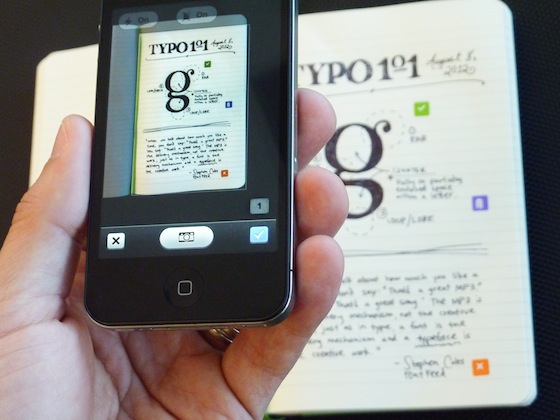
The Evernote Smart Notebook allows people to take notes by hand and then make the notes available online, TechCrunch first noted. To upload the notes, a photo of a page from the notebook is taken with the Evernote app. The notes are then saved to a user’s Evernote account where they can be browsed, searched and organized. Special stickers are provided to tell Evernote which virtual notebook to organize the note into.

[Source: 9to5Mac]

Samsung’s aftermath: appeals, emergency executive meetings, stock down 7%, jury comments

Following Samsung’s major loss to Apple in U.S. court, we saw follow-up official statements from Apple PR, Samsung PR, and Apple CEO Tim Cook. Now, new details from the aftermath are coming through.

The first piece of news comes from the Korea Times. The site reports that Samsung executives held an emergency meeting regarding the loss in trial. Even worse is a comment from a Samsung senior executive as he walked into Samsung’s HQ: “It’s absolutely the worst scenario for us.”

Inside the building, Choi Gee-sung, former Samsung Electronics CEO and now the head of Samsung Group’s corporate strategy division, was holding an emergency meeting attended by Shin Jong-kyun, the company’s mobile devices chief, and Lee Dong-joo, lead marketing official.

The Korea Times also reports that Samsung executives are set to formally respond to media requests and offer a more official response in the coming days.

The loss not only created havoc for Samsung executives, but Samsung shareholders as well. CNET reports that Samsung shares are down approximately 7% in the South Korean market:

[Source: 9to5Mac]

Raspberry Pi lands MPEG-2 and VC-1 decoding through personal licenses, H.264 encoding and CEC tag along

Making the Raspberry Pi affordable involved some tough calls, including the omission of MPEG-2 decoding. Licensing fees alone for the video software would have boosted the board's price by approximately 10 percent. Now, after many have made media centers with the hardware, the foundation behind the project has whipped up a solution to add the missing codec. For $3.16, users can purchase an individual MPEG-2 license for each of their boards on the organization's online store. Partial to Microsoft's VC-1 standard? Rights to using Redmond's codec can be purchased for $1.58. H.264 encoding is also in the cards since OpenMax components needed to develop applications with the functionality are now enabled by default in the device's latest firmware. With CEC support thrown into the Raspbmc, XBian and OpenELEC operating systems, a single IR remote can control a Raspberry Pi, a TV and other connected gadgets. If you're ready to load up your Pi with its newfound abilities, hit the source link below.

Update: The Raspberry Pi Foundation let us know that US customers won't have to pay sales tax, which means patrons will only be set back $3.16 for MPEG-2 and $1.58 for VC-1 support, not $3.79 and $1.90 for the respective licenses. We've updated the post accordingly.

[Source: Engadget]

Insert Coin: SmartThings wants to connect your dog, mailbox and kitchen cabinets to the internet

Sometimes you just can't remember if you turned off the toaster oven before leaving the house. Sitting at work, you might wonder, "is my house burning down?" or "should I go home and check?" You could run home, of course, or you could just link that croissant cooker up to the internet and switch it off from your phone. SmartThings promises to let you do just that, offering a system that connects everyday physical objects to a cloud-based control center. The project aims to provide users with a bevy of end-devices -- automatic door locks, thermostats, humidity sensors, presence sensors, power outlet switches and more -- that connect to a router-like SmartThings hub. From here the user can easily see and control these devices on the SmartThings mobile app.

That alone would be pretty handy -- but the SmartThings team decided to take it a step further by building SmartApps, that is, applications for further customizing how SmartThings devices (and the user) interact with the every day objects they're attached to. The platform is going to remain open, too, allowing owners and developers to build custom applications to fit their needs. Better still, the project is on a tight time line, and aims to put its product in backer hands by December -- of course, it'll have to reach its $250,000 Kickstarter goal first. Check out the team's pitch after the break, or hit up the source link below for more details.

[Source: Engadget]

LG announces 27-inch Personal Smart TV ahead of IFA

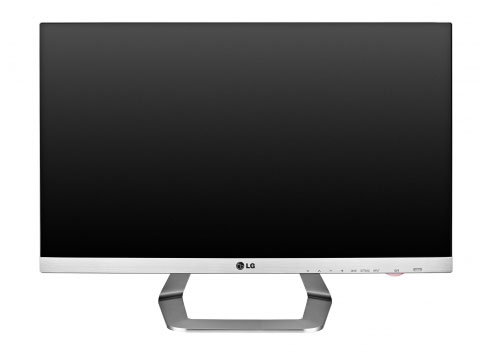
No room in your apartment for LG's upcoming 84-inch monster? Don't worry, the Korean outfit has something in your size, as well. The company's TM2792 promises the same Cinema 3D passive glasses technology as its big brother in a more compact 27-inch frame. The tube also promises to play nice with your other devices, featuring a MHL and WiDi for screen and content sharing. No word on pricing yet, but LG says the Personal Smart TV should land in European markets this September. Hit the break for the official press release, or sit tight: LG is bound to reveal more at the TV's official IFA debut.

[Source: Engadget]

Facebook speaks out on the big app rebuild

We posted about the Facebook app update the other day, and if you haven't updated your app yet, you really should. The app is a prime example of why native development is almost always better than trying to do things with cross-platform web connections, and why it's so important, even for an online service like Facebook, to make sure an app performs well on a given platform. If you're interested in reading more about the process, Facebook has posted a substantial article over on its own Facebook page, walking through why this change was made and exactly how it was done.

It's very interesting to read behind the technical scenes of how this update was created. The app essentially works in the same way that the previous version does, but it was built from the ground up in iOS' native Objective-C. The changes were all core to the process of running the app rather than UI developments, and if you have any development experience, it's wild to see the giant Facebook deal with the same issues that other iOS developers face.

Of course, the drawback for all of this is that while the original HTML 5 app was relatively easy to update, this new app requires a little more code tweaking to change even basic things in the app. Facebook has done its best to build things as modular as possible (the new app even uses some of the code from the standalone Facebook Messenger app), but going forward, a more solid foundation may mean we have to wait longer for changes.

[Source: TUAW]

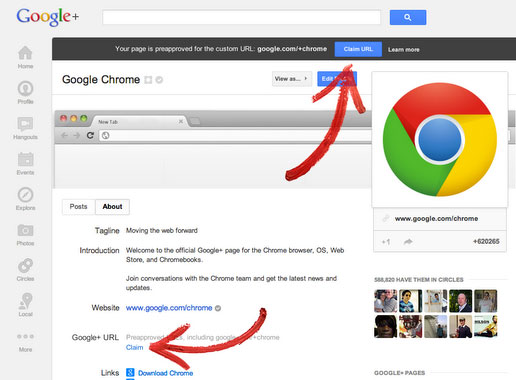
Google+ expands custom URLs to 'thousands more' pages and profiles

If you're lacking the mental perspicacity to memorize that bizarre string that constitutes your Google+profile (or business page) we've got some good news -- Google's continuing its roll-out of custom URLs to its most popular social network pages. You'll have to make sure that you stake a claim to your pre-approved URL when the box appears on your page -- fortunately it's pretty hard to miss, sticking out along the top of your well-known profile / page. Lesser known brands and 'personalities' will have to wait a little longer, but Product Manager Saurabh Sharma says that the custom URLs will continue to trickle down the system "in the future."

[Source: Engadget]