Evernote forcing users to change password after hacking attempt

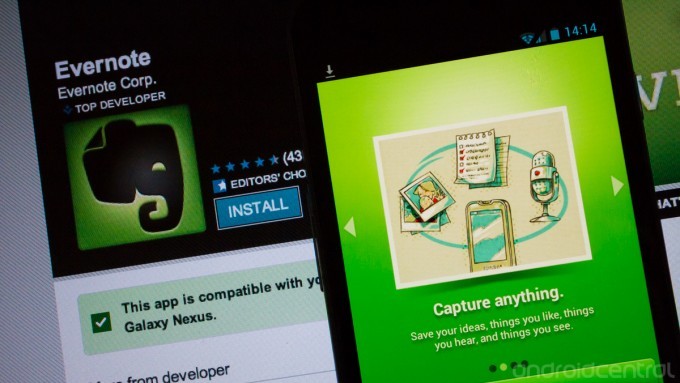
Evernote, the popular cross-platform note taking and sharing app, has issued a statement about some recent "suspicious activity on the Evernote network". All users will have to change their password, and it seems that user names, and other data that includes the encrypted version of passwords has been accessed. In a letter sent out to users, Evernote says the following:

The investigation has shown, however, that the individual(s) responsible were able to gain access to Evernote user information, which includes usernames, email addresses associated with Evernote accounts, and encrypted passwords. Even though this information was accessed, the passwords stored by Evernote are protected by one-way encryption. (In technical terms, they are hashed and salted.)

While our password encryption measures are robust, we are taking steps to ensure your personal data remains secure. This means that in an abundance of caution, we are requiring all users to reset their Evernote account passwords. Please create a new password by signing into your account on evernote.com.

After signing in, you will be prompted to enter your new password. Once you have reset your password on evernote.com, you will need to enter this new password in other Evernote apps that you use. We are also releasing updates to several of our apps to make the password change process easier, so please check for updates over the next several hours.

As we've seen recently, there's a rash of coordinated attempts to hack the big players in online services. Hopefully Evernote's encryption methods are solid, but having users change their password at log in is a great way to keep everyone safe. Visit Evernote's blog for more information.

[Source: AndroidCentral]

Google Gift Cards get UK pricing

Google's yet-to-launch gift cards have a UK price. According to Google's support page, you'll soon be able to buy vouchers for Google Play in denominations of £10, £25, or £50, Android Central reports.

The amounts aren't exactly the same as those in the US, where they have a $15 one as well. Now, all we need is for the vouchers to actually go on sale, and we'll be golden.

The last thing we heard regarding the gift cards hitting the UK was back in December, when the redemption page went live on the Google Wallet site for Brits. The page is of no use without a gift card, but still, it hinted Google could launch the cards in time for Christmas. But it didn't. Maybe it had its hands full worrying about Nexus 4 shortages. Still though, it could start selling them in time for Easter.

The Android-maker hasn't hung about launching other Google Play services recently. Play Music (née Google Music) launched in the UK back in November, and Play Magazines hit these shores about a month later.

Apple offers iTunes Gift Cards ranging from £15 to £100. It also famously rewards landmark shoppers with $10,000 vouchers, as it did last March, when one lucky person snaffled the 25 billionth download.

Google is increasingly moving into hardware, so it'd make sense to offer gift cards outside the US. Its Android OS accounts for three out of four smart phones, so there'd be no shortage of demand. The Nexus 4 has been almost permanently out of stock since it went on sale from Google Play, as the big G offers it far cheaper than anywhere else. If it can do the same with other devices, I'm sure those gift cards would fly off the virtual shelves.

[Source: CNET]

BlackBerry Opens BlackBerry Live Registration

BlackBerry on Friday announced that developers and partners can now register for its annual BlackBerry Live developer conference, formerly known as BlackBerry World. The conference kicks off on May 14th and continues through May 16th at the Orlando World Center Marriott in Orlando, Florida.

Pricing starts at $449 if you register by March 22, otherwise you can register for $599. BlackBerry is also offering companion passes for access to breakfast and the welcome reception for $199. A certification exam is available for $75 and an education package that includes a two-day training course and more costs $799. Attendees who attended specific past events can save up to $150, too.

We’re hoping to hear more on BlackBerry 10, especially on the apps and hardware front, and additional information on the company’s full-QWERTY BlackBerry Q10 smartphone.

[Source: TechnoBuffalo]

Microsoft was hacked in the same wave as Apple and Facebook

Microsoft has been hacked, in the same wave of attacks targeting Facebook and Apple. The company made the announcement in a blog post on its website.

You can sleep safe if you use Windows 8 or Windows Phone 8 though, as Microsoft says there's no evidence of any customer data being compromised. Funnily enough, the company says some of its computers in its Mac business unit were among those hacked.

Microsoft says it didn't make a statement immediately, as first it wanted to find out what exactly happened. Only a "small number" of computers were infected by malicious software "using techniques similar to those documented by other organisations."

Last week, Apple announced it had been hit by malware that attacked Java, and a few days earlier, Facebook said it too had been targeted. Just don't tell Jeff JarvisTwitter was also hacked last month, with 250,000 accounts affected.

Newspapers including The New York TimesWashington Post and Wall Street Journal have all accused China of cyber attacks, though the origins of the hack targeting Microsoft haven't been revealed. Google's Eric Schmidt has penned a book on the subject, calling China "the world's most active and enthusiastic filterer of information", as well as the "most sophisticated and prolific hacker of foreign companies."

Microsoft acknowledged these kind of attacks are par for the course in the modern tech landscape. It said in its blog post: "This type of cyber attack is no surprise to Microsoft and other companies that must grapple with determined and persistent adversaries… We continually re-evaluate our security posture and deploy additional people, processes, and technologies as necessary to help prevent future unauthorised access to our networks."

[Source: CNET]

More than 7m Brits are yet to use the Internet, government says

You might hate me for saying this (if you're over, say, 25), but I genuinely can't remember a world without the Internet. But it seems 15 per cent of UK adults have managed to avoid it completely -- more than 7.4 million Brits have never used the Web, according to an official report from the Office for National Statistics.

While those figures may sound surprising, the majority of the population who have yet to experience the wonders of the Internet are aged 75 or over. Internet use is highest among those between the ages of 16 and 24, of course, with very nearly 100 per cent of the population having used the Web. There were still 53,000 among the younger generation who had not, however, with poverty the main cause.

300,000 people who have not accessed the Internet put this down to earning less than £200 a week -- in stark contrast to the 100 per cent earning over £2,000 who are plugged in.

More and more people are accessing the Internet all the time though, with 1.2 million users having connected to cyberspace since last year.  

The report showed men were also more likely to use the Web, with 12 per cent of men having never been online as opposed to 16.9 per cent of women.

The older generation was not the only demographic with a particularly high proportion of people having never used the Internet: 32.8 per cent of people with disabilities live offline.

The report revealed that, unsurprisingly, single people were most likely to live their lives online with just 5.2 per cent having never accessed the information superhighway (you may have noticed I'm running out of synonyms here).

The problem with the social divide of Internet users could soon become much worse, with many government services being moved to its online portal. The first major service to get a 21st century overhaul will be the Department of Work & Pensions' Universal Credit project, which will combine six benefits into one, that can then be managed and claimed online.

[Source: CNET]

Google will launch a free music streaming service, FT says

As if branching out into hardware like phones and tabletsdriverless cars, and even augmented reality glasses wasn't enough, Google is also working on a free music streaming service, the Financial Times reports.

The service would try to drown out the likes of Spotify, Deezer, and Nokia Music. The launch is said to be "impending", so it seems Google is still just tuning up.

According to the FT, Google will offer subscriptions as well as free unlimited listening. Though you will have to put up with ads if you don't want to pay, just like on Spotify.

Why would Google go into unchartered territory then? Especially seeing as its Play Music service, which launched in 2011 as Google Music, is only available in the US and a handful of European countries. Well it's another way for Google to make money, seeing as at the moment 95 per cent of its revenues come from advertising. Streaming is big business, being one of the fastest growing areas of the music market.

Apple is also rumoured to be working on a streaming service, which would put it and Google in direct competition on yet another front. As if the smart phone war wasn't already bloody enough.

Google could preinstall the service on all Android devices. And seeing as the operating system is on three out of four smart phones, that should give Google quite some reach. Not that it wouldn't be short of competition though. I'm sure Spotify and its good buddy Facebook wouldn't be too happy about the Google boys crashing their party. The music industry is also no fan of Google -- just this week, the Recording Industry Association of America attacked the search giant for linking to pirate sites. It claimed Google had gone back on its promise to shunt such sites further down its search rankings.

[Source: CNET]

Twitter ratchets up phishing protection by adopting DMARC standard

Phishing emails often pose as being sent by major league sites rather than princes from far-flung countries, but Twitter's implemented a new measure to stamp out phonies that borrow its name. Costolo and Co. announced that, earlier this month, they began leveraging a tech called DMARC that establishes a way for email providers to authenticate senders and reject messages penned by impostors. While the DMARC specification does need support from e-mail services, outfits including AOL (which happens to be our parent company), Gmail, Hotmail / Outlook and Yahoo already make use of it. According to Twitter, it's now "extremely unlikely" that the majority of their users will receive emails masquerading as being sent from a Twitter.com address. We're sorry to disappoint, but it looks like you'll have to get your fix of foreign lottery notices from somewhere else.

[Source: Engadget]


Google Glass maps, translation and more shown off in new vid

Google's futuristic 'Glass' eyewear is slowly but surely coming into focus, with the Big G releasing a new video that gives a clue as to how the space-age pince-nez will function.

In several scenes, real-time GPS is shown to be feeding maps data into the eyepieces of Glass wearers, so you can see where you are on a map while driving or cycling.

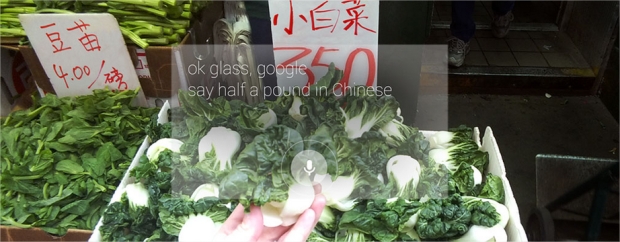
The video also suggests that commands are summoned by saying "OK Glass", which calls up more voice-activated commands, including "Google", "Take a picture" and "Record a video".

It seems you won't need your hands for photographical functions then, but the futuristic specs are also going to include touchpad controls, which may come in handy for more sophisticated tasks.

Translation is another touted feature, so you could use Google's voice search to demand instructions on how to say a word in French, for instance.

Google's original 'One Day' trailer for Google Glass was a lot more ambitious, featuring icons that bob in front of your eye and other high-tech treats that likely won't be available when Google Glass eventually goes on sale.

I think it's good to see the search giant talking in more practical terms about what its glasses will be capable of. A new site explains some of its features, and opens the doors to fans who want to be among the first to use the new technology, if you can impress Google with your combination of words, pictures and relevant hashtags.

Better still, it reveals that Google Glass will come in black, grey, white, blue and orange! Hooray for colours!

[Source: CNET]

NVIDIA UNVEILS NEW TEGRA 4I PROCESSOR WITH BUILT-IN LTE

NVIDIA (NVDA) on Tuesday announced its first Tegra processor with an integrated LTE chip. The 2.3GHz quad-core Tegra 4i, which brings the company in closer competition withQualcomm (QCOM) and its line of Snapdragon CPUs, is equipped with 60 custom GPU cores, a fifth processing core for battery conservation and an integrated NVIDIA i500 LTE modem. It also includes NVIDIA’s Chimera camera technology that is capable of capturing HDR panorama shots without requiring a single-direction sweep. The company calls its the new processor the most efficient, highest performance CPU core on the market, noting that it will provide “amazing computing power, world-class phone capabilities, and exceptionally long battery life.”

[Source: BGR]

Google Liberates More of Your Data With New Takeout Service

Google is once again trying to show itself as the friendly service that feels you own your ondata by adding a couple of more service to its Takeout product.

While Facebook continues to do everything possible to hold on to your data for as long as possible, Google has been adding more and more data liberation tools to its Takeout – now apparently being renamed to Takeaway – product. For some time you’ve been able to download all of your information from Contacts to your Profile, but now it has also added Blogger and Google+ to the services you can grab your data from.

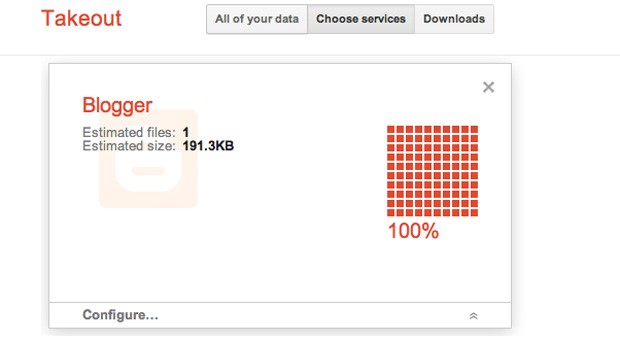
The new Blogger extraction tool allows you to remove your entire history, or even as little as one blog post. On the Google+ side of things, you not only get your original posts, but also all of the data on the circles you shared it with.

Freedom of data you create should be a no-brianer, but it appears Google is one of the few companies that understands that.

[Source: TechnoBuffalo]

Google Takeout now liberating Blogger and Google+ Pages

Google Takeout's export functions have slowly extended their reach from profiles and personal contacts to heftier material, such as all our videos. However much we've been using that data portability, Google is eliminating what few gaps are left in its coverage: the company's Data Liberation Front has expanded Takeout to preserve both Blogger content as well as Google+ Pages. Web denizens can cherry-pick just the blogs or Pages they want if a whole-enchilada backup is too much. Regardless of how large a safety net we need, the new options are ready and waiting at the source links.

[Source: Engadget]