Sprint unveils Spark, its ultra-fast 1Gb wireless service

Sprint wants to get back into the network speed discussion badly.

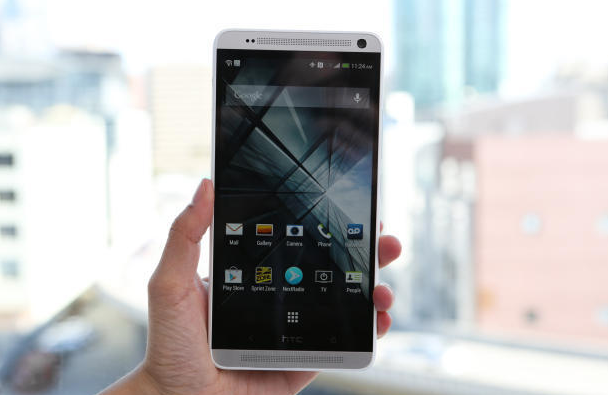
The company on Wednesday unveiled Sprint Spark, its brand for the ultra-fast LTE service that eventually will offer a wireless connection capable of delivering data at a blazing 1Gbps. But initially, Spark will be able to deliver peak speeds of 50 to 60Mbps.

Sprint, which has fallen behind in its deployment of a faster 4G LTE network, is in desperate need of catching up with the competition. Sprint has been hampered by the shutdown of its Nextel network and complications with business deals, including the acquisition of former partner Clearwire and a takeover by Japanese carrier SoftBank. The company lags behind at a time when consumers are focusing more on the speed of their service...

Read the full story here... Source: CNET

T-Mobile's John Legere: The most dangerous man in wireless

John Legere, CEO of T-Mobile, had the room with his first F-bomb.

The event was last January's Consumer Electronics Show, and scores of reporters, bloggers, and photographers had come to hear what Legere had to say in one of his first public appearances since his appointment as CEO in September. Expectations weren't high. The audience, gathered in the typical Las Vegas convention center room showered in pink lights, had expected to hear the same "challenger" strategy that his predecessor had put forth the year before...

Read the full story here... Source: CNET

Apple Acquires Low-Power Wireless Chip Developer Passif Semiconductor


Apple has purchased Silicon Valley-based wireless chip developer Passif Semiconductor, reports technology writer Jessica Lessin. The company, which Apple has reportedly been after for several years, specializes in low-power communication chips that could be used to improve battery life in wearable devices such as Apple’s rumored iWatch. 

Passif develops communication chips that use very little power. Its technology, which includes a radio that works with a low-energy version of Bluetooth called Bluetooth LE, is promising for health-monitoring and fitness devices that need extra-long battery life. (Apple, of course, is working on one of those.)

Apple has confirmed the acquisition, with Apple spokeswoman Amy Besette givingAllThingsD the following statement: "Apple buys smaller technology companies from time to time, and we generally do not discuss our purpose or plans." 

According to rumors, battery life is one area where Apple has struggled in its iWatch development. A report in March suggested that the batteries in Apple’s iWatch prototypes were only lasting a couple of days, with the company targeting at least 4–5 days of battery life. 

After trademarking the iWatch name in a number of countries, Apple has been pouring its resources into the smart watch in recent months. The company hired a number of new employees to join the iWatch team, including health sensor experts, as the iWatch is said to focus on health related applications and biosensors. 

Passif's low-power chip technologies could also be used in other Apple products going forward, improving battery life across the board. In addition to Passif, Apple has acquired a number of other small companies in recent months, including Locationary and HopStop.

Source: Mac Rumours

 

World’s Fastest Wireless Radio Frequency Chip Boasts 10 Billion Bytes Per Second

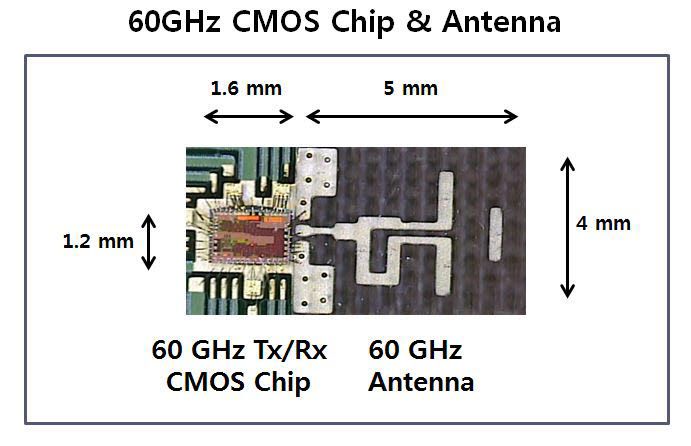
Researchers from the Korean Advanced Institute of Science and Technology (KAIST) have developed a new radio frequency chip capable of sending/receiving 10 gigabits per second.  That equates to a 4.7GB movie file that can be downloaded in 3.76 seconds.

Park Cheol Soon, the lead KAIST professor of the project, states the chip can be used in future smartphones and cameras, but can also replace cables and deliver cable/fiber optic speeds without the costly infrastructure.

The team claims the design of the chip and antenna has been made to be small (4mm tall and 6.6mm wide) for use in most mobile devices. The antenna itself is designed to transmit and receive data, rather than needed multiple antennae to perform the task, further reducing the size of the design.

For consumers, this means some really cool applications, imagine Google Fiber datatransmission speeds without all the laying of wires and infrastructure in homes, or transferring a full 64 GB SD card wirelessly in mere seconds.

[Source: TechnoBuffalo]

Apple releases AirPort Utility 6.2 for Mac with Guest Network extension capabilities

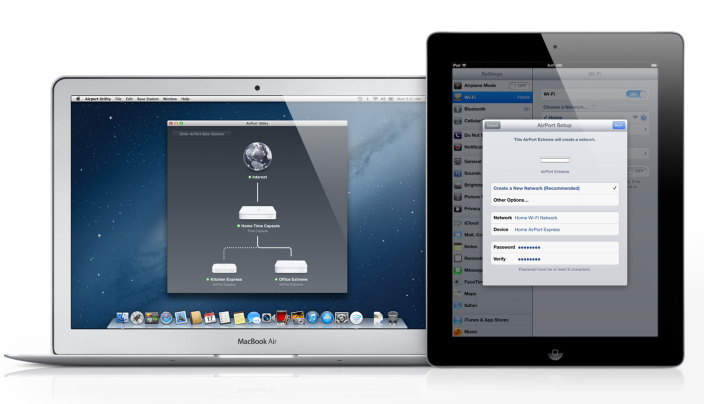
Apple has released AirPort Utility version 6.2. The new update adds the ability to extend guest networks if you have multiple AirPort routers. Additionally, Apple has added improved international support and the ability to add WPS printers to your AirPort WiFi networks.

[Source: 9to5Mac]

Apple files patent for true wireless charging technology

When it comes to wireless charging, today's options aren't exactly as cord-free as the label would suggest. Things like charging mats or other wireless docking options are fine and all, but adding more accessories and bulky cases to the mix is often more trouble than it's worth. As Wired reports, a patent filed this week by Apple side steps these pesky add-ons and could offer true wireless charging for the first time on Apple hardware.

The patent -- titled Wireless Power Utilization In A Local Computing Environment -- uses near-field magnetic resonance to push power to compatible devices from a central unit, creating what is effectively an invisible bubble where your gadgets can recharge without the need for cords or plugs of any kind. So imagine your wireless keyboard and mouse simply never running out of juice, or even being able to set your phone or tablet down on your desk and have them recharge on their own.

[Source: TUAW - Click here to read the full story]

Next iPhone's motherboard possibly spotted with a dash of extra wireless

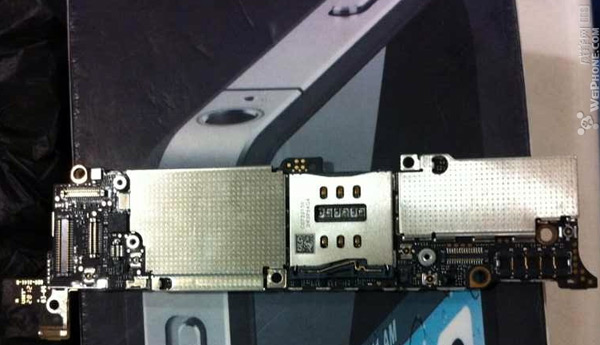
We may well have seen the next iPhone's back shellfront panelSIM tray and even its cabling. Why not round it out with what might be the motherboard? A WeiPhone forum goer who slipped out the iPhone 4S' board last year is back with the 2012 update's potential new heart. While the tipster hasn't been courteous enough to do a side-by-side with the older component, repair shop iDeviceGuys notes to 9to5 Mac that the newer part isn't just a carbon copy; that smaller SIM slot (what you see in the middle) is one of the bigger giveaways. The real treat may be the extra wireless antenna connections. They aren't any surefire signs of 4G, but the antenna links suggest Apple isn't content with what the iPhone 4S has to offer. We're mostly left wondering about what's under that shielding -- it's a mystery as to whether or not the next iPhone's processor speed bump is a mountain or a molehill. Barring one more peek, we could get the full scoop next month.

[Source: Engadget]