
Facebook updates Home, says downloads reach 1M

MENLO PARK, Calif. -- Facebook is releasing a new version of Facebook Home, the social network's software suite for Android, the company announced at its headquarters here Thursday.
The new product will go live on Google Play at 1 p.m. Thursday as an update to the Facebook Android app, but users probably won't see it till about 3 p.m., Facebook said.
Facebook VP of Engineering Cory Ondrejka said the company is planning on several improvements to the product in the coming weeks, but today's update will have bug fixes. Also, for any Android devices that don't support Home, Facebook won't block users who want to transfer Home -- in a process called sideloading -- from supported devices. More than 10,000 people were using this method to get Home on unsupported devices shortly after Home launched, Facebook said...
Read the full story here. Source: CNET
Twitter Already Testing Two-Step Authentication
 Twitter is close to rolling out two-step verification in response to recent hackings, according to Wired. The social network has reportedly begun internal testing before the feature becomes available in increments to users; the staggered release is to ensure smooth sailing. The extra security measure should reduce the risk of accounts, high-profile or otherwise, being hijacked, which has become a more frequent occurrence over the past few months.
Many other big-name companies have rolled out two-step verification to combat hacking. Basically, by implementing the heightened security measure, hackers will have a much more difficult time gaining access to accounts because they won’t just need a password, but a randomly generated code sent to a device, usually through SMS. I know every time I log into Google, I’m sent a six-digit code I need to input before I can actually login.
Wired wasn’t told how or when Twitter will introduce two-step verification, but with so many recent hackings, the company will surely want to get it pushed out sooner rather than later. If a simple SMS solution is planned, fine—that’s better than nothing at all. Before two-step is rolled out, though, keep your passwords safe, and watch out for misinformation from trusted sources.
[Source: TechnoBuffalo]
Believe It Or Not, Research Reveals That Most Facebook Users “Self-Censor”
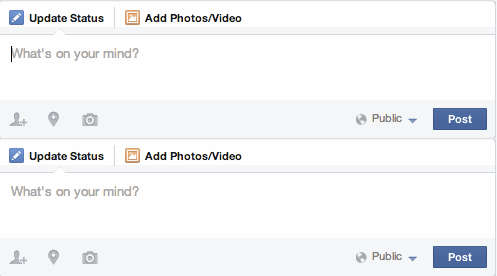 Is there anything about social media that researchers haven’t yet zoomed in on? This time, the study (.pdf) comes from a Carnegie Mellon Ph.D. student and a Facebook staffer, who reveal that most Facebook users tend to self-censor their comments at the last minute before posting.
Carnegie Mellon’s Sauvik Das and Facebook Data Scientist Adam Kramer co-authored a study that put millions of people’s Facebook habits under a microscope during a 17-day period. When the duo examined the massive sample size of 3.9 million users, they found that 71 percent edited themselves right before posting.
The study identifies “self-censorship” as “the act of preventing oneself from speaking” — though personally, I think a more accurate definition might be “the act of preventing oneself from looking like an imbecile to everybody one knows.” (You say potato, I say potahto.) The report hones in on the fact that today’s social media enables people to write and then review their thoughts before sharing them. This, Das and Kramer believe, is what gives users the room to second guess what they wrote.
I’m both surprised by these research results and not. On the one hand, it’s human nature for a person to evaluate how he or she comes off to others. But on the other hand, it certainly doesn’t seem like a whopping 71 percent are actually considering what they put out on Facebook. The network’s rife with offensive status updates, questionable pics and other regrettable messages.
I suppose all those gross updates and “potty” shares must come from the other 29 percent.
[Source: TechnoBuffalo]
Volkswagen iBeetle integrates the iPhone through a dock, an app... and that's it
 Many see Apple and Volkswagen as two peas in a pod given their similar marketing, even if previous talk of collaborations amounted to little more than speculation. That purported dream team will soon become real through the iBeetle, an adaptation of the modern VW Bug designed with a little help from Apple. Don't get your hopes up for a tie-in on the level of VW's iPad-friendly Bulli concept, however. The integration mostly amounts to an iPhone dock as well as a car-optimized iOS app that can play music, read messages aloud, take photos and augment the instrument cluster. It's a solid idea, especially when a large number of us already use our smartphones this way, but it isn't very adventurous -- the iPhone won't coordinate extensively with the center stack, unlike smartphone-aware infotainment platforms such as GM's MyLink or Ford Sync. We'd still take a close look at the iBeetle when coupe and convertible models reach US dealerships in early 2014, but it may be best for those already bent on getting somefahrvergnügen from their next ride.
[Source: Engadget]
TalkTalk fined £750,000 for calling you and hanging up
 TalkTalk has been given a talktalking to for calling people and hanging up. Ofcom has fined the phone company £750,000 over excessive silent and abandoned phone calls.
Telecoms watchdog Ofcom slapped TalkTalk with the fine for making 9,000 silent or abandoned calls to potential customers during a telesales campaign in 2011.
TalkTalk blames two call centres, run by Teleperformance Limited and McAlpine Marketing Limited, that went over the limit for telemarketing calls on four separate occasions in two months. TalkTalk has cut ties with the companies and intends to get them to pay the fine.
If you have a landline you probably know the drill: you've just settled down to watch The One Show with some cold cuts and a flagon of mead, when the phone goes. When you answer, you're greeted by silence or a dead line.
Automated calls often fail to realise the phone has been answered by a real person. Thinking you're an answering machine, the robophone either ends the call -- an abandoned call -- or fails to play the intended message -- a silent call.
The maximum fine for abandoned calls is £2m.
[Source: CNET]
Twitter #Music app helps you find tunes by who you follow
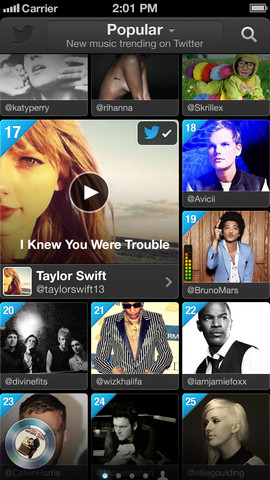 With so much competition already existing in the streaming music world, the Twitter #Music app faces the same problem as every new service -- how do they set themselves apart from the competition? The answer for Twitter is discovery; more specifically helping users discover new musical artists along the lines of the ones they already follow.
It takes a few minutes to learn how to navigate the app, but once you understand the ins and outs you'll be flying. There are four screens: Popular, Emerging, Suggested, and #NowPlaying.
Popular features the artists who are currently trending on Twitter. Emerging showcases smaller artists who are building twitter buzz, although at the moment it's not clear how they judge if someone is "emerging" or not. Suggested compiles artists based on who you already follow. And #NowPlaying is based on the music your followers are listening to.
Music is displayed on tiles with the artist's picture or logo. Simply click on the tile and hear the song by that artist. It's a little disappointing that you're limited to only one song per artist to listen to, especially if you're using the most basic function where the music is simply an iTunes preview clip. The service allows you to connect your Spotify or Rdio account to listen to full songs however. Using the app with just iTunes clips feels like a waste of time, but when given access to the full song the potential for music discovery increases dramatically. For instance, I had no idea M83 recorded new music for the upcoming film Oblivion and now I do. Thanks, Twitter #Music.
#NowPlaying is the most actively social component of the service. It shows you what your friends are listening to and specifically which friend recommended it. Given the limited use of the service right now there weren't a lot of recommendations available for checking out, but it was neat to see what one of the obscure rock bands I like was sharing at the moment.
Whether this service strikes you as merely a fun distraction or an exciting new way to discover music will probably depend on how much you use your Twitter feed to discover music. I tested it with two different Twitter accounts, one for a music blog I write for that mostly follows bands, and my own personal account that basically only follows a punk band and rappers I think are funny.
The end result is easy to predict. The more artists you follow on Twitter the better the suggestions proposed for you are going to be. Otherwise you're going to find the to-be-expected list of Top 40 and popular indie rock acts you find in every streaming services recommendations.
It's also worth noting that suggested songs tend to pick older tracks for some artists. The band Alkaline Trio is represented by their newest single "I Wanna Be a Warhol" while indie rocker Kevin Devine brings up his 2005 song "Cotton Crush." "Cotton Crush" is a great song, but Devine has put out three solo albums since then. On one hand I appreciate including deeper cuts in an artist's discography; on the other it seems strange for a new music discover service to reach that deep when it only offers one song by an artist at a time.
Twitter #Music is a clever new way to discover music based on the stuff you already like. It's hard to judge the suggestions too harshly when you take into account they are largely based on the suggestions of mainstream Twitter users. The app more than makes up for it with their personalization based on your own personal use. I'd like to see future updates add the ability to listen to more than one track by a single artist, but even in its current form Twitter #Music is going to be getting a lot of use on my iPhone.
[Source: TUAW]
Facebook launches real-time graphs to highlight its data center efficiency
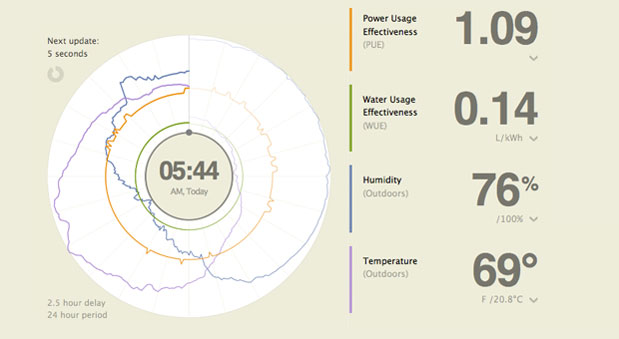 Curious as to the effect that your poking wars are having on the planet? Facebook is outing power and water usage data for its Oregon and North Carolina data centers to show off its sustainability chops. The information is updated in near-real time, and the company will add its Swedish facility to the charts as soon as it's built. The stats for the Forest City, NC plant show a very efficient power usage effectiveness ratio of 1.09 -- thanks, in part, to that balmy (North) Carolina air.
[Source: Engadget]
Google+ Update Mutes Sound While Typing in Hangout
 Here is a very clever little update from Google+. Now while talking with you friends on Hangout, Google+ will automatically mute your keyboard. No longer will your friends have to listen to you type loudly over their speakers.
The engineer behind the update, Tim Haloun, explains it simply as such.
- If someone keeps typing in a Hangout, their mic will be muted until they stop
- They’ll see an in-Hangout notification, so they know they’re not interrupting the conversation
- We’ll do this for larger Hangouts (4+ people).
So while maybe not so useful during friendly one-on-one conversations, company meetings and group sessions can proceed smoothly without the click-clacking of your keystrokes rudely interrupting everyone else. Writing e-mails, taking notes and secretly checking out updates on your favorite sporting team will no longer be an issue.
Expect Microsoft, Skype and everyone else to catch on eventually. The feature is available now with an update, so be sure to give it a spin and see if it works. Let us know if it does below.
[Source: TechnoBuffalo]
Microsoft’s Smartwatch Has Been in Development for Over a Year
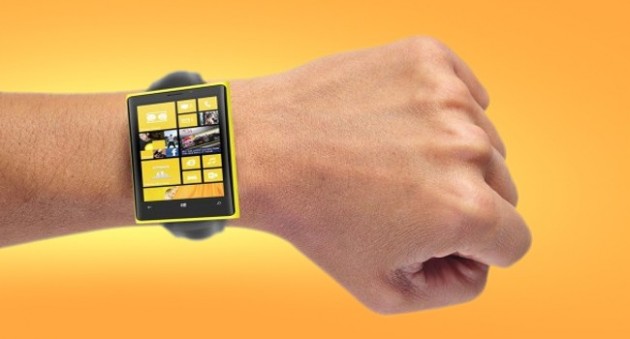 Microsoft might not just be toying with the idea of building a smartwatch, but may already be well along in the development process. The Wall Street Journal said earlier this week thatMicrosoft is working on a smartwatch with a 1.5-inch display and now The Verge says it has learned that Microsoft’s Xbox team has already spent a year developing a prototype. The watch will allegedly employ a wristband that attaches to the watch face using a magnetic mechanism that’s capable of transmitting power and data, The Verge said.
Microsoft isn’t the only company planning to enter into the smartwatch wars. Samsung, Apple and Google all reportedly have similar devices coming down the pipeline. The ultimate question that remains to be answered is how they will benefit consumers. Will smartwatches simply serve as notification windows into our smartphones, or will they provide a unique experience that adds real value to our wrists?
[Source: TechnoBuffalo]
BBC Worldwide to offer first-run TV to Australia through Foxtel in mid-2014
 Australians have long had access to the BBC, although a current four-channel lineup on Foxtel won't completely satisfy fans of British TV when it's just a sliver of the content they know. BBC Worldwide should be closing some of that (figurative) distance, though, with plans to offer a premium channel through Foxtel's network. The as-yet-unnamed service will give Aussies a chance at first-run BBC shows about a year before they'd broadcast over the air there. and without ads. (Pretty good for not having a UK TV license.) The BBC content will naturally be available in HD, as well as for mobile streaming through Foxtel Go. About the only drawback to the channel outside of its premium nature is the mid-2014 start date, but that may be a small sacrifice for determined Anglophiles and ex-pats.
[Source: Engadget]
Two-step verification starts rolling out for Microsoft accounts
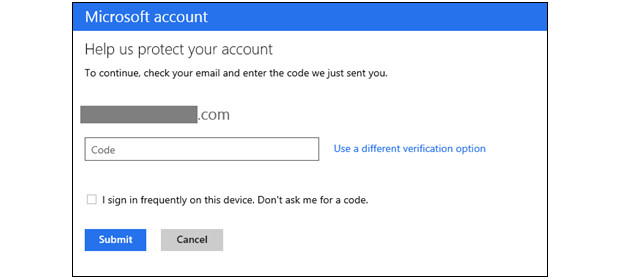 Everyone else is doing it, so why not Microsoft, right? The company has been accused of playing the "me too" game in the past, but we're not going to complain when the the end result is better security. As we learned from a leak last week, Redmond will begin enabling two-step verification for Microsoft accounts. The switch will get flipped for everyone over the next few days and, with email, Xbox Live and Skype (just to name a few) associated with the service formerly known as Live, it's never been more important to keep it locked down. (Especially when others are learning this lesson the hard way.) The two-factor gateway is purely opt-in, except where it's already been required: editing credit card information and accessing SkyDrive from a new computer. There's even a dedicated authenticator app for Windows Phone 8, which works whether or not you've got an internet connection. There's loads more detail at the source and you can check to see if the feature has been turned on for your account at the more coverage link. And if you can, we strongly suggest you turn it on. Like, now.
[Source: Engadget]