Amazon said to be developing 3D smartphone

Amazon is reportedly working on two smartphones, including one that would have 3D capability.

The Wall Street Journal reported Thursday that Amazon is developing a device that features a 3D screen that can be used without special glasses. Citing "people familiar with the company's plans," the Journal wrote that the phone would use retina-tracking technology that would make the images seem to be floating "like a hologram and appear three-dimensional at all angles." What's more, users might be able to navigate through content using just their eyes...

Read the full story here. Source: CNET

Havok introduces free 3D game development engine

Havok has announced that their 3D gaming Vision engine, Physics and Animation suites, and their award winning AI tools will now be free for "leading" mobile platforms under their new Project Anarchy initiative. If you play games, you already know about Havok. They're the folks who make the tools behind games like the Assassin's Creed, Halo, and Skyrim franchises, and are used by some of the biggest names in gaming, like EA, Bethesda, and Bungie.

The download also includes game samples and tutorials for mobile developers, and there will be a complete online community to "encourage free sharing and collaborative development of extensions and customizations by the community." Ross O’Dwyer, head of developer relations at Havok, says:

We’re really delighted to be able to offer these professional grade tools to mobile developers for free and we look forward to supporting the mobile game development community to make some stunning games with the technology over the next few years.

[Source: AndroidCentral]

University of Cambridge chip moves data in 3D through magnetic spin

Chips that have 3D elements to them are very much real. Moving data in 3D hasn't been truly viable until now, however, which makes an experimental chip from theUniversity of Cambridge that much more special. By sandwiching a layer of ruthenium atoms between cobalt and platinum, researchers found that they can move data up and down an otherwise silicon-based design through spintronics; the magnetic field manipulation sends information across the ruthenium to its destination. The layering is precise enough to create a "staircase" that moves data one step at a time. There's no word on if and when the technique might be applied to real-world circuitry, but the advantages in density are almost self-evident: the university suggests higher-capacity storage, while processors could also be stacked vertically instead of consuming an ever larger 2D footprint. As long as the 3D chip technology escapes the lab, computing power could take a big step forward. Or rather, upward.

[Source: Engadget]

Lynx A Camera

It's the world's first point-and-shoot 3D camera. It's not a conventional camera, but it's like a camera - particularly when it comes to learning curve and ease of use. If you can use a point-and-shoot Nikon, you'll find the Lynx even easier to use. Instead of outputting 2D images, it produces 3D models of whatever you point it at.

It's a light, plastic device shaped like a tablet. It has specialized, front-mounted optics including a 640x480 color camera and a 3D sensor. On the front, there's a large, 14" color LCD screen for an instant and accurate view of imaging results. You can navigate your captured models using joysticks, just like a videogame controller. The device has a powerful graphics card for capture/render and high-capacity storage. The battery is good for four hours. It fixes the annoying stuff (bad battery life, small screens, costly storage) of conventional cameras.

Capturing with the device is really cool. From the startup screen, you can select from three features: scene modelingobject modeling, and motion capture. Each starts instantly and has a simple start/stop interface. 

Scene modeling is more like a paintbrush. Scan surfaces around you and watch the 3D model get painted in the viewfinder. Scene modeling is more appropriate for large scenes because it stores the models in an extremely efficient manner.

Object modeling is like sculpting with a chisel. You walk around the object of interest and it slowly carves out a watertight 3D model of the object. 
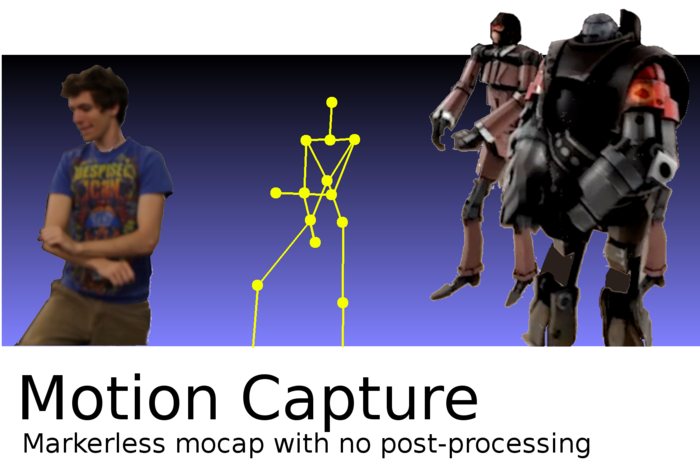
Motion capture is like having a motion volume in front of your camera. Point the camera at an actor, press record, and just have the actor start moving around. When you press pause, the results are instantly ready.

With all 3 of these features, you can immediately output the files into the formats you currently use in your workflow including PLY, OBJ, STL, XYZ, JPS, BVH, and more.

One of the most disruptive features of the device is the price. If you cobbled together all the hardware and software you would need to accomplish these tasks, you'd end up dishing out a couple hundred grand. That's not accessible at all. The Lynx device sells for about the same price as a full-framed DSLR, making it a serious value for small outfits and innovators trying to break into these technologies.

[Source: Kickstarter]

Apple's 3D Maps and Imagery See Incremental Improvements

Following last week's open letter from Tim Cook in which he promised that Apple "will keep working non-stop" until the iOS 6 Maps app meets customers' standards for quality, Apple has indeed been making improvements to the service. While there is certainly a ways to go, it is clear that the company is indeed moving quickly to address issues and improve coverage for the flagship 3D mapping and imagery features in the app. 

While improvements have been ongoing, MacRumors forum members yesterday began noticing what appears to be a larger set of additions to the 3D content in the Maps app, including both the satellite/aerial imagery and the standard maps. One region that was among the first to be noticed was the New York City area, with a number of improvements including new 3D imagery of the Statue of Liberty being seen.

We've also heard from users who have experienced new Flyover imagery showing up in Honolulu, Hawaii and in the San Fernando Valley in the Los Angeles area. The changes are also affecting the standard vector-based maps as well, with users reporting new 3D buildings showing up in New York City and London. 

Interestingly, not all users are seeing the new imagery, with some even doing side-by-side comparisons between devices with different results. The difference is presumably due to aggressive caching of maps and imagery, and users who are not yet seeing the new imagery should see updates in the relatively near future.

[Source: MacRumors]

Popcorn Hour launches A-400 streamer for €289 with 'studio-quality' 3D video processing

If you're a streamer who shuns plastic disks and their ilk, but still wants 3D, there's good news: Syabas has announced the Popcorn Hour A-400 network media player. Thanks to a dual-core video processor, the box can mulch through 3D Blu-ray content (ripped, presumably), while also supporting studio-level features like detail enhancement and debanding. Like its A-300 predecessor, the streamer can dock a hard disk for content storage, and connects to your network via ethernet or optional WiFi. Other connections include an SD card reader, HDMI 1.4, eSATA and USB 2.0 and USB 3.0 (pending confirmation). On top of giving you access to your own content, the Syabas Apps Market brings YouTube, BBC's iPlayer, and 90 or so other free or premium channels. It'll hit stores in October with a €289 price tag, so if that sounds like your bag of popcorn, see the PR for more info.

[Source: Engadget]

The upcoming iPad mini rendered in 3D based on reports and leaked schematics

Following our report yesterday with information about the iPad mini’s design, specifically that the iPad mini would look like a larger iPod touch (with skinnier bezels than the full-sized iPad), we’ve made some 3D renders.

These renders, courtesy of designer Maurizio Vitale, are based off of our reported information. More importantly, however, is that these renders are also based off of the leaked iPad mini schematics from July, which basically match our information from sources.

The height, width, screen-size, and more were all calculated based on those aforementioned schematics. Better yet, we’ve also got an iPad mini render that compares the device in size to the current Retina display iPad with a 9.7-inch display. That comparison is also based on the dimensions garnered from the schematics.

[Source: 9to5Mac]

E3 Expo to be broadcast in 3D

NVIDIA today announced that GamerLive.TV, an online provider of videogame, entertainment and lifestyle content, will be the first media organization to broadcast news and updates from the E3 2011 conference in stereoscopic 3D for NVIDIA® 3D Vision™ users.
 
E3 Expo (June 7-9, 2011, Los Angeles Convention Center) is the premier annual trade show for the computer and video games industry, used by many game and hardware developers to showcase new titles and game-related gear. 
 
Beginning today and continuing through June 9, GamerLive.TV will issue more than 50 high-quality 3D videos of the latest E3 news, including game launches, booth demos, 3D game captures, celebrity interviews, Expo events, and VIP parties.  It will also post exclusive interviews with the world’s top game developers, including representatives from Activision, Capcom, Disney, Electronic Arts, Sega, THQ, and Ubisoft.
 
The videos will be available on GamerLive.TV’s YouTube channel, as well as here.  In addition, NVIDIA will showcase the videos at 3DVisionLive, and will post regular updates on Twitter (@NVIDIAGeForce) to alert users when new videos become available.
 
3D Vision users will be able to view all of the E3 videos in rich, high-quality stereoscopic 3D on their NVIDIA 3D Vision PCs and notebooks when using the latest version of the Mozilla Firefox Web browser.
 
To view YouTube stereoscopic 3D videos, an NVIDIA 3D Vision-equipped PC or notebook and the latest NVIDIA GeForce® drivers (version 275 or above), are required, as well as Firefox (version 4 or above), which includes support for HTML5 video streaming.  Users will also need to select the HTML5 viewing option when viewing a YouTube 3D video: Which can be found here.
 
For more information about how to view YouTube videos with 3D Vision, please visit 3DVisionLive.