Top 5 Apps for Making International Calls

International calls can be one of the steepest charges on your mobile phone bill. Fortunately, there's an array of alternative options to choose from. Many consumers choose to use international calling cards, for example. These give you a PIN number which allows you to use any phone yet still benefit from low per-minute rates. Another option if you have relatives in the states is to call USA with Lebara or other pay-as-you-go carriers. These offer SIM cards and prepaid rates for low cost international calls. Finally, downloadable apps can be used on your mobile phone. These give you a high level of flexibility and little hassle when you need to call friends and family living abroad. The following are five of the top options.

Viber

Viber is a simple to use app which lets you make cheap international calls. You can download the app and it will scan through your contact list to connect with those contacts who also have the Viber app on their phones. If you place calls between two Viber users, the call is free overWiFi networks. However, one problem with Viber is that if another call comes in on your mobile phone, the Viber call could be dropped.

Skype

Skype has quickly become one of the most popular options for international calling. Like Viberand other options on this list, calls are free between two users of the same service. International rates to non-Skype numbers are comparable to those you'd get when you call Australia with Lebara or other destinations using a prepaid service. An added plus to Skype is that you can video chat, but the audio tends to be somewhat unpredictable. This is particularly true if you're calling areas where WiFi is spotty.

Google Voice

There are a number of different functions provided by Google Voice, including voicemail, call forwarding, and low international calling rates. However because this service is still relatively new, it has yet to catch on across the world like competitors such as Skype. This means that it's more difficult to connect calls between two Google Voice contacts, although the service can be quite reliable.

Rebtel

Another popular worldwide option, Rebtel has been rapidly expanding. Their apps allow you to place international calls from pretty much any device, with calls between Rebtel customers conducted free of charge. Rebtel also offers local numbers and low rates to a number of destinations, making them a strong competitor to prepaid options like Lebara.

Fring

One of the first international calling apps on the market, Fring has unfortunately been overshadowed by its new competition. However, it still offers a worthwhile app that provides video chat, instant messaging, and VoIP calling services.

When it comes to making international calls, all of these apps can provide strong alternatives to your regular mobile service. There's no excuse for ending up with a sky-high phone bill when you combine services like mobile calling apps and prepaid phone cards.

Facebook Android app security flaw affects those who don’t even use the app

While it’s not clear just why the app would do this, or what purpose it has for doing so, the Facebook app for Android is taking your phone number the first time you open it up. Without even logging in, the app takes your number and stores it on the Facebook servers. You don’t need a Facebook account, or even initiate an action within the app. Simply having it and opening it will allow the app to take your phone number.

Norton discovered this security flaw during routine testing they perform on apps for their Mobile Insight security app. According to Norton, their testing methods are sound:


Through automatic and proprietary static and dynamic analysis techniques, Mobile Insight is able to automatically discover malicious applications, privacy risks, and potentially intrusive behavior. Further, Mobile Insight will tell you exactly what risky behavior an application will perform and give you specific, relevant, and actionable information.

-norton


Norton then reached out to Facebook, who claimed to be unaware of the issue. They told Norton they“did not use or process the phone numbers and have deleted them from their servers”, and said they had no knowledge of the issue. Norton also notes that Facebook is not the only app doing this, or even the worst offender. They promise more information on other culprits in coming weeks, but we’re still curious why Facebook would take numbers from a device that wasn’t even logged in. If I were to download the app, then open it to see what it looked like out of curiosity, my number would then be uploaded to the Facebook server.

We’re not ready to call Facebook nefarious on this account. Giving them the benefit of the doubt, even in the face of all their other security flaws, we’ll chalk this up to another error on their part. What this does do is bring into focus app permissions, and how important they are. Perhaps more importantly, how they can be abused by the app publisher, and ignored by users as fine-print.

Source: Android Authority


Dutch Officials Set to Open 11 iPad-Only 'Steve Jobs Schools' for Children

Last year, we reported on a Dutch proposal to launch so-called "Steve Jobs schools" for children, offering a peek at of Jobs' vision of how the iPad could help remake the educational experience. 

Spiegel now follows up (via AppleInsider) with a new report discussing the country's plans to open 11 such schools this August.

 Some 1,000 children aged four to 12 will attend the schools, without notebooks, books or backpacks. Each of them, however, will have his or her own iPad. 

There will be no blackboards, chalk or classrooms, homeroom teachers, formal classes, lesson plans, seating charts, pens, teachers teaching from the front of the room, schedules, parent-teacher meetings, grades, recess bells, fixed school days and school vacations. If a child would rather play on his or her iPad instead of learning, it'll be okay. And the children will choose what they wish to learn based on what they happen to be curious about.

The article highlights the flexible nature of the schools with a look at an upcoming school being prepared in the city of Breda. The school building itself will be open from 7:30 AM to 6:30 PM every day of the year except Christmas and New Year's Day, with children free to come and go as they please as long as they are present during the core school day that runs from 10:30 AM to 3:00 PM...

Read the full story here. Source: Mac Rumours


Facebook's outmoded Web crypto opens door to NSA spying

Secret documents describing the National Security Agency's surveillance apparatus have highlighted vulnerabilities in outdated Web encryption used by Facebook and a handful of other U.S. companies.

Documents leaked by former NSA contractor Edward Snowden confirm that the NSA taps into fiber optic cables "upstream" from Internet companies and vacuums up e-mail and other data that "flows past" -- a security vulnerability that "https" Web encryption is intended to guard against.

But Facebook and a few other companies still rely on an encryption technique viewed as many years out of date, which cryptographers say the NSA could penetrate reasonably quickly after intercepting the communications. Facebook uses encryption keys with a length of only 1024 bits, while Web companies including Apple, Microsoft, Twitter, Dropbox, and even Myspace have switched to exponentially more secure 2,048-bit keys...

Read the full story here. Source: CNET

Google Street View puts you atop world's tallest building

You can now "stand" on top of the world's tallest building without having to face the dizzying heights in person.

In its first-ever collection in the Arab world, Google's Street View took its cameras to the top of the Burj Khalifa in Dubai, dubbed the world's tallest manmade structure at 2,717 feet. The images show off the view from the observation deck on the 124th floor and offer a peek from the building's maintenance unit on the 73rd floor.

The tallest occupied floor in the world rests on the 163rd floor, while the highest swimming pool in the world spashes around on the 76th floor.

The 360-degree panoramic photos were captured over three days using the Street View Trekker, a backpack equipped with its own camera system. The Street View Trolley also lent a hand to snap photos in narrow and crowded spaces.

The new images mark the first time the Street View team has collected images of a skyscraper, Google said in a blog post published Monday.

Source: CNET

Facebook launches photo comments

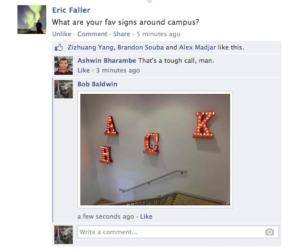
Facebook is now letting its 1.11 billion members react to their friends' status updates with photo comments.

The social network said Wednesday that it has started the global release of the new feature, which lets people add photos to comment threads using a new Attach a Photo button. To start, uploads of photo comments will be restricted to the Facebook Web site and mobile site, but simply viewing photo comments will be possible from Facebook's mobile applications, the company said.

Photo comments are a product of one of Facebook's famous hackathons. Facebook engineer Bob Baldwin, one of the developers behind the release, said he was inspired to create the photo comments feature because, "sometimes showing a photo helps me tell a story much better than words alone."

The new addition could transform the social network into a more meme and teen-friendly zone, as photos turn commenting into a more playful activity. Of course, there's also the potential for spam, abuse, and just plain ugly comment threads. But imaginer Baldwin wishes for the best. "I hope this will make threads with friends more expressive and engaging," he said.

Source: CNET


Sexy or Funny?

Adobe -- Sexy or Funny? http://adobe.ly/19In0d9

What do brands need to make online ads more appealing? In recent research we found that a lot of people think TV ads are more important than online ads.

Adobe took to the streets to find out what was important to people in ads. More that two-thirds (68%) of UK consumers said ads should tell a unique story. However humour is even more important, 92% said funny ads are more effective than 'sexy' ones. Watch to see what people thought were their most memorable funny and sexy adverts.

Steve Jobs Didn't Want an iBookstore, but the iPad and Eddy Cue Changed His Mind

Testifying in court yesterday as part of the ongoing e-books price fixing trial, Apple senior vice president for Internet Software and Services Eddy Cue offered some perspective on the history of iBooks and the iBookstore, noting that Steve Jobs was initially opposed to such a project. As shared by AllThingsD, Cue noted that it wasn't until just prior to the launch of the iPad that he was able to convince Jobs of the potential of e-books.

“… When I got my first chance to touch the iPad, I became completely convinced that this was a huge opportunity for us to build the best e-reader that the market had ever seen,” Cue said. “And so I went to Steve and told him why I thought [the iPad] was going to be a great device for ebooks. … and after some discussions he came back and said, you know, I think you’re right. I think this is great, and then he started coming up with ideas himself about what he wanted to do with it and how it would be even better as a reader and store.”

Cue had initially suggested an e-book effort earlier in the fall of 2009, but Jobs felt that the iPhone's screen was too small to allow for a good user experience and that the Mac didn't feel like a reading device. By the time Jobs was on board, it was November, and the iPad was scheduled for a January introduction, giving Cue just weeks to line up the deals needed to build the iBookstore. 

In relating the story, Cue noted that getting the iBookstore deals done took on special significance for him, as it was obvious that Jobs was in declining health at the time. Jobs had taken a strong interest in iBooks for iPad, and was committed to showing it off at the iPad media event, giving Cue extra incentive to make sure everything was in place.

Source: Mac Rumours

Facebook schedules event for June 20 to reveal 'big idea'

Facebook is inviting members of the press to attend a mystery event on Thursday, June 20 at its Menlo Park, Calif. headquarters, where the company promises to unveil a new product.

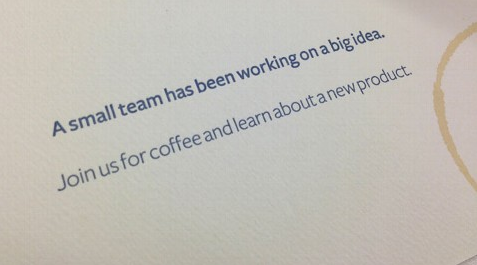
The invitation, sent via snail mail according to ABC News, reads: "A small team has been working on a big idea. Join us for coffee and learn about a new product."

Facebook confirmed the event with CNET but would not provide additional details.

The invite for the product-related event closely trails the social network's release of hashtags, a long overdue feature that finally connects the company to pop culture.

It also comes just days after a developer discovered code that hints at the development of aFacebook RSS reader. A reader release would make for a timely launch as Google Reader isgoing dark on July 1.

Source: CNET


Google CEO on NSA spy program: We're definitely not involved

Google CEO Larry Page has flatly denied involvement in a secret spy program operated by the National Security Agency, calling into question recent news reports that alleged the company gave spooks a backdoor into its servers.

Google's statement was also signed by David Drummond, the company's top legal officer, who oversees the entire legal department.

PRISM gives the federal government surreptitious access to customer information held by Microsoft, Yahoo, Apple, Google, Facebook, and other Internet companies, according to reports from the Washington Post and The Guardian newspapers yesterday.

The program, code-named PRISM, allegedly allows NSA analysts to peruse exabytes of companies' confidential user data by typing in search terms. PRISM reports have been used in 1,477 items in President Obama's daily briefing last year, according to an internal presentation to the NSA's Signals Intelligence Directorate that the newspapers obtained.

Those allegations about companies' participation in PRISM remain unconfirmed, and thecompanies listed in the supposed presentation have denied any participation. Today's statement from Page, Google's co-founder, is the most detailed to date -- and, crucially, comes from someone who would be in a position to know or investigate rather than an unnamed corporate spokesman who would not be...

Read the full story here. Source: CNET

Amazon supersizing its food delivery business?

Never mind the books, movies, music, computer gear, and whatever else you might buy from Amazon. How about a nice banana? The e-tail giant is seriously considering a big move into the grocery-delivery business, according to a report.

The company is set to expand its Seattle-only AmazonFresh service to Los Angeles as early as this week and to the San Francisco Bay Area later this year -- with launches in 20 other urban areas in the U.S. and abroad contingent on the success of the LA and SF businesses -- Reuters reports, citing two unnamed sources.

It's true that fresh food doesn't stay fresh for long, and that the banana you ordered three paragraphs ago can also get easily bruised in transit. Those facts make an online grocery business a risky prospect (just ask Web 1.0 casualty Webvan). But Amazon is hoping to make its profit from other items ordered at the same time as groceries, according to another Reuters source, supermarket analyst and consultant Bill Bishop, who told the news service that Amazon is eyeing as many as 40 markets.

"Amazon has been testing this for years and now it's time for them to harvest what they've learned by expanding outside Seattle," Bishop is quoted as saying.

Reuters also notes that, aside from the threat posed to supermarkets and other food purveyors by a giant like Amazon taking a bite out of the market, the e-tailer's grocery effort could ultimately touch FedEx, UPS, and other package pushers: Amazon will deliver the edibles with its own vans, and success on the grocery front could lead to a broad network of company delivery trucks, which could handle nonfood items as well, Reuters says.

We've contacted Amazon for comment and will update this post with any info we get from the company.

Source: CNET