LG is building a washing machine that doesn't use water

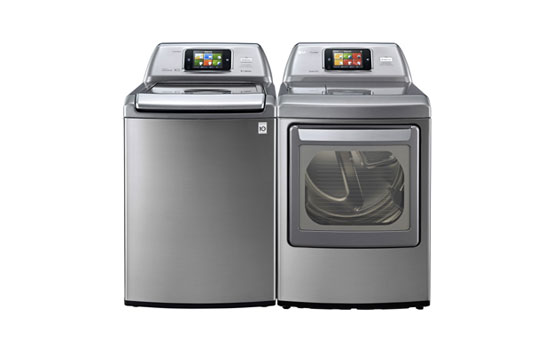
Still not charmed by LG's robo-vacuum? Well, the Korean electronics manufacturer has plenty more appliances up its capacious sleeves, including a washing machine that won't require water. Alas, Senior Vice President for LG Electronics Home Appliance Division, Kevin Cha, wasn't willing to divulge to us exactly how this laundry magic trick will be performed, or whether it'll be totally waterless rather than just virtually waterless -- it's still in the early stages of development and is (for now) a trade secret.

What we do know is that another LG model, the Styler that was unveiled at CES this year, can already 'freshen' clothes without detergent or water. This, too, is also going to pick up a feature upgrade, with the company set to add some kind of ironing functionality to the upright clothes cabinet soon. LG is also looking at an ecological re-imagining of the refrigerator, with a prototype that can keep itself cool for six hours without any power assistance. In general, LG says it's focusing on next-generation smart appliances in a big way next year. Hopefully, those plans will include some of the interesting patents we've picked up recently -- and wine.

[Source: Engadget]

Facebook hires former Apple executive and iOS 6 Maps lead Richard Williamson

Bloomberg reported late on Tuesday thatFacebook recently hired former Apple executive Richard Williamson as a manager in its mobile software group.

A 10 year Apple veteran, Williamson previously served as Apple's Director of iOS Software, a fact which serves to explain the hiring given Facebook's aggressive new push in the mobile space.

While at Apple, Williams oversaw the development of Apple's homegrown Maps app, which, if you recall, debuted to much controversy with the release of iOS 6. Williamson was ultimately shown the door this past November when Eddy Cue decided to shake up Apple's Maps team.

As for Facebook becoming a haven for former Apple employees, news of Williamson's hiring came shortly after it was revealed that the social networking giant had lured former Apple engineer and famed Tweetie inventor Loren Brichter into the Facebook mix.

The fact that Brichter is "helping" out at Facebook is particularly noteworthy because he's an iOS developer legend, of sorts. While he may not be a mainstream name outside of the tech world, his original Tweetie app set a new bar for what Twitter clients could and should be, both in terms of usability and aesthetic design. He's also credited with creating, or at the very least popularizing, common app features such as 'pull to refresh' and the 'cell swipe'.

Perhaps fittingly, word of Brichter's new place of employ first surfaced via a tweet from Mike Matas, a user interface designer at Facebook who previously spent 4 years at Apple working on UI features for a number of Mac and iOS apps.

Bloomberg adds:

Other former Apple employees brought in by Zuckerberg include Greg Novick, a former iPhone manager who helped develop the device's touch interface; Mike Matas and Kimon Tsinteris, software designers who joined when Facebook acquired their company Push Pop Press; and software engineers Scott Goodson, Tim Omernick and Chris Tremblay.

With the recent release of Facebook Home, we now have a clearer idea as to why Facebook has been so keen on snatching up companies and individuals with expertise in mobile software design. That said, the fact that a number of former Apple engineers and designer are now making their way over to Facebook isn't all that surprising. If anything, it underscores Facebook's commitment to deliver a grade-A experience in the mobile space, current reviews of Facebook Home notwithstanding.

[Source: TUAW]

Spotify Expanding to More Markets Later This Week

Spotify will expand its reach to eight other countries as early as tomorrow, according to sources familiar with the company’s plans. CNET on Monday first reported the possible growth, saying the on-demand subscription-based service could arrive in Mexico, Hong Kong, Singapore, Malaysia, the Baltics and Iceland.

As other big companies look to introduce streaming services of their own—AppleGoogleand Amazon, just to name a few—expansion will be key to Spotify’s increasing popularity. As of March, the company said it was servicing over 24 million active users, 6 million of whom were paying subscribers. With such a solid on-demand model, some would say better than Pandora’s automated service, Spotify has become one of the fastest-growing digital music companies ever, CNET said.

Since launching in 2008, Spotify has garnered a reputation for paying labels some pretty healthy returns—the service pays 70 percent of every dollar it makes. That puts the service right behind iTunes for label revenue. With such an enormous presence, the likelihood of securing more and better deals will only go up. And, thus, more expansion.

With so many other companies attempting to enter into the crowded streaming music scene, Spotify is further pulling ahead as the defacto choice. For anyone in any of the eight new markets, enjoy.

[Source: TechnoBuffalo]

Google details Glass specifications - bone conduction audio, 12GB usable storage, full day of 'typical use' battery life

Full device specs round out an evening of Google Glass news

We've seen that Google is getting ready to ship out Google Glass Explorer units, the developer preview of the Mirror API, and the Android companion app already this evening, and now it's time for the device specs. Google has released the tech specs of Google Glass, and it should answer some of the questions folks have. 

  • Fit: Adjustable nosepads and durable frame fits any face. Extra nosepads in two sizes.
  • Display: High resolution display is the equivalent of a 25 inch high definition screen from eight feet away.
  • Camera: Photos - 5 MP; Videos - 720p
  • Audio: Bone Conduction Transducer
  • Connectivity: Wifi - 802.11b/g; Bluetooth
  • Storage: 12 GB of usable memory, synced with Google cloud storage. 16 GB Flash total.
  • Battery: One full day of typical use. Some features, like Hangouts and video recording, are more battery intensive.
  • Charger: Included Micro USB cable and charger. While there are thousands of Micro USB chargers out there, Glass is designed and tested with the included charger in mind. Use it and preserve long and prosperous Glass use.
  • Compatibility: Any Bluetooth-capable phone. The MyGlass companion app requires Android 4.0.3 (Ice Cream Sandwich) or higher. MyGlass enables GPS and SMS messaging.

We're not really worried about things like CPUs and GPUs, or on-board RAM, and it looks like they have covered what's going to be important. The all day battery life is almost a must have with any wearable computer, so we hope that rings true. Also worth noting that Any phone with Bluetooth is said to be compatible. We'll soon know more about both I imagine.

[Source: AndroidCentral]

Microsoft Looking to Join the Smart Watch Race

With rumors of an Apple smart watch ramping up over the past few months, a number of other companies have also reportedly been working on their own projects involving watches and other wearable devices. Last month, both Samsung andGoogle were reported to be working on their own projects, and now The Wall Street Journalindicates that Microsoft is also exploring the possibility of a smart watch.

Earlier this year, Microsoft asked suppliers in Asia to ship components for a potential watch-style device, the executives said. One executive said he met with Microsoft's research and development team at the software company's Redmond, Wash., headquarters. But it's unclear whether Microsoft will opt to move ahead with the watch, they said. [...] 

For its potential new watch prototype, Microsoft has requested 1.5-inch displays from component makers, said an executive at a component supplier.

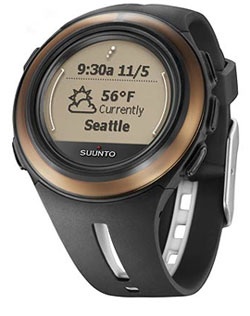
The report notes that this is not Microsoft's first foray into smart watch technology, with the company having launched its Smart Personal Objects Technology (SPOT) platform in 2004 through partnerships with watch companies such as Fossil and Suunto. 

Those watches, which received data through Microsoft's MSN Direct FM radio-based service, were discontinued by 2008, but the idea of smart watches is experiencing a rebirth as companies look to make the experience of today's mobile devices even more "personal". 

(Image: Suunto's n3 smart watch from 2004, based on Microsoft's SPOT technology)

[Source: MacRumors]

It Sounds Like Twitter Music Will Integrate With Some Big Services

Twitter’s new music app may not be available for us mere mortals, but that’s not stopping folks from snooping into its details. Right now, all that’s available to everyone that’s not Ryan Seacrest is a landing page, but not much else. Thanks to designer Youssef Sarhan, information on Twitter’s new initiative has been made available, and it looks like the service will connect with pretty much every big name out there: Spotify, Rdio, iTunes, Soundcloud, Vevo and YouTube.

A few of the connections were already mentioned in a previous rumor, though we didn’t know 100 percent how deeply the integration would go. Aside from some code elements detailing which services #music can connect with, Sarhan’s finding also reveals users will be able to purchase songs, suggest music, see artist biographies and follow users for easier music discovery.

In addition to an incoming app, it sounds like there will also be a Web interface to match, so every Twitter user can hop into the service once it launches (in a week). A lot of information has been extracted from the site itself, and it hasn’t even been made active. We’re bound to hear more throughout the weekend and week before the service officially launches to the masses.

[Source: TechnoBuffalo]

Twitter Music Is Available… But Only For Celebrities

Bad news, folks. The Twitter Music iOS app is not launching today as originally expected, nor is it arriving this weekend — at least, not for the masses. If you’re famous, however, that’s another story entirely.

Yesterday AllThingsD pegged a Friday release, to line up with the opening of the Coachella music festival this weekend, but then recanted that in a new post today. Apparently only “influencers” are getting the music discovery app early. Whether you consider Ryan Seacrest an influencer is a matter of opinion, but that’s why the American Idol host and Dick Clark protégé was playing around with it yesterday.

What’s with Seacrest and mobile appdevelopers? They just can’t seem to stop pelting him with pre-release apps. (SeeZynga/DrawSomething 2.)

If Twitter Music’s any good, more tweets are likely to follow from other celebrities. Assuming no nasty or insulting tweets go out about the app, it’s kind of brilliant on the part of Twitter’s marketing team. Nothing like a little buzz to tempt the masses, and if there are any bugs, the stars are essentially beta testers who can help sniff them out ahead of a public release.

As for the rest of us, AllThingsD now says we’ll get our hands on it in a week. So hang tight, and try not to be jealous if you notice rock stars and personalities all atwitter over this. Think of it like they’re doing you a service.

As the name suggests, the app focuses on music discovery, recommending artists and songs based on a variety of factors, such as who the user follows. (Justin Bieber and Alicia Keys fans would get very different suggestions.) Clips play from right inside the app, courtesy of third-parties like iTunes and SoundCloud, and Vevo powers the integrated music video playback.

For now, it’s iOS only, but we’ll keep our eyes open for any announcements or leads regarding Twitter Music for other platforms.

Are you excited to get your hands on this new music app from Twitter? Think it could pull you away from Pandora, Spotify or another favorite? Weigh in.

[Source: TechnoBuffalo]

This Gmail 5 for Android Concept is Amazing

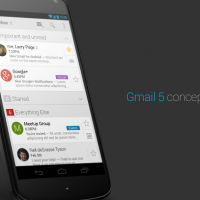
An Android developer and designer named Paul Burke recently published a set of photos to his Google+ page that re-imagines Gmail for Android. The photos show a stunning, simple and elegant user interface that incorporates all of your contacts and reorganizes your inbox so that it’s more intuitive and easier to use.

“I’ve been imagining what Gmail for Android could look like in a post-Google Now world,” Burke said. “After seeing the Gmail for iOS design, I was inspired to create a concept that adopts the best of both apps. The basic premise of this redesign is new navigation, and more focus on people and content. I’ve been working on this in tiny bursts for a while, and wanted to get more screens done, but at this rate, the actual app will come out first. I hope to, at least, get more done to show how the cards would work in the Conversation view.”

Burke warns, of course, that his concept won’t ever be created by Google and that these are sketches he developed in Photoshop. Google: take note.

[Source: TechnoBuffalo]

5 of the Best Online Games

With the online gambling market continuing to offer a variety of great deals (largely due to the substantial amount of competitor sites), there’s never been a better time to enjoy a few games yourself.  But how should you go about deciding which of the many games available are worthy of your attention?  Well, hopefully this list of the best five should help,

Poker.   It might be seen as a bit of a cliche in the betting world, but poker is a classic for good reason: it’s great fun!  Unlike some card games, poker’s learning curve is reasonably easy for a beginner to negotiate the web’s world of usernames means that you can play with complete anonymity, so you don’t have to worry about pressure.    There are a huge amount of different websites that offer poker from low levels to get you started up to the big stakes for whenyou’ve got used to playing.  888 Poker, Full Tilt Poker and Party Poker are all good websites to start with.

Bingo.  In the last few years, online bingo has absolutely taken off, with new websites springing up almost every week to offer their own versions of this popular game.  Because competition is so high, it’s actually a good time to get involved, with sites outbidding each other to attract custom.  Different companies are offering some great deals such as more than doubling your first initial stake, so if you put £10 into your site account, they will double it to £20 (and on some occasions more than that).  There are usually a range of different games that can be played for both low and high stakes.

Blackjack.  An absolute Vegas classic, blackjack been a part of the gaming industry for years.  Gloriously simple to pick up and play, it’ll take you less than five minutes to learn how the game works (if you don’t already) and get going.  If you’ve got a good memory for remembering which cards have already been dealt, you might find yourself playing at quite an advanced level quite quickly.  Incredibly addictive, Blackjack makes for a really good introduction to casino gaming.

Roulette.  Another classic that’s synonymous with Vegas, roulette has its own sense of theatre, and offers a lot of potential for strategic play.   If you want to get started on roulette, it’s important to remember that the European version will actually give you better odds due to it having one less 0 square.  It also has one fewer green square, which also drops the house odds. Like blackjack, Roulette is quite simple to start off with but has its own learning curve for those looking to play for bigger stakes.

Casino games.  The other main group of games that are popular online are the virtual equivalent of the old fruit and slot machines, with almost all modern casino sites offering their own versions.  Some of the games originated in Egypt, such as the popular Cleopatra’s Pyramids, and others are simply based on the classic ‘3 lemons’ style fruities.   Whatever the design, thesegames never go out of fashion, and are beloved by those who love the ‘classic’ pub feel they get from playing them.

Analysts & Reviewers NOT using products before commenting!

It goes without saying, that everyone is a reviewer nowadays. However, more & more often many companies publish reviews, or analysts pass judgement on products with very little hands-on time with them. If you are interested in follow the topic that really needs addressing, you can see the conversation below.

Google Sending Out Glass Explorer Edition This Month

Google’s human cyborg Glass project will take further shape later this month when the company sends out the Explorer Edition to early testers. The futuristic wearable tech, which was unveiled by Google last year, promises to completely change how we experience our daily lives. Instead of having your hands firmly grasped around a smartphone or two, Glass will bridge that gap between our growing social disconnect and digital dependency.

“This month Google hopes to ship Glass Explorer Edition, designed for the first people to examine the potential uses of Glass,” a Google spokesperson said on Wednesday. “Developers can tinker with Glass and consumers can try it out in the real world.”

Forget the potential of the technology: how will people realistically react to people wearing Glass out in public? Curiosity, disgust, apathy, intolerance. How long before one of these early devices goes missing? Glass is expected to cost around $1,500 when it’s released to consumers later this year, so the fee of admission certainly isn’t cheap. With early access provided to developers, it’ll be exciting to see what possibilities are thought up.

The practical applications we’ve seen so far are quickly replying to texts and snapping quick photos, among other handy uses. Google will definitely need to work on the aesthetics of the product itself; the concept isn’t exactly foreign, but an existing product certainly is. We’re approaching the halfway point of April, so the arrival of Glass is nearly upon us if Google can keep to its expected release.

[Source: TechnoBuffalo]

The technological future of clothing

Electrical and wireless technology has progressed massively in the past decade and all of us are excited about what the future will bring. Few associate clothing with high-tech, though recently there have been developments in the field of material technology which could soon affect us all! If scientists get their way, in the future your kids’ outfits could be very different from simple boys sandals and polo shirts. Intrigued? Check out how far our threads have come with these predictions for the future…

Woollen bullet-proof vests?

Most of us are more used to wearing this natural fibre in the form of a cosy cardi, but wool could have more beneficial properties. Many bullet-proof vests are made from Kevlar, a synthetic fibre, though wool could soon be added to this to improve their energy and water absorption making bullet-proof vests lighter and cheaper.

Spray-on clothing

Body-con clothing and jeggings have been on-trend for a number of seasons, but for a really skin-tight look how about spaying on your clothing!? One Spanish designer has managed to create spray-on clothing which can be removed, washed, worn again or dissolved. This innovative fashion idea is courtesy of Spanish designer Manel Torres, a former student of the Royal College of Art. He collaborated with a professor of particle technology at Imperial College London in order to provide a unique way of dressing, as well as hoping to contribute to the future of the medical, transport and chemical industries.

Eco-conscious garments

Being environmentally-friendly is an aim for many of us, and in the future this could easily extend to our clothing too. Scientists and designers are looking to developdevelop textile which do not harm the environment, using polymer chemistry which doesn’t depend on non-renewable energy-sources. Producing and using more manufactured fibers is also a goal for the future, as well as looking for more unconventional clothing fabric, like recycled products. Designer Anke Domaske has used milk to create a new fabric called QMilch and US-based clothing company StaWarm has created a line made from recycled coffee beans.

Keeping warm

Keeping warm in sub-zero temperatures whilst wearing clothing that allows easy movement and mobility has been a tricky dilemma. A new material developed by sportswear company Hanesbrand aims to solve this, and provide the ultimate in cold weather insulation. Zero-Loft Aerogels is a thin, silica material that is made up of 90% air. It offers almost three times the insulation of traditional down, without being bulky.

Active smart-wear

Smart clothing involves building computing technology into clothing which allow more comfort for the wearer. Just innovations include fabrics which sense the environment and react accordingly. Clothing that changes density depending on the temperature, jackets which store solar energy to be used as power and built-in sensors may all be arriving at a high-street near you at some point in the future!